You read Influence. You loved it.
The stories. The psychology. The way Cialdini pulled back the curtain on why people say yes. You saw the principles everywhere—in ads, in conversations, in your own decisions.
Now you want more. Not more of the same—but the next level. The books that influenced the influencers. The behavioral science classics that every serious student of human nature reads.
Here are three of them.
How to Read Someone’s Mind by Miles Carter
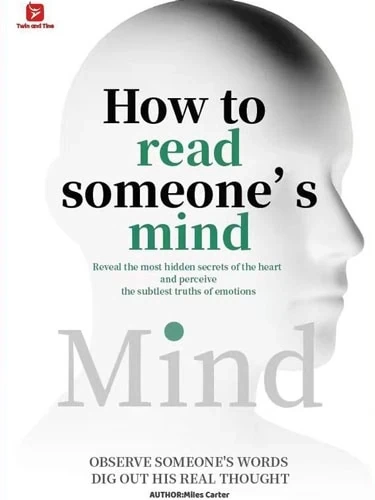
Why do people say yes? Cialdini gave you the principles. But here is what he did not teach you: how to see those principles working in real time.
Cialdini explains what people do. Carter teaches you to see when they are doing it.
The same reciprocity principle that makes a waiter’s mint increase tips—how do you spot when someone is using it on you? The same liking principle that makes salespeople successful—how do you read the signals that tell you someone is trying to build false rapport?
“Influence is easier to spot when you can read the person behind the technique.”
Carter’s book is the perfect companion to Cialdini. It gives you the observational tools to catch influence in action. To see the flicker of hesitation, the shift in posture, the mismatch between words and body. To know when someone is being genuine and when they are running a script.
For anyone who loved Influence and wants to take it a step further: from understanding the principles to seeing them play out in real life.
Predictably Irrational by Dan Ariely
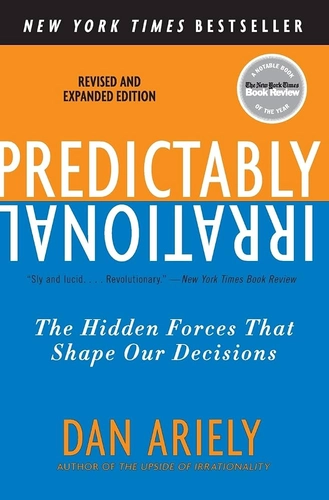
Cialdini shows you how people are influenced. Ariely shows you why they are so easy to influence: because they are not rational.
Ariely, a behavioral economist, ran experiments that reveal the hidden forces behind everyday decisions. Why we overpay for things we do not need. Why we procrastinate. Why we cheat a little but not a lot. Why free things make us lose our minds.
“We are not rational creatures. We are rationalizing creatures.”
Where Cialdini gives you the principles of persuasion, Ariely gives you the unconscious biases that make those principles work. Understanding both gives you a complete picture of why people do what they do—and how to make better decisions yourself.
For anyone who wants to go deeper into the psychology behind Cialdini’s principles.
Nudge by Richard Thaler and Cass Sunstein
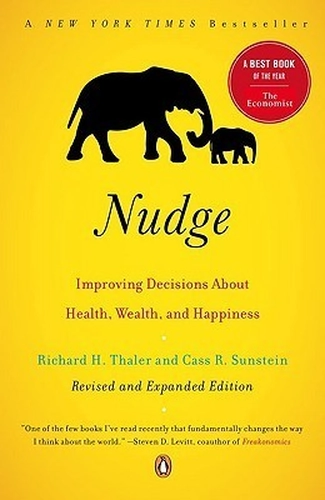
Cialdini’s work is about influence—how to persuade people to say yes. Thaler and Sunstein are about choice architecture—how to design environments that guide people toward better decisions without restricting freedom.
This is behavioral science applied to policy, business, and everyday life. How do you get people to save more for retirement? Eat healthier? Make better choices without mandates or bans? The answer: small design changes.
“People are easily influenced. The question is whether that influence is used for good or for manipulation.”
Thaler, a Nobel laureate in economics, shows you how the same psychological insights Cialdini wrote about can be used to improve lives—not just close sales. It is a natural next step for anyone interested in behavioral science.
For anyone who wants to see behavioral science applied to real-world problems—not just persuasion, but positive change.
If you want to see influence in real-time interactions, read Carter. If you want the deeper psychology behind why influence works, read Ariely. If you want to use behavioral science to design better systems, read Thaler and Sunstein.
Three behavioral science classics to read after Influence. Your next move depends on where you want to go deeper.
