He didn’t say a single word during the entire car ride home. He just stared out the window, tracking the raindrops on the glass, blinking too fast to keep the tears back. On the passenger seat between us lay the math test—a big, messy red “D” circled at the top.
I wanted to say: “Don’t worry, it’s just one test! You’ll get an A next time.”
I could feel myself reaching for the usual lines anyway. But the truth was, he wasn’t ready to hear any of it yet. What I didn’t realize at the time was that silence is often not emptiness—it is regulation. Children usually withdraw language first before they can process emotion. My urgency to fix the moment was doing more harm than the grade itself. In that seat, my son wasn’t testing my ability to manage his future; he was testing my ability to manage my own discomfort. Many parents instinctively rush into problem-solving because watching a child fail feels unbearable [1]. But what kids need after a setback usually isn’t a motivational speech. They need emotional safety first. These are the specific things I’ve learned to say—and the exact phrases to stop saying completely.
Why Parents Panic When Kids Fail
Parents often panic after a child fails because their own discomfort drives them into immediate fixing mode. When my kids failed, my own anxiety spiked over their choices and their future. Because I couldn’t handle the discomfort of watching them hurt, I tried to resolve the problem before they even had time to breathe [3].
The real issue is not that parents say the wrong thing—it’s that they say the right thing at the wrong emotional timestamp. At the wrong emotional stage, even good advice feels like pressure. Many parents jump straight into discussing study schedules, organizational planners, or tutor options while their child’s face is still completely red from crying. The timing is wrong. Most overwhelmed kids are not refusing advice because they are lazy; they literally cannot process problem-solving while they still feel emotionally threatened [1].
When parents rush to erase a mistake immediately, children start learning that failure is a catastrophe instead of a normal, survivable experience.
What to Say When Your Child Fails: The 3 Response Models
Most parents do not know what to say once a child starts shutting down. I used to think my job was to immediately fix the vibe. I would talk about solutions and next steps before the tears had even stopped, which only made my kids retreat further.
These are the three communication models I keep coming back to when I can feel a conversation starting to go sideways.
Emotional Containment Model
Before children can solve a failure, they need to feel safe enough to experience it.
This is the foundational response required for direct failures, such as when a child fails a test they actually studied for. Instead of trying to look on the bright side, force your hands into your pockets, avoid crowding their space, and say:
“That must feel so bad. I saw how hard you worked on those flashcards all week, and I would feel really disappointed too. Let’s just drop our bags. We don’t have to look at this paper until you’re ready.”
Not: “It’s okay, you’ll do better next time.”
This replaces correction with containment. It signals that you can handle the disappointment without needing them to perform happiness to soothe your anxiety.
The Residual Detail: She still went upstairs and shut the door, and the crumpled test paper stayed on the counter until the next morning.
The Cognitive Delay Model
Reflection works better after emotions settle.
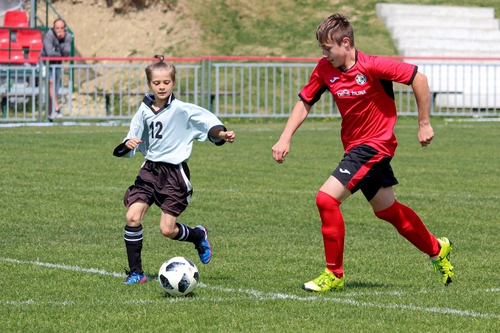
Use this variant when the failure involves public performance, like losing a competitive game or missing the cut. Look straight ahead at the windshield—not directly at their face—and say:
“You really wanted that win, and losing stings. It is completely fine to be angry right now. Once the dust settles later tonight, I’d love to hear about that one specific play you made near the sideline.”
Not: Immediately asking what went wrong on the field.
This removes social pressure before reflection, allowing the physiological fight-or-flight response to clear.
The Residual Detail: The dirty soccer bag stayed right by the front door untouched for two weeks.
The Identity Separation Model
Use this variant when the failure is behavioral, such as making a social blunder or hurting someone’s feelings. Lower your voice, respect their physical boundaries, and say:
“Everyone messes up and hurts people sometimes. It feels awful, but it doesn’t make you a bad kid. Let’s take a breath. We can’t change the words that came out, but we can figure out how to make it right.”
Not: “How could you say that to your friend?”
This decouples identity from behavior. When children feel morally “at fault,” threat drives defense rather than accountability [2].
The Residual Detail: He defended himself for another hour, but two days later, he sent a clunky apology text to his teammate without any prompting.
What Not to Say After a Child Fails
Sometimes over-talking during a meltdown is more about a parent’s own anxiety than a child’s recovery. Avoid phrases like:
- “Stop crying.”
- “It’s not a big deal.”
- “What were you thinking?”
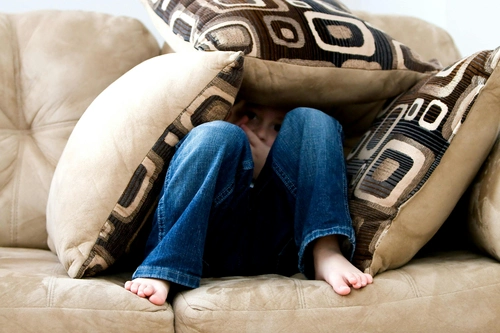
None of these responses help when a child is overwhelmed [2]. When kids are emotionally flooded, minimizing the feeling often sounds like rejection instead of comfort. What looks like defiance or resistance is often just neurological shutdown. It causes them to shut down faster, leaving parents staring at a closed door wondering what went wrong.
The pattern only became visible when I noticed I kept reacting the same way across completely different situations. Rushing to email a teacher or argue with a coach usually serves to reduce parental discomfort rather than help the child [3]. Sometimes the most useful response is to stay nearby, remain calm, and allow the emotional wave to pass naturally without forced intervention [1].
I still don’t handle these moments perfectly. Most parents don’t. But I’ve learned that after a child fails, the first conversation matters less than parents think. Most conversations fail not because parents lack the right words, but because the child’s nervous system is not available for words yet [1]. Kids usually settle faster when they realize the person beside them is not about to fall apart too.
FAQ
- What if my child refuses to talk at all after failing?
Silence after a setback is usually regulation, not rejection. Stay nearby without pushing — most kids re-engage on their own timeline, often the next morning once the intensity clears.
- Should I contact the teacher after my child fails a test?
Not immediately. Give it a day first — one bad grade rarely needs intervention, and reaching out too fast signals to your child that failure is a crisis worth panicking over.
- What if my child blames me for their failure?
Let it land without defending yourself. “I hear you” and silence is almost always more useful than a rebuttal — the accusation is rarely actually about you.
- How do I respond differently to a child who shuts down versus one who explodes?
Shutdown kids need proximity without pressure. Explosive kids need space and a flatter voice from you. The scripts are the same — the delivery changes.
References
[1]Center on the Developing Child, Harvard University. Stress response and resilience in children.
[2] Child Mind Institute. Child anxiety, emotional regulation, and development resources.
[3] American Academy of Pediatrics (AAP). Developmental behavior and mental health guidance.
