Choosing what to eat for dinner is easy for some people, but for someone caught in an anxious thought pattern, even relatively small decisions can become surprisingly complicated. You may compare every possible outcome, worry about making the wrong choice, imagine how other people might react, and then question your decision after you have already made it. What begins as a simple choice becomes a long internal debate. Decision anxiety is not necessarily about being unable to make choices. Often, it is about wanting to feel completely certain before moving forward in a world where certainty is rarely possible.
Why Anxiety Makes Decisions Feel More Serious
Every decision contains some degree of uncertainty.
You cannot know exactly how a conversation will go.
You cannot predict whether a new opportunity will work out.
You cannot guarantee that a particular choice will produce the outcome you want.
For most people, this uncertainty is simply part of making decisions.
But when anxiety becomes involved, uncertainty can feel like danger.
The Mind Starts Looking for the “Perfect” Choice
An anxious person may believe that if they think long enough, they can find the decision that guarantees the best possible outcome.
So they compare.
Then reconsider.
Then search for more information.
Then ask someone else for reassurance.
And even after making a choice, they may continue wondering whether another option would have been better.
The problem is not a lack of effort.
It is the expectation that enough thinking will eventually remove uncertainty completely.
The Difference Between Careful Thinking and Anxiety-Driven Thinking
Taking time to make an important decision can be healthy.
The key is understanding what your thinking is accomplishing.
Careful Decision-Making
You gather relevant information.
You consider the main options.
You identify the potential benefits and risks.
Then you make the best decision you can with the information available.
Anxiety-Driven Decision-Making
You keep searching for information even after you have enough.
You repeatedly imagine negative outcomes.
You focus disproportionately on what could go wrong.
You delay because you want to feel completely certain.
You revisit the decision after making it.
The second pattern can leave you exhausted without necessarily making the final decision better.
Why Uncertainty Is So Difficult for an Anxious Mind
Anxiety often creates a strong desire to know what happens next.
If you know the outcome, you can prepare for it.
If you can predict the outcome, you may feel safer.
But most meaningful decisions do not come with guarantees.
You Cannot Predict Every Outcome
A career decision may work out differently from what you expected.
A relationship may change.
A conversation may not go exactly as planned.
A new opportunity may involve unexpected challenges.
Trying to predict every possibility before acting can therefore become an endless task.
More Information Does Not Always Create More Confidence
Sometimes additional information helps.
Sometimes it simply creates more things to compare.
At a certain point, more research can become another form of avoidance.
You are still thinking about the decision, but you are no longer moving closer to making it.
Questions That Can Help You Make Decisions With Less Anxiety
When you notice yourself getting stuck, try changing the questions you ask.
Instead of:
“What is the perfect choice?”
Ask:
“Which option makes the most sense based on what I know right now?”
Instead of:
“What if everything goes wrong?”
Ask:
“What is the most realistic concern I need to prepare for?”
Instead of:
“How can I be completely certain?”
Ask:
“How much certainty do I actually need?”
These questions do not eliminate risk.
They make the decision more realistic.
Stop Treating Every Decision Like a Permanent Choice
Anxiety can make decisions feel much more final than they actually are.
But many choices can be adjusted later.
You can change a routine.
You can have another conversation.
You can revise a plan.
You can learn from a mistake.
You can make a different decision next time.
A Decision Is Often a Direction, Not a Lifetime Commitment
Recognizing this can reduce some of the pressure surrounding everyday choices.
Instead of asking whether you are making the perfect decision, consider whether you are making a reasonable decision that you can work with.
That is often a much more achievable standard.
Watch for Reassurance-Seeking
When anxiety rises, it is natural to ask other people what they think.
Sometimes outside perspectives are genuinely helpful.
But repeatedly asking for reassurance can become part of the anxiety cycle.
You ask someone:
“Do you think I made the right choice?”
They reassure you.
You feel better temporarily.
Then another doubt appears.
So you ask again.
The reassurance provides short-term relief, but it may not address the underlying uncertainty.
Learning to tolerate some uncertainty can be more useful in the long term.
What Happens After You Make the Decision Matters Too
Decision anxiety does not necessarily end once you choose.
For some people, the next stage is post-decision rumination.
You start wondering:
“Was the other option better?”
“What if I had waited?”
“Did I make a mistake?”
This can turn even successful decisions into sources of stress.
Give Yourself Permission to Move Forward
Once you have made a reasonable decision, continuing to mentally reopen the case may not help.
Unless new information appears, you can allow the decision to remain made.
You do not need to repeatedly prove to yourself that it was perfect.
How Break the Anxiety Circle Relates to Decision Anxiety
Understanding the cycle behind repeated doubt
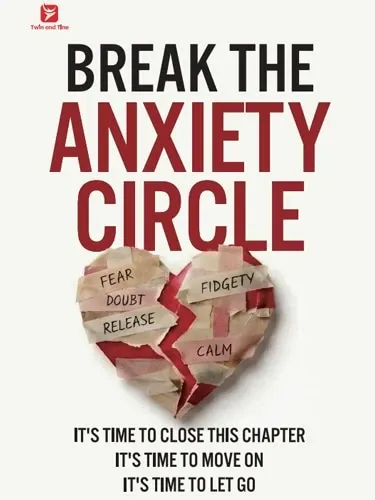
Break the Anxiety Circle by Miles Carter is particularly relevant to people who notice that anxiety does not stay attached to one specific problem.
The subject may change.
Today it is a work decision.
Tomorrow it is a relationship conversation.
The next day it is something that happened several months ago.
But the underlying pattern can remain the same: uncertainty leads to worry, worry leads to more analysis, and more analysis creates even more reasons to doubt yourself.
The book focuses on recognizing these recurring anxiety patterns rather than treating every individual worry as a completely separate problem.
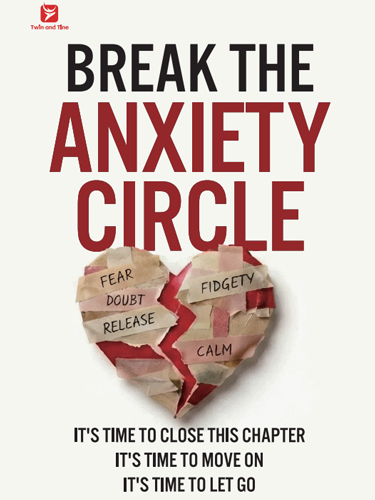
Break the Anxiety Circle
Miles CarterA mental reset for people trapped in the overthinking loop. Understand why your mind won’t stop racing — and how to break free from anxiety, people-pleasing, and emotional exhaustion.
Breaking the Pattern Starts With Recognizing It
The next time you find yourself spending an unusually long time on a decision, pause and ask:
Am I gathering useful information, or am I trying to eliminate uncertainty?
That question can be surprisingly revealing.
If you already know enough to make a reasonable choice, the next step may not be more thinking.
It may be accepting that some uncertainty will remain.
Make the Best Choice You Can
You do not need perfect information.
Accept That Some Outcomes Cannot Be Controlled
A good decision can still produce an unexpected result.
Stop Reopening Decisions Without New Information
If nothing has changed, repeatedly reconsidering the choice may simply restart the same anxiety cycle.
Final Thoughts
Decision anxiety can make ordinary choices feel much heavier than they need to be.
The deeper issue is often not the decision itself.
It is the belief that you must reach complete certainty before you can feel safe moving forward.
But certainty is rarely available.
A healthier approach is to gather enough information, consider the realistic possibilities, make a reasonable choice, and accept that some outcomes will remain unknown.
If you often find yourself trapped in repeated doubt, overanalysis, or fear surrounding everyday decisions, Break the Anxiety Circle by Miles Carter offers a useful perspective on understanding the anxiety patterns behind that experience.