He sits across the table from you, telling you about something that happened at lunch. He says a few classmates were talking about a game. He leans in and says, “I’ve played that game too. The third level has a design problem.” Then everything goes quiet. A pause. Then the conversation moves on.
Later, he looks down and says, “I don’t know what I said wrong.”
You know he didn’t mean anything bad. He just doesn’t know when to speak, or how much is too much. Every attempt feels slightly off. Like swinging too hard in tennis and missing the ball completely.
Quick Answer: To help a socially awkward teenager, focus on reducing social pressure, teaching simple conversational “entry skills,” and giving structured roles like observing before participating, rather than forcing them to perform socially.
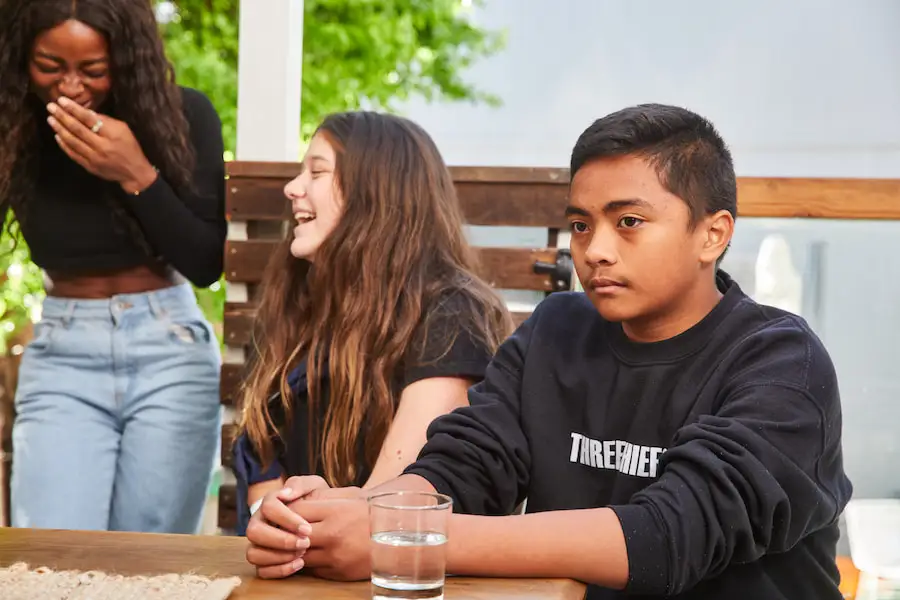
Why Some Teenagers Struggle in Social Situations
Many socially awkward teenagers are not lacking social desire — they are overwhelmed by group pressure and lack simple, repeatable social scripts.
In group settings, everything happens fast. Timing, tone, jokes, interruptions. For a teenager who is still learning these rules, it feels like joining a game halfway through without knowing the rules.
The result is not lack of effort. It is overload.
Method One: Turn Socializing Into a “Shallow End” Experience
Imagine a pool party. Everyone is already in the water. Some people are playing, some are laughing. You hesitate at the edge because the water feels cold.
You would not jump straight into the deep end. You would start in the shallow end.
Social situations work the same way.
Instead of “performing socially,” the goal becomes: start small.
- Talk to one person instead of a group
- Say one or two sentences instead of a long story
- Listen for a while before speaking
This reframes social struggle as “not warmed up yet,” not “I failed.”
Method Two: Give an “Observer Mission”
In group situations, socially anxious or awkward teenagers often focus on themselves: “What should I say? Did that sound weird?”
This takes up all their attention, leaving no space to actually observe others.
So instead of trying to perform socially, give them a different role: observer.
The job is simple:
- Notice who talks the most
- Notice who makes others laugh
- Notice what kinds of comments end conversations
Later, talk about it casually. Not as judgment — just curiosity.
“What did you notice about that group?”
This shifts them from anxiety to awareness.
Method Three: Prepare Three “Emergency Sentences”
One of the biggest fears socially awkward teenagers have is silence. When they don’t know what to say, their mind freezes.
So give them simple backup sentences they can always use.
- “What did you do this weekend?”
- “That happened to me too.”
- “Can you say that again? I didn’t catch it.”
These are not clever. That is the point. They reduce pressure and keep conversations going.
Practice them at home until they feel automatic.
Why This Works
Social confidence is not built by forcing performance. It is built by lowering pressure, increasing predictability, and slowly expanding comfort zones.
When teenagers stop feeling like they are “on stage,” their natural personality starts to come through.
One Honest Last Thing
You don’t need to turn your teenager into the most social kid in the room.
You just need to help them find one or two people they can talk to comfortably. For them, that is enough.
Start small. Stay consistent. Let them build from the shallow end first.
Over time, social confidence stops feeling like a performance — and starts feeling like something they can actually do.