The shelf is lined with bright covers promising peace. Each one claims to hold the answer. I stood there last spring, reading spines like tea leaves, trying to guess which anxiety self help book is right for me. My chest was tight from a week of spiraling thoughts. My phone had seventeen open browser tabs about overthinking. I bought three books that day. Two of them were useless for my situation. One changed how I handle my worst mornings. That is the thing nobody tells you. The best book is not the most popular one. It is the one that matches your specific flavor of struggle.
Why Does Picking the Wrong Anxiety Self Help Book Make Everything Worse?
Because you start doubting yourself. I read a highly recommended book about panic attacks once. It described symptoms I did not have. Racing heart. Shallow breath. Cold hands. I felt none of that. My anxiety sits in my head, not my body. It loops. It replays conversations. It argues with me about decisions I made three years ago. That book made me feel broken. I thought, maybe my problem is too strange for books. That is a terrible feeling.
The truth is, anxiety is not one thing. It is an umbrella term. Some people get physical panic. Some people get stuck in mental loops. Some people push themselves into exhaustion trying to be perfect. These are different problems. They need different tools. The question of which anxiety self help book is right for me only makes sense when you first ask a simpler question. What does my anxiety actually look like at 11pm on a Tuesday?
What Kind of Anxiety Do You Actually Have?
Take a moment. Think about your last bad episode. Did your body react first? Sweating. Trembling. A sudden urge to escape. That sounds like panic. Or did your mind take over? Endless what-if scenarios. Rehashing old mistakes. Paralysis by overanalysis. That is overthinking. Or maybe you were exhausted because you spent the whole day trying to be flawless. Every email rewritten. Every word measured. That is perfectionism mixed with anxiety.
Most people fit one of these three patterns. Some fit two. Rarely all three. Once you name your pattern, the book search gets much easier. You stop guessing. You start matching.
For physical panic symptoms, a direct, skills-based approach works well. For the overthinking loop, you need something that addresses the mental spirals directly. For perfectionism and high-achieving behaviors, you need a book that does not tell you to lower your standards. You need one that helps you carry ambition without crushing yourself.
Can You Give Me a Simple Way to Match My Anxiety to a Book?
Yes. Think of it like choosing a workout plan. You would not train for a marathon by doing only bicep curls. Same logic applies here. I have read many of these books. Three stand out because each targets a different pattern clearly.
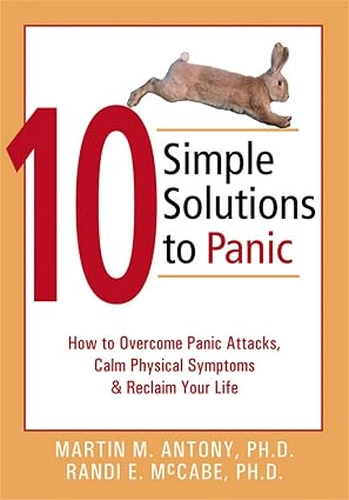
If your anxiety is physical, sudden, and overwhelming, look at 10 Simple Solutions to Panic by Martin M. Antony and Randi E. McCabe. This book is short and practical. It explains why your body reacts the way it does. It teaches breathing exercises and ways to face fearful situations safely. It is not a deep philosophical exploration. It is a tool kit. If you feel fine most days and then get hit by waves of panic, this one is probably right.
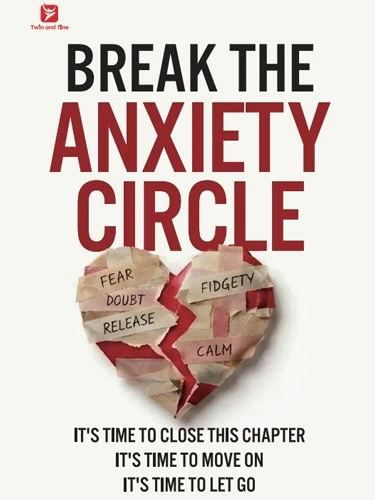
If your anxiety is mostly in your head, if you overthink, rehash, self-blame, and struggle to make decisions, then Break the Anxiety Circle by Miles Carter might be your match. This book is written for people trapped in the overthinking loop. It covers indecision, self-blame, and rumination. It gives actionable steps for each issue. It also includes quotes that help quiet the inner turmoil. The tone is straightforward and sincere. It reads like a friend who has been there, not a professor lecturing you.
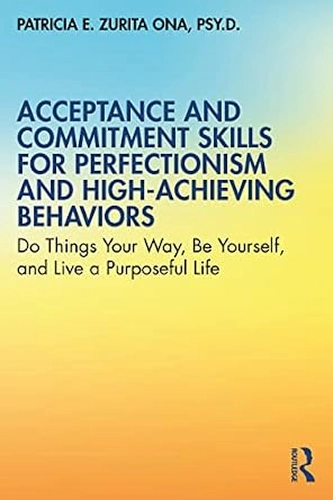
If your anxiety comes from pushing yourself too hard, if you are a high achiever who cannot accept mistakes, consider Acceptance and Commitment Skills for Perfectionism and High-Achieving Behaviors. This one is different. It does not tell you to stop being ambitious. It teaches you how to accept mistakes without beating yourself up. It helps you quiet the inner critic and keep fear in perspective. It is for people who want to succeed without burning out.
How Do I Know Which Anxiety Self Help Book Is Right for Me When I Fit Multiple Patterns?
This is the most common question I get. I fit two patterns myself. I overthink, and I push myself too hard. So I read two books. I started with Break the Anxiety Circle because my overthinking was louder. It was keeping me up at night. That book helped me see my thought loops clearly. Then, once my mind was quieter, I read the perfectionism book. That one helped me stop punishing myself for small mistakes.
Here is a practical tip. Rate your patterns on a scale of one to ten. Physical panic, mental overthinking, perfectionist pressure. Which one scores highest? Start there. Read that book first. If you finish it and feel some relief, you made the right call. If you finish it and feel nothing, try the second highest pattern.
One more thing. Pay attention to how a book makes you feel while reading it. A good match feels like recognition. You read a paragraph and think, that is exactly what I do. A bad match feels like translation. You read about symptoms and try to force them onto yourself. Trust that feeling of recognition. It matters more than reviews or ratings.
What If I Have Already Tried a Few Books and Nothing Helped?
That happened to me. I read a well-known book about anxiety that focused heavily on mindfulness. I tried the meditation exercises. They made me more anxious. I sat there trying to observe my thoughts and felt like I was failing at observing. It was exhausting.
Here is what I learned. Some books assume a certain baseline. They assume you can sit with discomfort. If you are in a very raw state, that can be too much. You need something more structured first. Break the Anxiety Circle works well here because it breaks everything into small, concrete steps. It does not ask you to be calm before you start. It meets you where you are.
Also consider the format. Some people need short chapters they can finish in ten minutes. Some people need exercises to write in. Some people just need to feel understood. Think about what you actually need right now. A gentle hand or a strict coach. Both are valid. Both exist in different books.
Three Books, Three Different Anxiety Styles
Let me lay this out clearly. If you have panic attacks, physical symptoms, sudden fear, choose 10 Simple Solutions to Panic. It is practical, short, and focused on physical symptoms.
If you overthink, dwell on the past, blame yourself, or get stuck in indecision, choose Break the Anxiety Circle. It targets the mental loop directly and offers actionable solutions for each specific struggle.
If you are a perfectionist, a high achiever, someone who cannot accept mistakes, choose Acceptance and Commitment Skills for Perfectionism. It helps you keep your drive while protecting your mental health.
One Last Thing
I remember sitting on my kitchen floor that afternoon, three new books stacked beside me. I felt hopeful and also exhausted. I wanted someone to just tell me the answer. Now I can tell you. The right book is the one that looks at your specific struggle and says, I know this one. Not the one that says, all anxiety is the same. You are not broken. You just have not found your match yet. Keep looking. It is out there.
[TITLE 1]: Which Anxiety Self Help Book Is Right for Me?
[TITLE 2]: Anxiety Self Help Book Guide for My Needs
[TITLE 3]: How to Pick the Right Anxiety Self Help Book