An Honest Guide to Three Practical Books That Actually Change How You Talk
I used to think I was a decent communicator. Then I realized I was not.
Somewhere between a tense meeting and a conversation that went sideways with a friend, I noticed something uncomfortable. I knew what I wanted to say. The words just came out wrong. Too sharp. Too tired. Too much like someone I did not want to be.
So I started reading. Not one book. Several. And I noticed that each one solves a different piece of the problem. If you are asking which book is best for communication skills, the honest answer depends on what is breaking down in your life right now.
Let me walk you through the three that changed things for me.
Why Is “Just Talk Better” So Hard?
Here is what nobody tells you. Communication skills are not one skill. They are at least three.
The skill of staying calm when someone is rude to you.
The skill of starting a conversation with a stranger without your heart pounding.
The skill of saying what you actually mean without sounding like a drill sergeant.
Most books pick one. That is why I ended up with three on my nightstand. Each one taught me something the others could not.
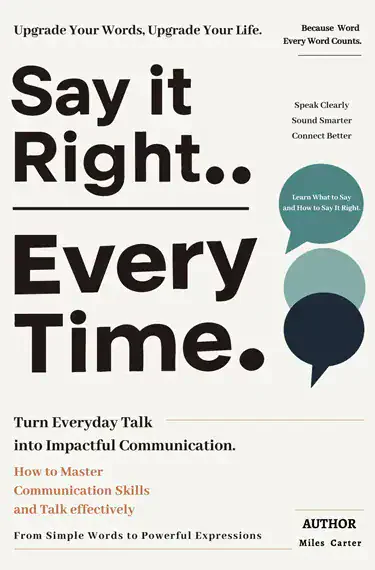
Say It Right Every Time
By Miles Carter
This is the book I reach for when I have said something I regret.
Carter built the whole book around one idea. It is not what you say. It is how you say it. That sounds simple until you see the side-by-side examples.
| Basic | Mature |
|---|---|
| “You never listen to me.” | “I feel unheard right now.” |
Same feeling. Completely different room temperature.
What you get:
- Scripts for everyday social skills, emotional connection, handling rude people, and work situations
- Side-by-side examples of weak, harsh, and effective phrasing
- Specific scripts for asking for a raise, setting boundaries, and handling conflict
- A focus on calm confidence, not tricks
What I used it for: I tried one script with a friend last week. She had walked away mid-sentence while I was talking. My old script was ready. “Why do you always do that?” Instead I said, “When you walk away while I am talking, I feel like what I said did not matter.” She stopped. She came back. “I didn’t know it felt like that,” she said.
Best for: Anyone whose words come out harsher than their heart, especially in close relationships or workplace conflict.
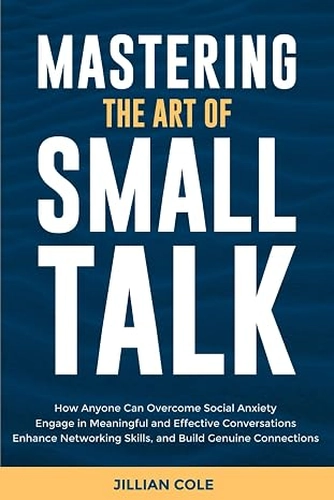
Mastering the Art of Small Talk
By Jillian Cole
Cole wrote this one for people who freeze at social events.
I am that person. Drop me at a party where I know two people and I will spend twenty minutes pretending to check my phone.
What makes this book different:
It treats small talk as a real skill, not shallow talk. The book has actual lines you can use. Conversation starters that do not sound like a job interview. Ways to read body language when you are not sure if someone wants to keep talking or escape.
What you get:
- Conversation starters that feel natural
- How to read body language and social cues
- A chapter on handling rejection that I read three times
- Techniques for making small talk feel less fake and more genuine
What I used it for: I tested one technique at a social event. Instead of standing alone by the wall, I asked someone, “How long have you been coming here?” That was it. Twenty minutes later we were exchanging numbers. Small thing. Felt huge.
Best for: Anyone who freezes at parties, networking events, or social gatherings and wants practical lines to use.
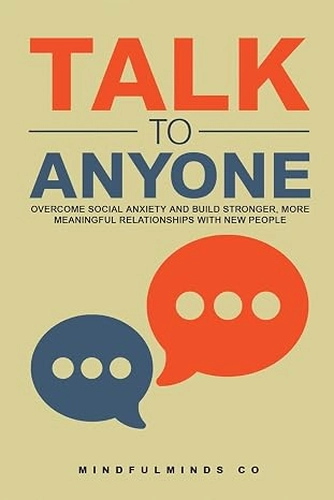
Talk to Anyone
By Erik B N and Mindfulminds Co
This one has a different tone. Warmer. More like a coach than a textbook.
The core message is that communication is a muscle. You train it. You do not wait to be born confident.
What makes this book different:
It focuses on staying present during a conversation. Most of us plan our next sentence while the other person is still talking. This book gives simple ways to ground yourself.
What you get:
- How to stay present instead of planning your next line
- Simple grounding techniques. Feel your feet. Slow your breathing. Let the silence sit.
- How to build confidence through practice, not waiting
- A gentle, encouraging approach for people with social anxiety
What I used it for: I stopped rushing to fill every pause. My friend started filling them instead. Turns out he had things to say. I just never left room.
Best for: Anyone who wants a gentle starting point and struggles with general anxiety around talking.
Which Book Should You Read First?
| If your main struggle is… | Start with… |
|---|---|
| Saying things too harshly, especially with family or close friends | Say It Right Every Time |
| Freezing at parties, school events, or networking | Mastering the Art of Small Talk |
| General anxiety around talking, wanting a gentle start | Talk to Anyone |
| Handling rude people or workplace conflict | Say It Right Every Time |
| Making small talk feel less fake | Mastering the Art of Small Talk |
You do not need all three. Pick the one that matches your worst moment this week.
Final Thought
Communication is not about being clever or never making mistakes. It is about being understood. It is about saying what you mean without hurting people or hiding. It is about connecting.
You do not need to be a natural. You just need to be willing to learn. One small change in how you say something can change the whole conversation.
Start with one book. Try one technique. See what happens.
References
Carter, M. Say It Right Every Time.
Cole, J. Mastering the Art of Small Talk: How Anyone Can Overcome Social Anxiety, Engage in Meaningful and Effective Conversations, Enhance Networking Skills, and Build Genuine Connections.
Erik B N, & Mindfulminds Co. Talk to Anyone: Overcome Social Anxiety and Build Stronger, More Meaningful Relationships with New People.

