There are countless parenting books available, and choosing one can be harder than it looks. Some focus on child development, others on behavior or communication, while some are written around a very specific parenting philosophy. When you are simply looking for a book that is genuinely useful, the number of choices can quickly become overwhelming.
A worthwhile parenting book should give you more than a collection of tips. It should help you look at familiar family situations from a different perspective and give you ideas that make sense in real life. The three books below take different approaches, but each offers something practical for parents who want to become more thoughtful and effective in everyday situations.
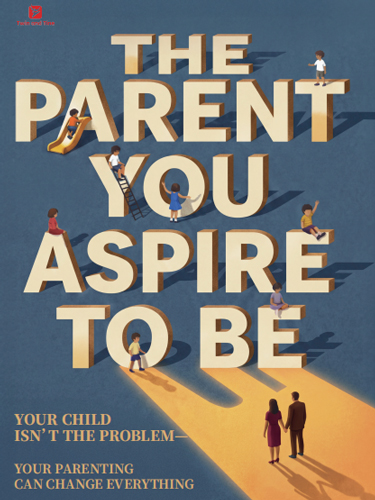
The Parent You Aspire to Be by Miles Carter
The Parent You Aspire to Be
Miles CarterPractical guidance for tantrums, backtalk, lying, screen addiction, emotional outbursts, and everyday parenting struggles.
Best for: Parents who want a broader guide to behavior, emotions, communication, and everyday parenting decisions.
The Parent You Aspire to Be by Miles Carter is designed for parents who feel that family problems rarely fit into one neat category. A child may be struggling with behavior, but the situation may also involve emotions, communication, boundaries, parental expectations, or the parent’s own reaction.
That broader perspective is one of the book’s strongest features. Instead of looking at each difficult moment as a completely separate problem, the book encourages parents to think about the patterns connecting what children do, how parents respond, and what happens afterward.
This can be particularly useful for everyday challenges such as repeated arguments, emotional outbursts, lying, screen-related conflicts, school refusal, picky eating, or situations where parents feel they are becoming too controlling.
The book is also relevant for parents who have tried individual parenting tips but still feel that the same problems keep coming back. Sometimes the issue is not the lack of another technique. It is that the larger pattern has not been understood.
The Parent You Aspire to Be encourages parents to step back, look at the situation from more than one angle, and make their response more intentional.
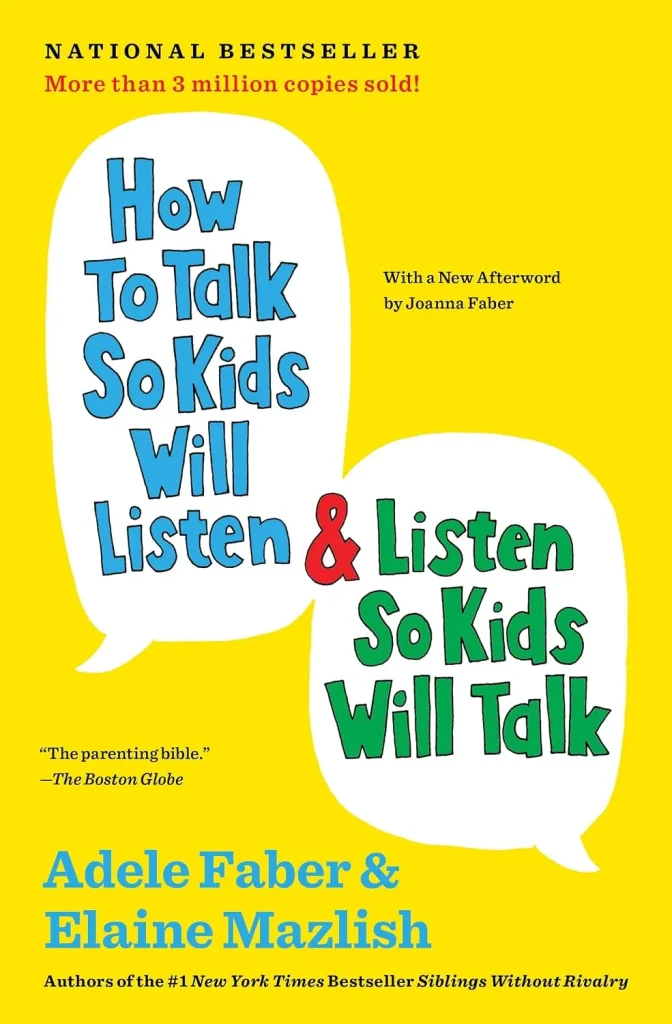
How to Talk So Kids Will Listen & Listen So Kids Will Talk by Adele Faber and Elaine Mazlish
Best for: Parents who want practical help with everyday communication.
Many parenting problems become harder because the conversation itself goes wrong. A simple request can turn into arguing, repeated instructions, frustration, and eventually a conflict that neither parent nor child originally intended.
How to Talk So Kids Will Listen & Listen So Kids Will Talk focuses on this part of family life. The book gives parents practical ways to communicate with children while taking their feelings seriously and still maintaining appropriate expectations.
Its ideas can be especially helpful in situations where parents feel they are constantly repeating themselves. Instead of focusing only on whether the child obeys, the book encourages parents to think about how they are communicating the request and how the child may be receiving it.
For parents who want a parenting book they can connect to everyday conversations almost immediately, this is a particularly useful choice.
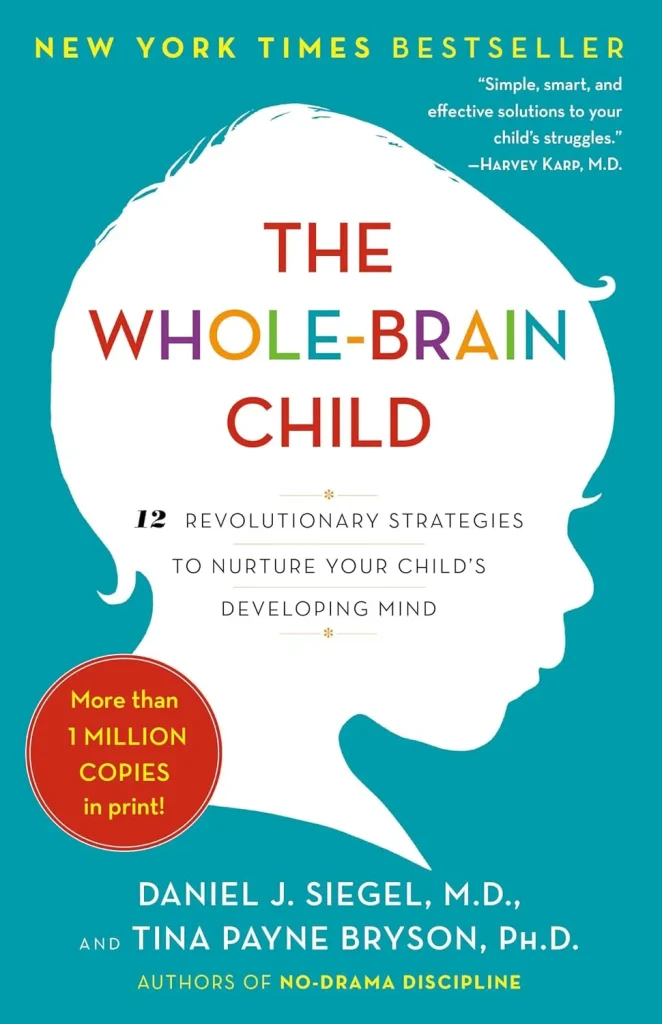
The Whole-Brain Child by Daniel J. Siegel and Tina Payne Bryson
Best for: Parents who want a better understanding of children’s emotional and cognitive development.
The Whole-Brain Child approaches parenting through child development and the way children’s minds develop over time. It gives parents a framework for understanding why children can sometimes react with intense emotions or behave in ways that seem difficult to explain.
This perspective can make a difference when parents find themselves asking why a child who seemed perfectly calm a few minutes ago is suddenly overwhelmed or unable to cooperate.
Rather than treating every emotional reaction as simple misbehavior, the book encourages parents to consider what may be happening developmentally. That can help parents respond with greater awareness while still maintaining boundaries.
It pairs well with The Parent You Aspire to Be because the two books look at parenting from complementary perspectives. One offers a broad look at family interactions and parenting patterns, while the other places greater emphasis on how children’s developing minds influence behavior.
What Makes a Parenting Book Worth Reading?
A parenting book is worth reading when it helps you do something with the ideas after you close the book. Information can be interesting, but its real value comes from whether it changes the way you think about a situation or gives you a more useful way to respond.
Practicality is one important factor. Parents are more likely to benefit from a book when its ideas can be connected to situations they actually experience, rather than staying at the level of theory.
Another factor is perspective. The best parenting books do not simply tell parents what to do; they can also explain why a child may be behaving a certain way and why a particular parental response may lead to a better or worse outcome.
Finally, a worthwhile book should leave room for parents to adapt what they learn. Every family is different, and useful parenting guidance should help parents make better decisions rather than make them feel as though there is only one correct way to raise a child.
Which One Should You Read First?
The right choice depends on what you currently want from a parenting book.
If you want a broad guide that connects behavior, emotions, communication, and parenting patterns, The Parent You Aspire to Be is a strong place to start.
If your biggest challenge is everyday parent-child communication, How to Talk So Kids Will Listen & Listen So Kids Will Talk offers a more focused approach.
If you want to better understand children’s emotional and cognitive development, The Whole-Brain Child can provide a useful foundation.
You do not necessarily need to choose the book with the most techniques. The better choice is the one that matches the kind of questions you are currently asking about your family.
Why The Parent You Aspire to Be Stands Out
The Parent You Aspire to Be is particularly useful for parents who do not want to view every parenting problem through a single lens.
A difficult behavior can be connected to emotions. A communication problem can be connected to expectations. A parent’s frustration can influence how a child responds, which can then create another round of frustration. Looking at those connections can make everyday family situations easier to understand.
That is why the book works well as an overall parenting guide rather than a resource for only one specific issue. It gives parents a way to think about the relationship between behavior, communication, emotions, and their own role in the situation.
For readers who want a practical parenting book that can be revisited as different family challenges arise, The Parent You Aspire to Be is a strong choice.
Final Thoughts
The best parenting book is not necessarily the one with the most advice or the most popular title. It is the one that helps you better understand your child, reflect on your own parenting habits, and make more thoughtful decisions in everyday situations.
The Parent You Aspire to Be, How to Talk So Kids Will Listen & Listen So Kids Will Talk, and The Whole-Brain Child each approach parenting differently, giving readers a useful range of perspectives.
For parents looking for one broad starting point that brings behavior, emotions, communication, and family dynamics together, The Parent You Aspire to Be is a practical book to put at the top of the reading list.