Quick Answer: Anxiety often gets worse at night because your brain finally has quiet space to process worries you pushed aside during the day. The more you force yourself to sleep, the more pressure you create. Reverse All-Nighting helps by giving yourself permission to stay awake calmly, which removes the panic around not sleeping.
It is 11 p.m. Your phone has already been tossed to the other end of the couch. The lights are off. The blanket is pulled up to your chin.
And then your brain, like a comedian who just drank three shots of espresso, launches into its one-person show.
“Was that reply you sent today too cold?”
“That presentation next Wednesday might have a problem on page three.”
“That sigh your mom made on the phone last week. Did you understand what she meant?”
You roll over.
Check the time: 11:47 p.m.
Roll again: 12:23 a.m.
Roll again: 1:08 a.m.
Congratulations. You were too busy during the day to feel anxious, so now the night gets all of it.
I know this feeling well. I once spent months replaying every embarrassing moment of the past decade in bed, two hours a night minimum. Then I found a method so ridiculous I was almost too embarrassed to admit it worked.
I call it Reverse All-Nighting.
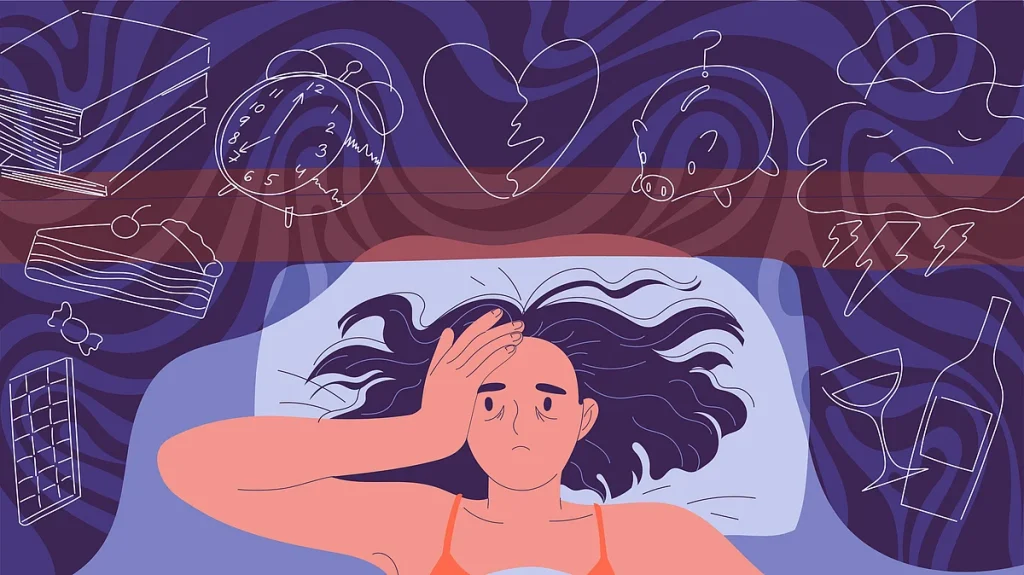
Why Does Anxiety Get Worse at Night?
During the day, you are busy.
Emails. Meetings. Kids. Dinner. Dishes. Messages. Work. Errands. People needing things from you.
Your brain says, “No time for anxiety right now. Save it for later.”
Then night comes.
The room gets quiet. The to-do list is paused. Nobody is asking you questions. Your body finally stops moving.
And your brain opens the folder labeled “Unprocessed Worries.”
It is not trying to torture you. It thinks it is helping. It is trying to predict risk, review mistakes, and prepare for possible problems.
The problem is that 1 a.m. is a terrible time for strategic planning.
But your brain does not know that. It only knows this:
You finally stopped. Now it is my turn.
The Night Anxiety Loop
Night anxiety often turns into a loop:
You feel anxious.
Then you cannot sleep.
Then you become anxious about not sleeping.
Then you imagine being exhausted tomorrow.
Then you really cannot sleep.
Now the original worry is not even the main problem anymore. The new problem is:
What if I cannot fall asleep?
This is why forcing yourself to sleep often backfires. The harder you try to relax, the more your body feels tested.
Sleep becomes a performance.
And nobody sleeps well while being graded.
The Paradox Method: Reverse All-Nighting
One night around 2 a.m., I was lying in my barely heated studio apartment during a Boston winter, flipped over like a defeated fish.
Then I asked myself a strange question:
What if, instead of forcing myself to fall asleep, I gave myself permission to stay awake?
This did not come from wisdom.
It came from pure hopelessness.
Before that, I tried everything.
Deep breathing. Counting. Meditation apps. Imagining a beach. Listening to a voice so calm it almost made me angry.
The harder I tried to calm down, the tighter my body became.
The harder I tried to sleep, the more awake I felt.
So that night, I sat up. Turned on a small lamp. Folded the blanket. Walked to my desk. Opened a notebook.
Then I wrote:
“I am not sleeping tonight. I officially cancel the mission of falling asleep. What I am going to do now is stay awake on purpose.”
Something shifted.
The second I moved from “I have to fall asleep” to “I choose to stay awake calmly,” the pressure cracked.
Anxiety is often fear of not being able to control an outcome. When I stopped trying to control sleep and started choosing what to do with the next ten minutes, I slipped around the back door of the anxiety.
When Your Brain Plays the Greatest Embarrassments Playlist
Old response:
You fight the thought.
“Stop thinking about that. It was three years ago. Nobody remembers.”
But the more you fight, the louder the thought gets.
It is the old white bear problem: the more you tell yourself not to think about something, the more it fills the screen.
Reverse response:
Take out a pen and paper. Not your phone. Phones are traps.
Then say:
“Fine. If my brain insists on running the show tonight, let’s schedule it properly.”
Write down every anxious thought, one by one.
“I am worried about the presentation.”
“I think I sounded cold in that message.”
“I am scared tomorrow will be ruined because I cannot sleep.”
Writing turns fog into sentences.
And once something becomes a sentence, it stops feeling like an everywhere-threat. It becomes a thing on paper.
A thing on paper can wait until morning.
What to Do When You Wake Up Feeling Like You Already Lost
The old morning starts like this:
You check your phone. The last time you remember seeing was 3 a.m.
Immediate verdict:
“I am ruined. Today is already a complete loss.”
But this is where you need to lower the standard.
If you spent part of the night lying quietly with your eyes closed, that still counted as rest.
No, it may not feel like perfect sleep.
But quiet rest is still better than scrolling, panicking, or fighting yourself for hours.
You did not lose the whole night.
You had a rough night.
Those are not the same thing.
What Reverse All-Nighting Changed for Me
I used this method for a few weeks.
Three things changed.
First, the time it took me to fall asleep dropped from hours to much less.
Second, I stopped being so afraid of waking up in the middle of the night.
Third, I became kinder toward my daytime anxiety too.
Because I finally understood something:
The problem was not only anxiety.
The problem was the hatred I added on top of anxiety.
Reverse All-Nighting gave me a way to say:
“Fine. If I am awake, I can still be gentle with myself.”
What You Can Do Tonight
1. Set an anxiety window.
If you start feeling anxious tonight, say:
“I hear this. I have a time for anxiety tomorrow from 4:00 to 4:20 p.m. I will save this for then.”
Most worries lose strength before they reach their appointment.
2. Build a Reverse All-Nighting toolkit.
Keep these within arm’s reach of your bed:
A pen and small notebook.
A glass of water.
A boring book.
One soft lamp.
On the first page of the notebook, write:
“Anxieties Caught Tonight.”
3. Give yourself a pardon.
Before bed, read this quietly:
“Tonight I do not have to be a perfect person who falls asleep easily. I only need to be a person who can stay awake without hating myself for it.”
When Should You Get Extra Help?
Night anxiety is common, especially during stressful seasons. But if anxiety regularly keeps you from sleeping, affects your work, relationships, health, or daily life, it may help to talk with a doctor or mental health professional.
Getting support does not mean you failed. It means your nervous system deserves help, not another lecture.
FAQ: Why Anxiety at Night Happens
Q: Why anxiety at night feels worse than during the day?
A: Anxiety often feels worse at night because the day’s distractions are gone. Your brain finally has quiet space to process worries, replay conversations, and scan for problems.
Q: Why do I feel anxious when I try to sleep?
A: Trying hard to sleep can create pressure. Once sleep becomes something you must “achieve,” your body may become more alert instead of relaxed.
Q: What can I do when anxiety keeps me awake?
A: Try writing your worries down, using a soft light, reading something boring, and giving yourself permission to rest without forcing sleep.
Q: Is lying in bed with my eyes closed still helpful?
A: Yes. Quiet rest is not the same as deep sleep, but it is still more restorative than scrolling, panicking, or fighting your thoughts all night.
One Last Thing
Try Reverse All-Nighting tonight.
Not as a trick to force sleep.
As a way to prove something to yourself:
You can be awake without being at war with yourself.
You can feel anxious without obeying every anxious thought.
You are larger than the noise in your mind.
And sometimes, the night gets softer the moment you stop trying to defeat it.