My daughter looked up from her dinosaur book last Tuesday. She was frowning. “Dad, if sleeping is so dangerous, why do animals still do it? Wouldn’t they just evolve to stay awake?” I put down my coffee. She was six. I needed a why do animals sleep explanation for kids that didn’t involve college textbooks or panic. So I told her we’d figure it out together. What followed surprised us both.
Quick Animal Sleep Facts to Share Today
If you’re explaining animal sleep to a curious kid, start with these:
- Brains use sleep to clear out messy waste from the day.
- Some animals sleep standing up so they can bolt.
- Dolphins rest half their brain at a time and keep swimming.
- Without sleep, animals become confused, clumsy, and weak within days.
- Nature doesn’t need sleep to be perfectly safe. It just needs it to work well enough.
Why Is Sleep So Important for Animals?
Here’s the thing my daughter latched onto. She thought danger should have erased sleep by now. But that’s not how nature works.
Imagine your brain is a busy kitchen. All day you cook thoughts, remember things, make decisions. By evening the counters are covered in sticky spots and crumbs. You can keep cooking. But after a while you’ll mess up a recipe, spill something, or just feel exhausted. Sleep is when the cleaning crew shows up. While you rest, your brain washes away waste that built up during the day. This is not a metaphor, not exactly. Scientists have watched it happen. They call it the glymphatic system, but I just call it “brain cleaning.”
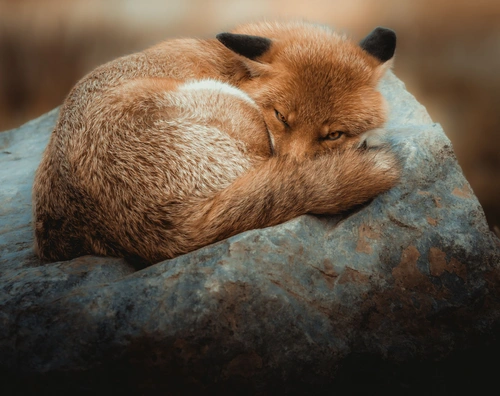
For animals, this cleanup matters even more. A fox needs sharp senses to hunt. A bird needs a clear memory to find seeds it hid months ago. Without sleep these skills dull fast. Evolution didn’t try to eliminate sleep because the benefit of a clean, sharp brain outweighed the risk of being caught while sleeping, at least for enough animals.
Some parents explain this with a child-friendly image. I told my daughter that every animal brain has tiny trash trucks. They start their route when the animal closes its eyes. If the trucks never run, the brain gets junked up. And a junked-up brain makes dumb mistakes. That’s worse than a few hours of vulnerability.
How to Explain Animal Sleep to Your Curious Kid
Kids don’t need a lecture. They need a story. Here’s what worked for us.
I started by asking her this: “What if you had to play tag all night and never stop?” She immediately yelled that she’d crash. Exactly. Animals feel the same. Then I told her about the sleepy dolphin. That really hooked her.
Dolphins can’t fully fall asleep like we do because they’d drown. So they shut off one half of their brain at a time. One half sleeps. The other half keeps swimming, keeps breathing, watches for sharks. After a couple hours they switch sides. She loved that. “So they never get to dream with their whole brain?” I admitted, probably not. But it works for them.
Fruit bats hang upside down and wrap their wings around themselves like a blanket. They look dead. Most predators don’t bother them that way. Giraffes sleep maybe 30 minutes total a day, in five-minute bursts, while standing. They fold their long necks into a curve, close their eyes, and barely let go of alertness.
We made it a game. I’d name an animal. She’d guess its sleep style. Lion? Sleeps like a champion, 16 hours. Elephant? Only 2 hours, dozes leaning on a tree. She started inventing her own animals with weird sleep habits. Then the real questions came.
The “Sleepy Animal Detective” Game
This game became a bedtime ritual in our house. It’s simple. You become detectives investigating how animals sleep. And the only tool you need is curiosity.
Step one: Pick an animal together. It could be a pet or something from a nature book.
Step two: Ask three questions. Where does it sleep? How long? Does anything try to eat it while it rests?
Step three: Try to figure out the why behind those answers. A rabbit digs a burrow not just to hide, but because the dark tunnel signals safety to its nervous system. It can truly rest deep underground.
We learned that meerkats pile up in a heap. One meerkat stays awake as lookout. The rest disappear into a fluffy tangle of sleep. When danger comes, the lookout chirps and everyone scrambles. This is the buddy system. Your child can see collaboration in action.
This game does more than teach. It turns anxiety about sleep into fascination. If a meerkat can trust its family and sleep in a heap, maybe a kid can feel safe in their own bed. The world feels a little less random.
Animals That Break All the Sleep Rules
Some sleepy animals just ignore the standard playbook. My daughter became obsessed with the albatross. These birds can fly for years without touching land. But they do sleep. In flight. On the wing. For seconds at a time. Their brains dip into micro naps while their wings lock in place on the wind. It’s not deep rest. But it’s enough.
Then there’s the bullfrog. Scientists thought it didn’t sleep at all. Later they found it does slip into a drowse where it’s slower to react but still aware. Not quite a full sleep. More like a resting mode that saves energy while keeping one metaphorical eye open.
Sharks that need to keep water moving over their gills face the same challenge as dolphins. Some species simply slow down and let their spinal cord handle swimming while the brain disconnects. It’s not exactly half-brain sleep. It’s a clever hack nature found for an ancient problem.
What Happens When Animals Can’t Sleep?
You might tell your child about the fruit fly. It sounds unexciting, but bear with me. If a fruit fly can’t sleep, it dies faster than if it starves. No food, it lives roughly two weeks. No sleep, it’s dead in three days. This is a powerful signal. Sleep is not a luxury. It’s non-negotiable.
In mammals, going without sleep unravels coordination. Rats denied sleep start to lose their ability to regulate body heat. They get sores. Their immune systems collapse. Human studies show that after 48 hours without sleep we start to micro-sleep—tiny blackouts we don’t notice. After 11 days one man hallucinated vivid conversations that never happened. He recovered. But the point stands. We cannot function without the brain cleaning that sleep provides.
This is the answer to why animals sleep despite the danger. The danger of no sleep is far worse. A fox caught while sleeping might die. But a fox that never sleeps will certainly die, either from bad hunting decisions or a wrecked body. Nature picks the option where at least some survive.
FAQ: Quick Animal Sleep Explanations for Kids
Q: Why do animals sleep if predators can sneak up on them?
A: The short explanation for kids is this. Every animal brain must clean itself during rest. A slightly bigger chance of getting chased is worth it for a brain that works. Plus, many animals hide in burrows or use buddies to guard them.
Q: How do dolphins sleep without drowning?
A: Dolphins sleep with one half of their brain at a time. The awake half controls swimming and breathing. After a while they switch halves. It’s called unihemispheric sleep. Your child can imagine reading a book while half their brain naps.
Q: Do animals dream like us?
A: Scientists think many mammals and birds have something like dreams. Your dog’s paws twitch because its brain replays the day. Rats dream about mazes they ran. It’s not exactly human dreaming, but it helps solidify memories. Some kids find this idea comforting.
Q: Why do some animals sleep so little and others sleep all day?
A: It often comes down to food and safety. An elephant needs to eat almost constantly to fuel its huge body. So it sleeps only a couple hours. A cat can afford long naps because it hunts in quick bursts. Explain it to your child as each animal having its own battery size and recharging speed.
Q: Do fish sleep?
A: Most fish do rest, though not exactly like us. They hover in place or hide in rocks. Their breathing slows. They don’t have eyelids, so they don’t close their eyes. But they’re still getting the rest they need. Kids love knowing that even fish need their downtime.
One Last Thing
That night after our sleep detective game, my daughter climbed into bed. She pulled the covers to her chin. “Dad, I think my brain trash trucks are starting their route now,” she whispered. A minute later she was under. I stood in the doorway and thought about how all across the planet, in burrows and branches and dark oceans, animals were doing the same thing. The risk was there. But so was the quiet, necessary maintenance that keeps life moving. It felt like a small, shared secret.
References
- Walker, M. (2017). Why We Sleep: Unlocking the Power of Sleep and Dreams. Scribner.
- National Geographic Kids. (n.d.). Why Do Animals Sleep? Retrieved from kids.nationalgeographic.com.
- Siegel, J. M. (2005). Clues to the functions of mammalian sleep. Nature, 437, 1264–1271.
