The moment my eyes open, it hits. Not a thought, not a worry—just a wave of fear that surges through my chest before I can even check the time. My Apple Watch shows the proof: heart rate spiking from 58 to 102 in seconds. I’m lying still, but my body is already in flight mode. It’s what I’ve come to call waking up from anxiety, a jolt that feels ancient and automatic.
I used to think it was just me, that I was broken because mornings felt like a punishment. But then I started asking: does anyone else feel like this? And the answer flooded in. This is not a character flaw. It’s a pattern, and there are ways to untangle it.
Quick Ways to Calm Morning Anxiety Today
If your heart is racing before your feet hit the floor, start here:
- Name it softly: “I’m waking up from anxiety again.” Naming cuts the shame.
- Place one hand on your belly, one on your chest. Breathe in for 4, hold for 2, out for 5. Repeat three times.
- Find one sensory anchor. The texture of your blanket. The sound of the fridge. The light through the curtains.
- Don’t check your phone. Keep it facedown until you’ve done your grounding.
- Say to yourself: “That’s for 9 a.m., not now.” Place the worry on a mental shelf.
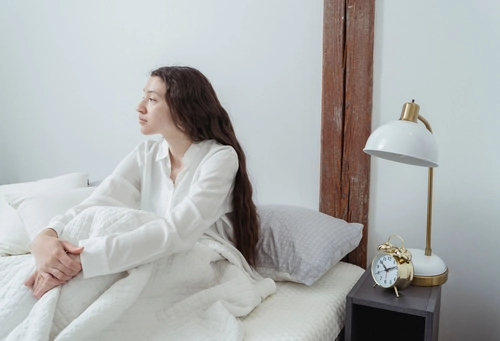
Why Do I Wake Up With Instant Anxiety Every Morning?
That first spike of dread often has nothing to do with today’s to-do list. For me, it follows a night of strange dreams—like the one where I’m back in high school, facing a teacher who seemed to blame me just for existing. I wake up with my stomach clenched, and for a few minutes I’m re-living all the current stresses through a funhouse mirror. My mind knows the dream wasn’t real, but my body doesn’t care.
One morning I realized my sleep position might be part of it. I was curled too tightly, jaw clamped, like I was bracing all night. A friend once told me, “I think my childhood trained me to wake up ready to dodge danger.” She wasn’t talking about trauma in a clinical way—just the memory of needing to be alert the second a door opened. That resonated. Our early wiring can turn the simple act of opening our eyes into a threat detection drill.
Plus, there’s the morning cortisol surge, a natural rise in stress hormones around waking. For some of us, that surge overshoots. So you’re not overreacting. You’re riding a wave of chemistry and memory that feels unbearable, but it does fade once you move.
How to Stop Waking Up With Anxiety Every Morning
The short answer: you don’t fight the wave. You lean into it, but with a few specific moves that teach your nervous system it’s safe. The first morning I tried this, I actually laughed at how simple it was—and how much it helped.
Begin before you even open your eyes.
The second you notice your heart pounding and that heavy knot in your chest, name it softly: “I’m waking up from anxiety again.” Just the naming cuts the shame. Then, with your eyes still closed, place one hand on your belly and the other on your chest. Breathe in slowly through your nose for a count of four, feeling your belly rise. Hold for two. Exhale through your mouth for five, like you’re gently blowing on hot soup. I do this three times, and each exhale feels like I’m lowering the volume on a loud alarm.

Pick one small sensory anchor.
Before my feet hit the floor, I choose one thing I can feel, hear, or see. Maybe it’s the texture of my blanket, the sound of the fridge humming, or the pale light through the curtains. I’ll say, “Right now, I feel cotton. Right now, I hear the hum.” This isn’t meditation jargon—it’s just pulling my brain from catastrophic loop to present moment. Getting out of bed then feels possible. I don’t leap up. I swing my feet to the floor, pause, and stretch once, like a cat. Any tiny motion tells my body, “We’re not frozen. We’re moving.”
Put the worries on a mental shelf.
When the overthinking starts screaming about emails, chores, social interactions, I use a phrase I borrowed from a friend: “That’s for nine a.m., not now.” I picture myself placing the worry on a mental shelf. I can come back to it later. For those first ten minutes, my only job is to be horizontal and breathing. One thing I’ve learned: checking my phone in that state pours gasoline on the flames. So I keep the phone facedown and don’t touch it until I’ve done the breathing and stretching. That alone changed my mornings.
A Simple Morning Reset Practice
When I mentioned this idea to a friend who also wakes up with racing thoughts, he started calling it the Reset. It’s not a treatment, just a sequence that gives your body a different script. I’ve timed it: about three minutes.
Minute one: Grounding.
Before you even lift your head, find three things you can sense. I’ll whisper into the pillow: “cool pillow,” “faint traffic,” “dog snoring.” This is the heart rate slowdown trick—my pulse often drops ten beats just from this shift.
Minute two: Shift position.
Roll to your side, slowly. Push yourself up to sit on the edge of the bed. Place both feet flat on the floor. Wiggle your toes. This simple change from horizontal to vertical signals to your brain that the sleep cycle is truly over and a new, active phase has begun. Sometimes I’ll say, “I’m in my morning body now, not my dream body.”
Minute three: Stretch and set an intention.
Stand up, reach your arms high, and take the deepest breath of the whole routine. As you exhale, say something you want to feel, not something you’re afraid of. I’ve used, “I can be gentle today,” or, “I’m allowed to start slow.” This isn’t about magically erasing anxiety. It’s about giving your morning a first move that isn’t panic.
The Reset works best when you do it before your mind latches onto the day’s story. I still have mornings where the anxiety clamps down. But the ritual gives me a path through, and that’s more than I had before.
When Your Bedroom Setup Works Against You
That morning I woke up from a stress dream about my old teacher, I noticed my neck was stiff and my pillow had twisted. I’d slept in a position that constricted my breathing. A few nights later, I experimented with a lower pillow and made sure my head wasn’t tilted too far forward. The difference was small but real. Discomfort during sleep can trigger the nervous system, and you might not even realize it until you wake up feeling chased.
Check: is your mattress supportive enough? Are your blankets too heavy or too light for your body temperature? Even dimming the lights an hour before bed can help set a calmer stage. I’m not saying a pillow swap will cure anxiety. But when your sleep environment stops adding to the stress load, you wake up with fewer pieces already stacked against you.

Why Dreams Feel So Real in the First Light
That dream about a teacher who seemed to hate me wasn’t random. It was my brain processing old social threats while I slept, and I woke up right during the emotional peak. Researchers call it the “dream rebound,” where suppressed worries surface toward morning. For me, those dreams amplify my current stresses into feeling overwhelming the moment I open my eyes.
The key is recognizing that the emotional hangover is temporary. I’ll remind myself, “That was a dream, and this feeling will fade in about ten minutes.” And it usually does. I also started keeping a small notebook on my nightstand. If a dream leaves a strong residue, I scribble one sentence about it. Getting it out of my head and onto paper seems to break the spell faster. This doesn’t fix everything, but it helps me separate the dream world from the solid world of my bedroom floor.
FAQ: Waking Up From Anxiety
Q: Why do I wake up with anxiety every morning even when nothing is wrong?
A: Morning anxiety often comes from the natural cortisol surge that happens around waking. For some people, that surge overshoots. Combined with dream residue or sleep position, it can feel like panic for no reason. The good news: it usually fades within 15-30 minutes once you’re up and moving.
Q: How do I stop my heart from racing when I wake up?
A: Try the 4-2-5 breathing before you even open your eyes. Inhale for 4, hold for 2, exhale for 5. Place one hand on your belly. The exhale activates the parasympathetic nervous system and slows your heart rate. Three rounds usually make a noticeable difference.
Q: Is waking up with anxiety a sign of something serious?
A: Not necessarily. Many people experience it, especially during stressful life periods. If it’s interfering with your daily functioning or you’re having panic attacks, it’s worth checking in with a healthcare provider. But occasional morning anxiety is common and manageable.
Q: Should I check my phone right when I wake up?
A: Try not to. The flood of notifications, emails, and news can spike your stress response before you’ve even grounded yourself. Keep your phone facedown and give yourself at least 10 minutes of breathing and stretching before you look at it.
Q: What if I can’t fall back asleep after waking up anxious?
A: Don’t force it. Get up, do the Reset practice, and start your day. Lying in bed wrestling with anxiety often makes it worse. Sometimes the best move is to accept that you’re awake and start moving gently.
One Last Thing
This morning I still woke up with that familiar flutter. My watch buzzed, I felt the squeeze. But instead of drowning in it, I remembered: I’m not alone in this, and I have three minutes. I placed my hand on my chest and breathed. The knot loosened, not gone, but softer. That’s waking up from anxiety—maybe not cured, but companioned. And for now, that is enough.
References
- Bourne, E. J. (2015). The Anxiety and Phobia Workbook. New Harbinger Publications.
- Harvard Health Publishing. (2020). Understanding the stress response. Harvard Medical School. Retrieved from https://www.health.harvard.edu
- National Institute of Mental Health. (2022). I’m so stressed out! Fact sheet. U.S. Department of Health and Human Services.
