I still remember the morning my son stood at the front door, backpack straps in both fists, and said, “I don’t want to go. I hate it there.” He was seven. His socks didn’t match. His voice was flat in a way that scared me more than yelling would have.
Why do kids hate school? I asked that question for months. I asked his teacher, my mother, a friend who teaches third grade, and finally my own son, who couldn’t fully answer it himself.
That last part matters. Most kids who hate school are not lazy. Most are not spoiled. Something in their day feels heavy, and they don’t have the words yet.
Quick Answer: Why do kids hate school?
Kids usually hate school because something feels heavy and they cannot name it. It might be separation, a social problem, a subject that got too hard, or just being tired. The word school means something different at every age.
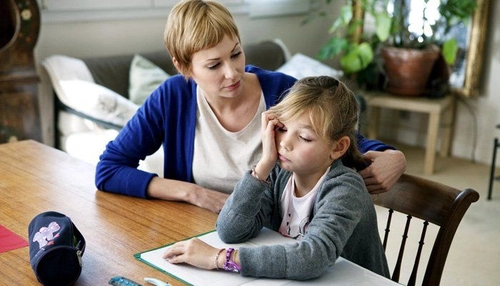
Is It Different for a 6-Year-Old and a 12-Year-Old?
Yes. I noticed a real split.
A six or seven-year-old usually hates the separation, not the school. The morning goodbye is the hard part. Once they’re inside, they’re often fine.
A ten or twelve-year-old hates something more specific. A teacher who snaps. A group that excludes them. The feeling of being watched and judged.
A teenager may hate the loss of control. Every hour is decided for them. That weight is real.
So when I ask why do kids hate school, the honest answer is this. The word school means something different at every age.
The Conversation That Changed Things
A friend who has four kids gave me one piece of advice that actually worked. She said, stop asking why they hate school. Ask them to walk you through one hour of their day.
So I did. Saturday morning, no rush, I asked my son to tell me about his day from the moment he walked in. Not the whole day. One hour.
He talked for twenty minutes. The lunchroom was too loud. A kid took his seat. He couldn’t find his water bottle. The teacher used a loud voice for the whole class and he thought it was aimed at him.
Not one of those things was the school’s fault or his fault. They were just pebbles. But four pebbles in one morning is a lot for a small person.
That conversation did more than a hundred how was school questions ever did.
What Is Your Child Really Saying?
Usually one of five things. I started listening for these.
I feel alone there.
Something is too hard and I’m embarrassed.
I don’t feel safe.
I’m tired, and everything feels like too much.
I miss you.
Number five surprised me. Even big kids, at the end of a long day, miss home. They just can’t say it that way, so it comes out as I hate school.
The Two-Block Walk
This is the thing that helped us most, and it’s almost embarrassingly simple.
Every morning, we walk two blocks together before he goes in. No phone. No questions about homework. We just walk.
The rule is this. He doesn’t have to talk, and I don’t have to fix anything. We just move our feet in the same direction.
The first week, we didn’t say much. By week two, he started telling me things while we walked. Something about a boy named Evan. Something about a spelling test he was worried about.
I think the walking did it. Side by side, not face to face, kids talk more. There’s no eye contact pressure. No tell me what’s wrong moment.
We call it the two-block walk. It’s not a cure. But it turned our mornings from a fight into a small, quiet thing we do together.
What If Your Child Still Refuses to Go?
Some mornings, they still refuse. That’s real.
On those days, I stopped arguing. I used one script.
I hear you. You don’t want to go. I still think you can go today, and I’ll be right here when you get back.
Short. Calm. No lecture.
Sometimes it worked. Sometimes I had to walk him in myself. And that’s okay. Not every morning is a win.
The point is not to force them to love school. The point is to make sure they know you’re on their side, even when you’re making them do the hard thing.
The Slow Turn
It took about two months. Not two days.
I kept notes for a while because I wanted to see if anything was working. Little things started to change. He mentioned a friend. He laughed about something at recess. One morning he put on his own backpack without being asked.
I asked him once, do you still hate school?
He thought about it. Not all of it. Just the mornings.
That felt honest. That felt like progress.
I don’t think kids need to love school. I think they need one person there who sees them, and one person at home who believes them.
The Mistake I Made First
I made it worse for a while, and I want to say that plainly.
Every morning I asked, why don’t you like school? I thought I was being caring. Looking back, I was asking a small child to explain a big feeling, over and over, before breakfast.
He couldn’t do it. So he just shut down.
Once I stopped asking and started walking beside him, things shifted. Not overnight. Slowly.
If you’re in the middle of this right now, and the mornings feel like a wall, you’re not doing it wrong. You’re just tired, and so is your kid. That’s a real place to start from.
A Closing Thought
That morning at the front door feels like a long time ago now. He still has hard mornings. But he also has mornings where he walks ahead of me and tells me about a kid named Evan and a spelling test he is not worried about anymore.
The walk is still two blocks. Same route. Same silence sometimes. But we are moving in the same direction. That turns out to be most of it.
References
- Siegel, D. J., & Bryson, T. P. The Whole-Brain Child. Bantam, 2011.
- American Academy of Pediatrics. “School Avoidance: Tips for Parents.” HealthyChildren.org.
- Ginsburg, K. R. Building Resilience in Children and Teens. American Academy of Pediatrics, 2011.

