Last December, I stood in the kitchen at 11 p.m., covered in flour, trying to assemble gingerbread houses that would collapse before breakfast. My six-year-old was upstairs, already dreaming about presents. I thought: Why am I doing this? Is any of it sinking in? I almost packed the whole sticky mess into the trash. Then I remembered something my own mother said years ago: “We don’t do holidays for the kids. We do them with the kids.” That tiny shift changed everything. The question stuck with me: why do people celebrate holidays for children, really? Not for perfect photos. Not for bragging rights. The answer turned out to be quieter, and better.
Quick Holiday Meaning Check-Up
If you’re feeling the holiday pressure, try these:
- Notice the moments your child talks about weeks later. Those are the real keepers.
- Let go of one elaborate activity. Replace it with twenty minutes of undivided attention.
- Ask your child what part of the celebration they’re most excited about. Listen without fixing.
- Capture one candid photo, then put the phone down.
- Remember: a ritual can be as simple as lighting a candle and saying “we’re here together.”
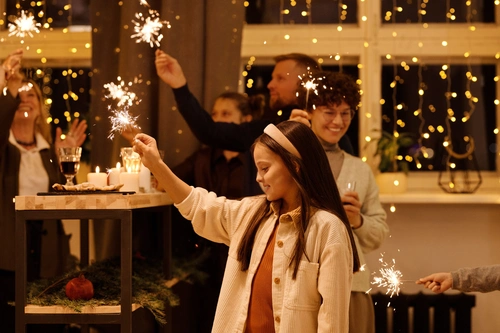
Why Do We Even Celebrate Holidays with Kids? It’s Not Just About the Presents
I used to think holiday celebrations were about building happy childhood memories. That’s true, but it’s only the surface. When I really watched my daughter during our small traditions—decorating the same ratty felt tree skirt, making chili on Halloween night—I saw something deeper. She felt anchored. The rituals gave her a quiet sense of belonging that no toy could. Some researchers call this “family identity.” I call it the invisible thread. Kids don’t remember the expensive gifts. They remember the cinnamon smell at grandma’s house, the silly dance we did after the menorah candles, the way her dad’s voice sounded reading the same story each year. Holidays are one of the few times we slow down enough to see each other without a to-do list. That’s a gift to both sides.
Another reason mattered just as much. Life for a child is full of firsts and unknowns. Most days feel like a blur of school, screens, and transitions. Holidays break that pattern. They’re like a special drawer in the year, pulled open at the same time, filled with the same beloved objects and sounds. My son once told me, “Halloween feels like the world finally gets me.” I laughed, but he was onto something. It wasn’t about the candy. It was about the predictability of the magic. Knowing that in October we’d hang the ghost lights gave him a map when everything else felt chaotic. That’s why people celebrate holidays for children: to give them a rhythm they can count on, year after year. It’s not a parenting strategy. It’s just love, repeated.
How to Celebrate Holidays with Children Without Losing the Meaning
So the “why” is clear. The harder part is the “how.” Because somewhere between the Pinterest boards and the gift pressure, the heart of the holiday can get buried. I learned this the messy way. Two years ago, I planned an elaborate Valentine’s Day treasure hunt for my kids. Clues, tiny gifts, homemade heart-shaped pancakes. By the end, I was exhausted and they were cranky. My daughter looked up at me and asked, “Can we just cuddle now?” I realized I’d celebrated for an audience in my head, not for the two actual humans in my living room.
The solution wasn’t doing less, exactly. It was paying attention to what stuck. Now, I ask my kids one question a few days before any holiday: “What’s one thing you hope we do?” Their answers surprise me. Last Thanksgiving, my seven-year-old said she wanted to make the same lumpy mashed potatoes because “that’s how you know it’s real.” She didn’t want fancy. She wanted proof that some things stay the same. So we made lumpy potatoes. We laughed about the lumps. That became the new tradition. The point is: the celebration belongs to them, too. When children feel ownership over a holiday, it becomes a living thing. Not just something adults make happen.
I’ve also learned to define what matters with a simple rule: pick three feelings, not ten activities. For Christmas, we decided on cozy, together, and silly. That guided every choice. A pajama dance party instead of perfect outfits. Hot chocolate in the dark watching the tree lights. No crafts that made anyone cry. This approach doesn’t require money or huge effort. It just requires clear intention. Some parents I know use this for any holiday, from Diwali to the Fourth of July. You stop the conveyor belt of to-dos and start noticing who’s actually in the room.
A Simple Ritual for Holding onto Holiday Memories
I stumbled onto a simple ritual that became the backbone of how we celebrate holidays now. Sometime during a holiday gathering, we pause. Maybe it’s after the meal, or before opening gifts. One person (usually a kid) chooses a moment from that day to “anchor.” We talk about what it felt like, what we heard, what we tasted. Then the child puts a small object representing that memory into a special box—a ribbon, a Polaroid, a dried leaf. We collect these over the years. My daughter’s box holds a birthday candle from her fourth birthday, a pebble from a Diwali walk, a little note that says “mom laughed so hard apple juice came out.” It’s nothing fancy. But opening that box each year reminds us that holidays aren’t events we survive; they’re stories we continue to write.
What makes this ritual work is its flexibility. It can take two minutes. It works for large families or just one child. You don’t need any supplies beyond a sturdy box and a willingness to listen. I’ve seen my friends adapt it for Hannukah, for Eid, for simple New Year’s Eve at home. The ritual flips the focus from what’s missing to what’s actually there. And children love being the keeper of the box. It gives them a role beyond receiver. They become the family memory-keeper. That identity sticks long after the holiday ends.
Age-by-Age: How Kids Experience Holiday Traditions
It helps to match your expectations with your child’s developmental stage. The anchor memory ritual works across ages, but the emotions shift.
Toddlers (2-3 years) thrive on sensory anchors: the sound of a certain song, the feel of a specific decoration, the taste of a holiday bread. They won’t understand the story behind the tradition, but their bodies remember. So let them touch everything safe. At this age, one small, repeatable action—like knocking on the door before a seder begins—can become the anchor.
Preschoolers (4-5 years) start weaving narratives. They’ll connect this holiday to last year’s. Encourage that. Ask, “What do you remember from last time?” When my son was four, he remembered only the grape juice spill at Rosh Hashanah. That became the anchor—the spill story. We re-tell it every year. It’s not the holiday I planned, but it’s undeniably ours.
Grade-schoolers (6-9 years) begin to ask “why” questions. Why do we give gifts? Why is this night different? This is when the deeper meaning of holidays for children really blossoms. You don’t need perfect answers. You can wonder together. Saying “I’m not sure, but I love that we do it” is a solid response. At this age, kids can contribute to the anchor memory box by writing a short note or drawing the feeling. My daughter once drew “the sound of Grandma’s voice” as a curly purple line. She still knows what it means.
What to Say When a Child Asks “Why Do We Celebrate This?”
The question often comes when you’re elbow-deep in wrapping paper or chopping onions. My instinct used to be to give a history lesson. But I’ve learned that a simple, honest script works better. The child isn’t asking for the encyclopedia entry. They’re asking for connection.
Try this: “Some families have celebrated this for a very long time, and we’re part of that story. Other families create new traditions. We do it because it reminds us who we are together.” Then pause. Ask what they think. My son once replied, “So it’s like our family’s secret handshake?” Exactly. Or you can say, “It’s a day we set aside to notice each other more. Isn’t that nice?” What matters is your tone—warm, not rehearsed. If the holiday has religious roots, you can say, “Some people believe…” or “Our family believes…” and leave room for later questions. There’s no exam. The celebration itself is the answer.
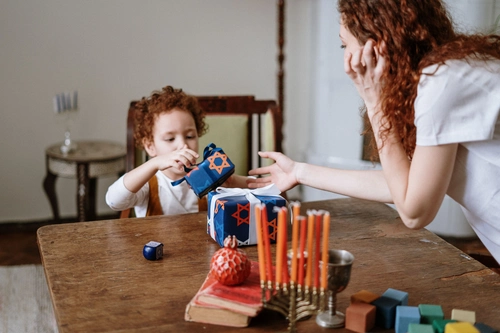
When Holidays Feel Hard: For Parents Who Don’t Have Big Gatherings
Not every family has a house full of relatives. I didn’t grow up with large holiday parties. My single mom worked long hours, and our celebrations were tiny. A frozen pizza on Christmas Eve. A single candle on my birthday. I used to feel embarrassed. Now I understand those quiet holidays shaped me just as much. Children feel loved in small moments just as deeply. If you don’t have a crowd, you can still celebrate. The anchor memory doesn’t need an audience. Light a candle, play a special song, and say, “This is our holiday.” My best childhood memory is my mom pulling me onto her lap at midnight on New Year’s Eve, whispering, “We made it through another year, kid.” That was it. No party. No noise. But I still carry that feeling.
So if you’re wondering why people celebrate holidays for children when you can’t offer the big show, the answer is: you’re already offering what matters. Presence. Predictability. Permission to feel joy, even in small spaces. You’re giving them anchors they will carry into adulthood. That’s no small thing.
FAQ: Why Do People Celebrate Holidays for Children?
Q: Why do we celebrate holidays for children when they won’t remember them?
A: Children remember feelings long before they remember events. The warmth, the safety, the rhythm of a recurring celebration—these settle into their nervous system even if the details fade. You’re building a foundation, not a photo album.
Q: What’s the most important part of a holiday celebration for a child?
A: Predictability and presence. The same food, the same song, the same silly tradition year after year. And you being there without distraction. That’s what they’ll carry forward.
Q: How do I celebrate holidays for children when I’m exhausted?
A: Shrink it. One candle. One song. One story. Your child doesn’t need the full production. They need you, present and calm, even for ten minutes.
Q: My child asked why we celebrate a holiday I don’t fully believe in anymore. What do I say?
A: Honesty with warmth. “Our family has celebrated this for a long time, and even though I’m not sure about all of it, I love what it means to us—time together, gratitude, remembering where we came from.” That’s enough.
Q: Can holidays ever be too much for a sensitive child?
A: Yes. Bright lights, loud music, family pressure—it can overwhelm some kids. Watch your child’s cues and give them permission to step away. A quiet corner with a book is still part of the celebration.
One Last Thing
That night, standing in flour-dusted defeat, I finally sat on the kitchen floor. My daughter padded in, half-asleep, and curled onto my lap. She didn’t see a failed gingerbread house. She saw her mom, awake, under the dim light, waiting for her. She whispered, “You did the houses again.” Not “perfect.” Not “fancy.” Just “again.” That was the anchor she needed. Everything else was just icing.
References
- Siegel, D. J., & Bryson, T. P. (2012). The Whole-Brain Child: 12 Revolutionary Strategies to Nurture Your Child’s Developing Mind. Bantam.
- American Academy of Pediatrics. (n.d.). Creating Family Traditions and Holiday Celebrations. HealthyChildren.org.
- Lieber, R. (2015). The Opposite of Spoiled: Raising Kids Who Are Grounded, Generous, and Smart About Money. HarperCollins.
