I was standing in my kitchen at 11 PM, scrolling through a comment section, waiting for one stranger to tell me I was right.
My daughter was asleep upstairs. My husband had gone to bed an hour earlier. And there I was, refreshing a thread about a parenting decision I had made three days ago, hunting for a thumbs up from someone I will never meet.
That was the night I started asking myself a harder question. Why do people seek approval from others? And why does it feel so ridiculous when my own reassurance counts for nothing?
Quick Reality Check for Today
- Notice the moment you reach for your phone to check a reaction.
- Ask whose voice you are actually listening for.
- Write down one decision you made today that felt right to you.
- Say the sentence out loud: “I do not need this person’s permission.”
- Name one person whose opinion actually matters to you.
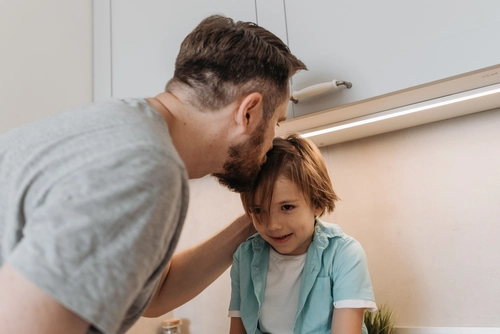
Why Do People Seek Approval From Others in the First Place?
Here is the honest answer. We are wired for it.
For most of human history, being cast out of the group meant real danger. Food, shelter, safety, all of it came through other people. So our brains learned to scan for signs that we belong. A nod. A smile. A “good job.”
That system worked fine in a small tribe. It works badly in a world of group chats and strangers on the internet.
I used to think something was broken in me. Then I realized that even people who seem completely unbothered are running the same program underneath. They just hide it better.
The trouble starts when the approval we need from a few close people turns into approval we need from everyone. Including people we do not even like.
How Do You Stop Seeking Approval From Literally Everybody, Including People You Hate?
This is the question that kept me up at night. It is also the one that finally gave me somewhere to start.
I asked myself why I wanted a specific coworker to think well of me. A person I genuinely did not respect. A person whose opinion, if I am honest, I would not want my daughter to inherit.
The answer surprised me. It was not about her at all. She was just standing in for an older voice in my head. One that told me I was not quite enough.
I call this the placeholder problem. The person in front of you is not the real audience. They are filling a role that someone else left open years ago.
So what actually helps?
1. Name the placeholder.
Ask, “Whose approval am I really chasing here?” Sometimes the answer is not the person in the room.
2. Build a short approval list.
Write down three to five people whose opinion you actually trust. If someone is not on the list, their reaction does not get a vote.
3. Give yourself the sentence.
I have learned that someone has to approve you. It might as well be you. It is the most reliable path.
I find that the need for approval fades when I get busy with something I am good at. Confidence built through real skill is harder to shake.
A Question That Helps: Would Ninety-Year-Old Me Be Proud of This?
This is the tool I use now. I borrowed the idea from a stranger online and it stuck.
Ask one question: Would ninety-year-old me be proud of this?
Not my neighbor. Not the school gate crowd. Not the person who left a rude comment. Ninety-year-old me, sitting on a porch, looking back.
It sounds silly. It works anyway.
Here is why. The approval of other people is always shifting. Yesterday’s praise becomes tomorrow’s criticism. But my older self is a fixed point. She has already seen how the story ends.
When I use this question, the noise drops. I stop drafting replies in my head. I stop explaining myself to people who were never going to agree.
I keep a written page of my own words. I read it when I need to recharge my faith in myself. I wrote it for no one else.
What About the People You Actually Dislike?
This part is strange. It is also very common.
Why do we want a nod from someone we do not respect? One reason is that their disapproval feels unfinished. We want to close the loop.
I once realized that the person I was trying to impress was just a stand-in. The real goal was proving something to myself, tied to a memory of someone I admired. Once I saw that, the other person stopped mattering.
That idea changed how I handle it. When I catch myself wanting a difficult person’s approval, I ask what I am really trying to prove. Then I go prove it directly. To myself.
Some people will never approve of me. No amount of effort changes that. Chasing it is like paying rent on a house I will never own.
A Few Small Shifts That Helped Me
| Old habit | New habit |
|---|---|
| Re-reading a message for tone | Sending it and moving on |
| Explaining my choices twice | Explaining once, then stopping |
| Wanting everyone to agree | Wanting the right people to understand |
| Checking for reactions | Checking in with myself |
None of this happens overnight. I still catch myself doing it. The difference is that now I notice faster. Noticing is most of the work.
Some people will never approve of me. No amount of effort changes that. Chasing it is like paying rent on a house I will never own.
It took me years to see that the problem was not their refusal. It was my refusal to read the pattern they had already shown me. That is what Owen Pierce explores in his book Awakening to Human Nature. It is less about guessing what people think and more about noticing what they repeatedly show you.
·Understand why people seek validation more than truth.
·See why loyalty, generosity, and cooperation shift when circumstances change.
·Learn to judge relationships by what stays consistent over time.
Awakening to Human Nature
Owen PierceYou saw the signs. You just didn’t know what they meant yet.
Learn how to notice the patterns behind people’s words, choices, loyalty, pressure, and changing behavior.$49.00$19.90

FAQ
Q: Why do people seek approval from others?
A: It is a wired-in survival instinct. For most of human history, belonging to a group meant safety. Our brains still scan for signs that we fit in, even when the stakes are much lower.
Q: How do I stop needing approval from everyone?
A: Start by noticing whose approval you are actually chasing. Name the placeholder. Build a short list of people whose opinions truly matter. And practice giving yourself the approval you are looking for.
Q: Why do I want approval from people I do not even like?
A: Their disapproval often feels unfinished. You want to close the loop. But the real audience is usually a stand-in for someone from your past. Once you see that, the other person loses their power.
Q: Can seeking approval ever be healthy?
A: Yes. Wanting the respect of people you trust is normal and useful. The problem is when it expands to everyone, including people you would not want to be like.
Q: What if I try all of this and still feel the pull?
A: That happens. The habit is old. Keep practicing. Every time you notice the pull and choose your own approval instead, you get a little stronger. If it feels overwhelming, talking to a counselor can help.
One Last Thing
That night in the kitchen, I finally closed the tab. Nobody had replied. Nobody ever did.
My own reassurance felt like nothing back then. It does not feel like nothing anymore. It feels like the only voice in the room that was ever actually mine.
References
- Brown, B. (2010). The Gifts of Imperfection. Hazelden Publishing.
- American Academy of Pediatrics. (n.d.). Social and emotional development. Retrieved from HealthyChildren.org.
- Clear, J. (2018). Atomic Habits. Avery.
Did this article help you see things differently? Our books turn helpful ideas into practical tools you can return to anytime.



Break the Anxiety Circle
$19.90

From Debt to Wealth
$19.90


