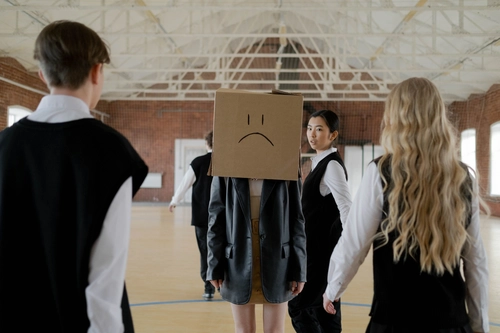
Why does everybody hate me? I whispered that into the darkness last year, after a conversation I wasn’t ready for. I had asked an old friend why she and our whole class used to hate me in high school. Her answer: “We just did. We never knew why.” Twenty people, she said, all agreed on one feeling, and not a single one could point to anything I actually did.
I sat there, scrolling through memories of a hundred micro-rejections, and the question looped louder. It wasn’t the first time I’d felt hated without a reason. It was just the first time someone confirmed I wasn’t imagining it.
Quick Self-Check Today
If you’re feeling universally disliked right now, start here:
- Pause and notice what story you’re repeating about yourself right now.
- Identify one recent moment when you assumed someone disliked you.
- Ask yourself: Did they say something, or did my mind fill in the blank?
- Remind your body you’re safe here, in this present moment.
- Read the rest of this not as advice, but as a friend sitting next to you.

Why Does Everybody Hate Me When I’ve Done Nothing Wrong?
I used to think there was a hidden rulebook I never received. Something about the way I walked, talked, or laughed made people recoil before they knew my name. It felt like I was born wearing a sign that said “dislike me.”
But the truth is rarely that clean. If twenty people hate you and can’t name a reason, the reason belongs to the group, not to you. Often, unexplained rejection is about social mirroring. One person feels a vague discomfort, another picks it up, and soon it’s a shared mood without origin. People bond over common dislikes faster than common interests.
In my case, someone had decided early on that I was “the guy who gets bullied,” and that label became a shortcut for everyone else. Nobody examined it. Hating me became a kind of belonging, and belonging feels good. The hate wasn’t personal. It was glue.
Does that make it hurt less? Not in the middle of it. But understanding the mechanism helped me stop searching my own face and personality for fatal flaws. Sometimes the answer to “why does everybody hate me” is that a social wave started and you happened to be standing there.
How to Stop Feeling Hated When You Can’t Change Their Minds
For years I tried to win people over by being less visible. I shortened my sentences, laughed quieter, apologized for existing. None of that worked because I was still treating their hatred as a problem I was supposed to solve. The shift happened when I stopped asking “What’s wrong with me?” and started asking “Whose voice is that in my head?”
One night I grabbed a notebook and wrote down every specific thing I believed people hated about me. “Too boring.” “Too awkward.” “Too much.” Then I asked myself: Who first said that? Was it something a classmate once muttered, a parent’s sigh, or my own anxious guess? Almost none of it came from me. I was carrying a script others had written and calling it my personality.
The next step was practice, not perfection. I started small. At the grocery store, I’d make eye contact and say hello without bracing for rejection. During group chats, I’d share one genuine thought and let it sit there, regardless of how it landed. Some people didn’t respond warmly. Others surprised me. I began to collect tiny pieces of evidence that I could be seen and not hated. Over time, that evidence became a counter-narrative to the one I’d lived with for so long.
One friend later told me, “I never hated you. I just didn’t know you yet because you never let people in.” That sentence shook me. I had become so convinced people would hate me that I withheld the very parts of myself that might invite connection.
A Simple Mirror Practice to Rebuild Self-Trust
I didn’t just wake up and love myself. I needed a daily practice to untangle other people’s reactions from my own worth. I still use it on hard days.
Every morning, before I look at my phone, I stand in front of the mirror and ask myself three questions out loud:
- “What is one feeling right now that is mine, not borrowed from someone else?”
- “What is one thing I did yesterday that aligned with the kind of person I want to be?”
- “If nobody had ever told me I was unlikeable, what might I dare to believe about myself today?”
The first question separates your actual mood from the fog of projected dislike. The second builds a small library of self-respect. The third cracks open a future that isn’t dictated by the past.
When I started, my answers were tiny: “I’m sleepy. I returned the library book. I might believe I could be a decent listener.” That was enough. Nobody needs to perform massive self-love. You just need a thread to follow out of the dark.
Sometimes, I imagine the younger version of me, the one who changed schools to escape bullying, and I say the words I wish someone had said then: “Their hatred is not your biography. You get to write a different story now.”
When the Hate Comes from People Close to You
It’s one thing when classmates scatter. It’s another when the feeling of being hated comes from family, coworkers, or a long-term partner. In those cases, the wound cuts deeper because you’re not just asking “Why does everybody hate me?” You’re asking “Why am I unworthy of love from the people who know me best?”
Here’s what I’ve learned, slowly and painfully: some people see your growth as a threat. If you’ve been the quiet one, the depressed one, the boring one in their eyes, your attempt to become more alive disrupts their idea of you. They might not even hate you; they hate the discomfort of revising a mental file they’d already closed.
When that happens, you don’t need to argue. You need to protect the new, tender self that’s emerging long enough for it to take root. Distance can be an act of self-compassion, not abandonment.
Finding a Witness, Not Just a Friend
A handful of people genuinely cared about me, but I couldn’t feel it because I expected the old pattern to repeat. I needed a “witness”—someone who could see me from the outside and reflect back something neutral, not a cheerleader. I asked a neutral acquaintance, “What’s one thing you actually notice about me?” She said, “You interrupt yourself a lot, like you don’t think you deserve to finish a sentence.” That observation didn’t judge me. It just gave me data. From there, I practiced finishing sentences.
If you’re stuck in the loop of feeling hated, consider finding one person who doesn’t have a history with you. Someone on a forum, in a hobby group, a therapist in training. Ask them a simple, non-loaded question: “What kind of energy do I bring into a room?” You might be surprised to hear that it’s softer than you think, or that it’s not the hatred you fear but a quiet sadness. That information can be the first honest mirror you’ve ever had.
FAQ: Why Does Everybody Hate Me?
Q: Why do I feel like everyone hates me even when no one has said anything?
A: The feeling often comes from an internalized story, not from current reality. Your brain might be scanning for rejection because it learned to expect it. Social mirroring can also amplify one person’s vibe into a group mood. Neither means you’re actually unlikeable.
Q: What if people actually do seem to dislike me for no reason?
A: That can happen. Sometimes groups bond over shared rejection of someone. It’s painful, but it tells you more about them than about you. The key is to stop treating their behavior as a problem you need to solve. You don’t need to earn basic decency from people who decided to exclude you.
Q: How do I stop assuming people hate me?
A: Start collecting evidence that doesn’t match your assumption. Small interactions, neutral responses, moments where someone was kind. Write them down. Your brain needs data to update its story.
Q: Is it possible the people who “hate” me are actually just intimidated or indifferent?
A: Yes. Sometimes what feels like hatred is actually distance, awkwardness, or discomfort. People often mirror the energy you give. If you brace for rejection, you might come across as closed or nervous. It’s not hatred—it’s a misunderstanding.
Q: How do I stop carrying the hate from the past into new relationships?
A: The first step is awareness. Notice when you’re bracing for rejection in a new setting. Remind yourself: “This is a new person, a new situation, a new chance.” Then take one small risk to show up as yourself. Not everyone will like you, but the ones who do will like you for real.
One Last Thing
Last night I lay down and remembered that old friend’s words again: “We just did. We never knew why.” For a moment the sting returned. Then I thought about all the mornings I stood in front of that mirror, and I realized something new. The hate was never about me. It was a room full of people who didn’t know themselves enough to examine their own feelings. And I was so busy asking why they hated me that I never let myself ask the better question: What might happen if I decided I wasn’t hatable after all?
References
- Brown, B. (2012). Daring Greatly: How the Courage to Be Vulnerable Transforms the Way We Live, Love, Parent, and Lead. Avery.
- Neff, K. (2011). Self-Compassion: The Proven Power of Being Kind to Yourself. William Morrow.
- Williams, K. D. (2009). Ostracism: Effects of being excluded and ignored. In Advances in Experimental Social Psychology (Vol. 41, pp. 275-314). Elsevier.
