It was 7:15 a.m. The cereal bowl flew across the kitchen. My four-year-old stood frozen, face crumpled, no tears. Just this bursting, crackling silence. I remember thinking, What is wrong with her? The logical part of me knew she was tired. But in that moment, her behavior felt like a personal attack. Then she whispered, “My tummy feels fuzzy.” That word, fuzzy, was her only bridge. That morning I finally got it. Behavior is not misbehavior. It’s the earliest language of emotional expression, and I had been reading it all wrong.
Quick Emotional Expression in Behavior Today
If you’re trying to decode your child’s behavior, start here:
- Pause before reacting to a meltdown.
- Name the feeling you think is hiding inside the behavior.
- Offer a physical outlet before demanding a verbal explanation.
- Remember: a face you read as “angry” might really be “scared.”
- Get low, open your hands, and say: “I see you’re really upset. I’ll stay close.”
Why Does My Child Wear All His Feelings on the Outside?
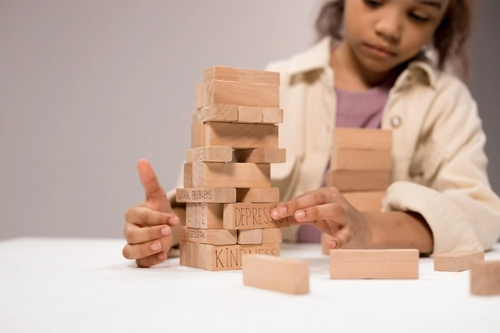
I used to ask myself this a dozen times a day. The answer, I eventually learned, was simple but hard to accept. Young children don’t have the brain wiring to feel something, label it, and calmly tell you about it. Their internal world goes straight to the body. That slammed door? That’s sadness the way a three-year-old knows how to do sadness. The biting? That’s fear with nowhere else to land.
There’s a moment burned in my memory. My son, age five, had a birthday party meltdown. He threw his new truck against the wall. Every adult in the room saw anger. What I eventually understood, hours later, was that two kids had whispered about his lisp during the game. He wasn’t angry. He was humiliated, and he had no word for humiliation. The behavior was the expression. Until he could access the vocabulary, his body had to speak for him. When you reframe it this way, the chaos becomes a message. Not a battle.
How Can I Teach Emotional Expression in Behavior Without Squashing It?
The mistake I made for years was trying to stop the behavior first. “No hitting! Use your words!” I’d say, while my child’s brain was literally offline. A better approach, I later found, starts with safety. I learned to get low, open my hands, and say, “I see you’re really upset. You can show me. I’ll stay close.” Then I’d wait. The key here is to treat the behavior as the first half of a sentence you’re helping them finish.
With my daughter, who used to scratch when frustrated, I created a physical script. “When you scratch, I see big angry energy. Let’s hit this pillow together. Then we can talk.” Naming the behavior as emotional expression in behavior, out loud, gave her a bridge. “Oh, that’s my angry energy,” she eventually said to me one afternoon, mid-jump. She was three. I nearly cried. Instead of demanding words from a child who had none, I was co-regulating and then co-translating. It’s a subtle shift, but it changes everything. You’re not just managing a tantrum. You’re building emotional literacy, one messy outburst at a time.
The “Feelings First” Script: A 3-Step Ritual for Translating Behavior into Connection
I needed something simple, something I could remember at 5 p.m. when I was running on fumes. So I made up a three-step script I now call the “Feelings First” ritual. It takes less than two minutes and works because it flips the usual parent instinct. Instead of correcting, you get curious.
Step one: Name the energy, not the child. “I see some fierce energy here.”
Step two: Offer a guess with a soft voice. “I wonder if there’s a hurt hiding under all this loud.”
Step three: Wait. Just wait. Count to ten in your head. Most of the time, the child will fill the silence with something real—a whisper, a sob, or a single word.
I remember using this with my nephew, who was seven and kicking the back of my car seat. I said, “I see some big mad legs back there. I wonder if you’re actually sad about leaving Grandma’s.” He stopped kicking. Ten seconds later, a teary voice said, “I never get to stay long enough.” That was it. No lecture, no consequences. Just a door opening because I treated his legs as a form of emotional expression in behavior.
What Common Misreadings Blindside Even Attentive Parents
We think we know an angry face when we see one. But what if we don’t? A 2009 study by Rachael Jack and colleagues asked Western Caucasian and East Asian participants to categorize facial expressions from photos. The Westerners looked mainly at the mouth to distinguish fear, surprise, anger, and disgust. The East Asian participants focused on the eyes. As a result, they made frequent “errors” in labeling expressions, especially for negative emotions. The authors concluded that facial expressions might not be universally recognized in the way previously thought, though that debate continues. The older Ekman-based idea that six core emotions have universal facial signatures may have overlooked cultural attention patterns.
Why does this matter for a parent watching a sullen seven-year-old? Because the face you read as “disgust” might actually be “fear” depending on where your eyes land. If your child is from a culture or even a family that communicates more through eye tension than mouth shape, you could be misreading them daily. A child who scrunches her eyes might look defiant to you but could be holding back tears. This isn’t about making excuses. It’s about recognizing that emotional expression in behavior, including facial behavior, is filtered through your own lens. When my son looks away and tightens his jaw, I used to see disrespect. Now I think, He’s holding something in. He needs a different kind of invitation. The fix is simple: say what you think you see and ask. “Your face looks tight. Could be angry, could be worried. Which is it?” You’d be surprised how often my children correct me, and how quickly the tension deflates once I get it right.
Age-by-Age Guide to Spotting Emotional Expression in Behavior
Under 3: Behaviors are often body-based and immediate. Hitting, throwing, arching backward aren’t “bad.” They’re distress in motion. The question to ask is, “What just happened inside their body?” Offer a physical container, like a tight hug or a soft space to crash.
Ages 3 to 5: You’ll see more dramatic facial expressions and whole-body performances. They start to use words, but under stress, behavior comes first. When my four-year-old would hide under the table and refuse to look at me, I learned to say, “Are you hiding because you’re sad or because you’re scared?” That simple either-or gave her a way out without having to generate the word herself.
Ages 6 to 8: Shame-based behaviors surface. They may use sarcasm, withdrawal, or exaggerated laughter to cover hurt. The body language becomes subtler. Tight shoulders, a small step backward, a too-quick smile. Look for the micro-letdowns. I watch for what their hands are doing. Hands in pockets while talking often means “I’m not sure what I’m saying is safe here.”
FAQ: Emotional Expression in Behavior
Q: What is emotional expression in behavior?
A: Emotional expression in behavior is how children (and adults) communicate feelings through actions, body language, and facial expressions when words aren’t available or feel unsafe. For young children, behavior is often their primary language—hitting, throwing, hiding, or freezing are all ways of saying something they can’t yet put into words.
Q: How can I tell if my child’s behavior is emotional expression or just “acting out”?
A: Look underneath the behavior. Acting out is often a child’s way of getting attention or testing boundaries. Emotional expression is a child’s way of communicating a feeling they can’t name. The difference is in the aftermath: after an emotional expression, children often feel relief or shame. After acting out, they may feel satisfied or defiant. Ask yourself: “What is my child trying to say right now?”
Q: What should I do when my child has a meltdown in public?
A: First, protect your child’s safety and dignity. Lower your voice, kneel to their level, and say something like, “I see you’re having a big feeling. I’m right here.” Don’t try to reason or discipline in the moment. Once they’re calm, you can translate: “You were so upset because the store was loud.” Public meltdowns are hard, but your calm presence is what your child needs most.
Q: Why does my child express big feelings physically rather than talking?
A: Young children’s brains are still developing the prefrontal cortex—the part responsible for impulse control and verbal expression. When emotions run high, the body takes over. Physical expression like hitting, throwing, or running is often a release valve. Over time, with modeling and practice, they learn to use words. The behavior isn’t a sign of failure; it’s a sign of development.
Q: How can I teach my child to express emotions verbally?
A: Start by naming emotions for them. “I see you’re frustrated. That block tower keeps falling.” When they’re calm, practice simple “I feel” statements. Model it yourself: “I feel tired today, so I’m going to rest.” Use books and games that talk about feelings. And most importantly, accept all their feelings, even the messy ones. When they know it’s safe to feel, they’ll start finding words.
One Last Thing
My daughter, now seven, still throws the occasional cereal bowl, though far less often. Last week, she sat on the kitchen floor, surrounded by Cheerios, and looked up at me with wet eyes. “I’m not naughty,” she said. “I just had a big feeling.” She had my script down better than I did. I slid onto the floor beside her and said, “I know. Me too.” That’s all. We sat there in the mess. Not fixing it. Just being two people who finally understood that emotional expression in behavior isn’t a problem to solve. It’s a message, waiting for someone to listen right.
References
- Jack, R. E., Blais, C., Scheepers, C., Schyns, P. G., & Caldara, R. (2009). Cultural confusions show that facial expressions are not universal. Current Biology, 19(18), 1543-1548.
- Ekman, P. (2003). Emotions Revealed: Recognizing Faces and Feelings to Improve Communication and Emotional Life. Times Books.
- American Academy of Pediatrics. (2018). Supporting emotional development in early childhood. HealthyChildren.org. Retrieved from https://www.healthychildren.org
