I still remember the morning I walked into the office kitchen and found my boss, Elena, quietly rearranging the coffee mugs. She’d just been passed over for a senior VP role. Her hands moved with deliberate precision, placing each handle at exactly the same angle. It wasn’t neatness. It was hunger. The same look I’d caught in my own reflection after losing a student council election years ago. That tightness around the eyes. The silent counting. I stood there and thought: why people are attracted to power and dominance, and why does the loss of it cut so deep?
Quick Insights Today
If you’ve ever wondered about your own pull toward power, consider these:
- A desire for power often masks a deeper need for safety and predictability.
- It’s not just about ego — control can feel like the only way to protect what you love.
- Both men and women feel this pull, though society frames it differently.
- Evolutionary wiring explains part of it, but culture shapes how we chase power.
- Recognizing the drive is the first step toward channeling it without hurting others.
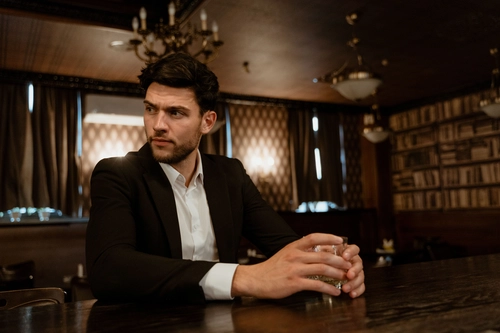
Why Do People Crave Power and Control?
I used to think only certain personalities wanted power. You know, the loud ones. The ones who interrupt in meetings. Then I saw my quietest friend volunteer to organize the entire neighborhood watch schedule. Twice a month. He micromanaged the patrol routes like he was planning a military campaign. Why? He told me later: “When everything outside feels chaotic, I can at least control this grid.”
That’s the piece most conversations miss. The pull toward power isn’t always about dominance. It’s about autonomy. The freedom to shape your own corner of the world. Researchers like Dacher Keltner in The Power Paradox note that we’re wired to seek influence because, historically, those with some sway got better access to resources. They could keep their families safer. That ancient math still hums in the background of every decision we make.
But not everyone experiences it the same way. Some people are more concerned with their personal passions than leadership. That’s a fair point. Not everyone is obsessed. But when the desire surfaces, it often ties back to something simpler. Respect. Being heard. Not feeling invisible.
How to Spot and Understand Your Own Attraction to Power
A few years ago, I caught myself spiraling after a friend was chosen to lead a project I’d been eyeing. I wasn’t angry at her. I was just… disappointed. And weirdly territorial about a spreadsheet I’d created. That’s when I had to get honest. What was I really after? The title? Or the sense that my ideas mattered?
Here’s a small exercise I started using. When you feel that pang of wanting more authority, pause and ask three questions:
- What would having this power actually let me do?
- Whose approval am I chasing?
- If I never got it, what would I lose?
I learned that I didn’t need power. I needed my contributions to be visible. Once I named that, the hunger softened. Not gone—just quieter and more useful.
Some people transform this drive into leadership that builds others up. Others let it morph into control that tears teams apart. The difference usually comes down to self-awareness and the stories we tell ourselves about what power means. A reflection I once came across said it well: “Power isn’t some pathetic fantasy. It’s about getting things done. Someone’s gotta step up.” And that’s fair—if that stepping up leaves room for others’ voices.
The S.E.E.D. Framework: A Tool to Channel the Power Drive
Over time, I started using a simple mental checklist when the pull toward dominance or control flared up. I call it the S.E.E.D. framework. It works for spotting the root of the attraction and steering it constructively.
- Safety: Is this about feeling secure? If yes, what actual threat am I trying to manage?
- Expression: Do I need to be heard? Can I write down my thoughts first instead of pushing them on others?
- Envy: Who do I compare myself to? What do they have that I believe I lack?
- Direction: If I had the power I crave, what would I actually change?

I used this after my friend got that project lead role. The envy was real—she’d been chosen partly because she’d networked more. I hadn’t invested in those relationships. The S.E.E.D. questions helped me see that my frustration was about a missed opportunity to practice connection, not about her.
It’s not a magic cure. But naming the layers takes the sting out of the impulse. It turns a raw, blind drive into something you can look at and even laugh about.
When the Attraction Becomes a Trap
The trouble starts when the need for power stops being about safety and starts being about identity. I’ve seen managers who couldn’t delegate because letting go felt like losing their self-worth. I’ve also been that person at a family gathering, insisting on cutting the cake my way. Everyone tense. Nobody hungry anymore.
Evolutionary psychologists argue that dominance once signaled reproductive fitness. There’s truth in that, but we’re not in the savannah anymore. Today, power games often come down to cultural scripts. Men especially get taught that value equals authority. Many of them hear, “You’re only as good as what you control.” No wonder some chase it at the expense of their health.
But here’s what I’ve observed: the people who use power healthily treat it like a tool, not a trophy. They hold it loosely. They ask, “What does this team need right now?” rather than “How do I stay on top?”
Why Evolutionary Stories Can’t Explain Everything
A few years ago, I read a book by David Buss on evolutionary psychology. It made a strong case that status-seeking behavior is hardwired into us, especially in men. But here’s the catch: evolution doesn’t happen in a vacuum. My grandmother, born in the 1940s, had almost no socially acceptable path to power outside the home. Her drive for influence came out in baking competitions and church committees. Meanwhile, my niece at sixteen is already running a student-led nonprofit. The same underlying drive—shaped completely differently by opportunity.
Social structures amplify or silence these desires. Talk to someone who’s been systematically denied influence, and their attraction to power might look more like a hunger for justice than for control. That’s worth sitting with. Our personal craving is never just biology. It’s always a conversation between our wiring and the world’s open doors.
FAQ: Why People Are Attracted to Power and Dominance
Q: Is the attraction to power and dominance universal?
A: The drive exists across cultures, but how it shows up varies widely. Some societies encourage status-seeking; others emphasize humility. The desire itself is common, but the expression is shaped by culture, opportunity, and personal history.
Q: Is the desire for power stronger in men than women?
A: Research suggests men and women pursue power differently, but both feel the drive. Men may be more likely to seek dominance hierarchies; women may pursue influence through connection and expertise. The gap often reflects social conditioning more than biology.
Q: Is it wrong to want power?
A: Not inherently. Wanting influence is human. The problem isn’t the desire—it’s what you do with it. Power used to build others up is leadership. Power used to control or diminish others is something else entirely.
Q: How can I tell if I’m using power healthily?
A: Ask yourself: Does the person I’m leading feel more capable after interacting with me? Do they feel seen? If your power leaves people smaller, you’re likely drifting toward the trap. If it leaves them more confident, you’re using it well.
Q: Can power ever be truly shared?
A: Yes, but it takes intention. Shared power requires trust, clear communication, and a willingness to let go of control. It’s harder than holding onto it. But it’s also more sustainable and more rewarding.
One Last Thing
That morning in the kitchen, Elena finished aligning the mugs and walked back to her desk. No dramatic exit. Just a woman recalibrating her sense of self after a closed door. We’re all arranging the mugs sometimes, trying to put something back in order when power shifts beyond our reach. The drive isn’t wicked—it’s deeply human. The question isn’t whether we feel it, but what we do when it rises.
References
- Keltner, D. (2016). The Power Paradox: How We Gain and Lose Influence. Penguin Press.
- Buss, D. M. (2015). The Evolution of Desire: Strategies of Human Mating (2nd ed.). Basic Books.
- Maner, J. K. (2017). Dominance and prestige: A tale of two hierarchies. Current Directions in Psychological Science, 26(6), 526-531.
