My daughter slammed the bathroom door so hard the mirror shook. Again. The trigger? I asked her to put her dirty socks in the hamper. That is it. Two minutes earlier, her teacher had emailed me a photo of her smiling, helping a classmate with a math worksheet.
I stood in the hallway thinking, who is this child?
She is the kid who gets “wishes she had a class full of her” from every teacher. She is polite, focused, and kind for seven hours straight. Then she walks through our front door and turns into a tiny hurricane of tears and shouting. Does that sound familiar?
If you are searching for answers about why your child has emotional triggers at home, you are in the right place. I spent two years feeling like a failure before I understood what was really happening.
Quick Ways to Help After School Today
- Offer a snack immediately. Hungry children are not rational children.
- No questions for the first 20 minutes. Just be near her.
- Let her choose a quiet activity. Drawing, LEGOs, or even just staring at the ceiling.
- Keep your voice low and your demands at zero.
- Save homework for after she has decompressed.
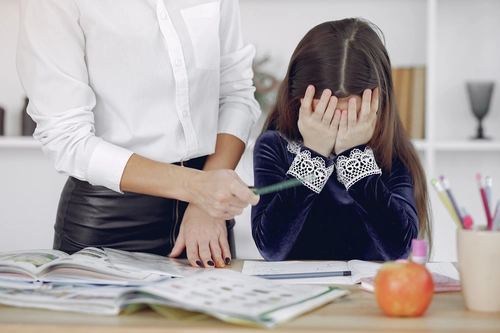
Why Does My Child Only Act Out at Home and Not at School?
Here is what took me way too long to figure out. She was not being manipulative. She was exhausted.
Think about holding a heavy backpack all day. Now imagine someone tells you to put it down. What do you do? You drop it. Fast. Your daughter does the same thing with her feelings. School requires her to follow rules, raise her hand, wait her turn, and manage frustration silently. That takes real effort. By 3:30 PM, her emotional fuel tank is empty.
Home is where she feels safe enough to let it all out. That sounds backwards, right? But it is actually a sign that you have built a secure connection with her. She saves her messiest feelings for you because she trusts you with them. It does not feel like a compliment when she is screaming about the wrong color cup. I know. I have been there.
This pattern even has a name that some parents use: restraint collapse. It describes what happens when kids hold it together all day and then fall apart in a safe space. Have you ever cried the moment you walked through your own door after a terrible day? That is the same idea.
What Can I Do When My Child Has Emotional Meltdowns at Home?
The number one thing that helped us was changing the first thirty minutes after school. I used to jump straight into questions. How was your day? Do you have homework? What did you eat for lunch? Big mistake. She needed quiet, not conversation.
Here is what we do now.
A Simple After-School Reset Routine
Offer a snack immediately. Low blood sugar makes everything worse. I keep something ready for the car ride home.
No questions for the first 20 minutes. Just be near her. Let her choose a quiet activity. Drawing, LEGOs, or even just staring at the ceiling.
Keep your voice low and your demands at zero. Save homework for after she has decompressed.
The snack part matters more than you would think. A parent I know swears by a smoothie in a straw cup. She said the sucking motion is soothing for her daughter. Another mom kept cookies in the car for the ride home. Does it have to be food? No. But try it for a week and watch what changes.
Giving Her Words for the Feeling
When she was calm, usually at bedtime, we started talking about her school day persona. I asked her, what does it feel like to be good all day? She said, my tummy hurts by the end. That was a breakthrough moment for me.
We named her school self “Perfect Piper” and her home self “Real Piper.” Silly? Maybe. But it gave her a way to talk about the pressure she felt. Now she can say, “Perfect Piper is tired today.” That opens a door instead of slamming one.
I also stopped asking why are you crying over nothing? Because to her, it is not nothing. The blue cup versus the pink cup feels like the final straw on a mountain of small frustrations. She is not overreacting to the cup. She is reacting to the whole day, and the cup just happened to be the last thing she could handle.
A Tool for After-School Emotional Release
Let me share the exact routine that turned our evenings around. It is not complicated. That is the point.
From the moment she gets in the car until we start homework, I follow three rules.
Rule one: No demands. She does not need to hang up her coat. She does not need to unpack her bag. She can drop everything on the floor for fifteen minutes. I pick it up later. This was hard for me. I like tidy spaces. But I like peaceful evenings more.
Rule two: Physical connection before words. A long hug. A back scratch. Sometimes just sitting close on the couch. Touch regulates the nervous system faster than any conversation. When I stopped talking and started hugging, the meltdowns got shorter.
Rule three: She leads the play. If she wants to tell me about her day, I listen. If she wants to be alone, I let her. If she wants to wrestle the couch cushions, I let her do that too. The goal is to let her body release the tension she has been holding all day. Some kids need to run. Some need to cry. Some need to build a pillow fort. Let her show you what she needs.
What About the Back Talk and Disrespect?
I hear you on this one. Letting her have feelings does not mean letting her be rude. There is a difference between she is having a hard time and she is being disrespectful. I had to learn to separate those two things.
When she snaps at me, I say something like this: “I can see you are really upset. It is okay to be angry. It is not okay to speak to me that way. I am going to sit here with you until you feel ready to talk.”
Then I go quiet. No lecturing. No explaining. Just presence. Sometimes she cries harder. Sometimes she calms down quickly. But she always knows I am not going anywhere. That consistency matters more than any punishment I ever tried.
Could this be ADHD? Some parents in similar situations have explored that question. ADHD in girls often looks different than in boys. It can show up as emotional intensity rather than physical hyperactivity. If you are wondering, it does not hurt to talk to your pediatrician. They can help you sort out whether the behavior is typical development or something that needs more support.

How Long Will This Phase Last?
Here is the honest answer. It depends. Some kids grow out of it by fourth grade. Others need ongoing support to build emotional skills. My daughter is nine now, and she still has hard afternoons. But they are shorter and less frequent than they were a year ago.
What changed? Not her. Not me, exactly. Our expectations. I stopped expecting her to be the same calm, collected kid at home that she is at school. Home is where she gets to practice being a real person with real feelings. That includes the messy parts.
FAQ
Q: Why does my child have emotional triggers at home but behave perfectly at school?
A: This is called restraint collapse. Your child holds it together all day in a structured environment. Home feels safe, so all the bottled-up emotions come out. It is actually a sign that she trusts you.
Q: What is the best way to respond to an after-school meltdown?
A: Stay calm. Offer a snack. Do not ask questions right away. Give her space and physical connection. Save conversations for later when she is regulated. A 15-minute decompression window can make a huge difference.
Q: How can I tell the difference between normal emotional release and something more serious?
A: Look at the frequency, intensity, and duration of the meltdowns. If they happen daily and last for over an hour, or if your child is hurting themselves or others, it may be worth talking to your pediatrician. Trust your instincts.
Q: What if my child’s emotional triggers at home are worse when I am the one picking them up?
A: You are the safe person. That is why she falls apart with you. It is not personal. It is a sign of deep trust. The more you can stay calm and consistent, the quicker she will learn to regulate with your help.
Q: Should I punish my child for melting down at home?
A: Punishment usually makes restraint collapse worse. She is not misbehaving on purpose. She is overwhelmed. Focus on connection and regulation first. Set limits on behavior without shaming the feelings behind them.
One Last Thing
The next time your daughter screams at you over something tiny, take a breath. Look at her red face and tearful eyes. Remember that she is not giving you a hard time. She is having a hard time. And she chose you to share it with. That is exhausting and also, strangely, a gift.
You are not doing anything wrong. She is not broken. You are both just figuring out how to navigate this season. Be patient with her. Be patient with yourself. You have got this.
References
- American Academy of Pediatrics. (2023). Emotional development in school-age children. Retrieved from HealthyChildren.org.
- Siegel, D. J., & Bryson, T. P. (2014). No-Drama Discipline: The Whole-Brain Way to Calm the Chaos and Nurture Your Child’s Developing Mind. Bantam Books.
- Zero to Three. (2022). Helping young children manage big emotions. Retrieved from zerotothree.org.
