I bought this on a Tuesday night, defeated. My six-year-old had spent the car ride home asking me why the sky changes color, why fish don’t drown, and why I wouldn’t let her eat ice cream for dinner. I had no good answers left. So I ordered Rayan Yale’s 100,000 Whys, hoping it would buy me a week of peace.
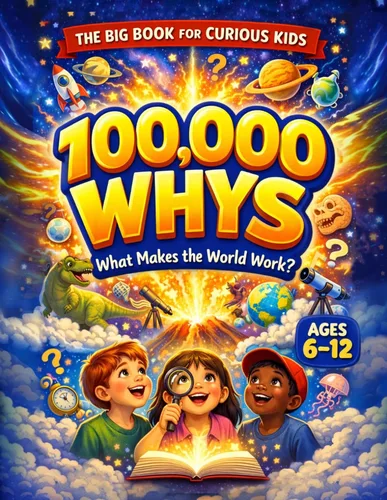
The package arrived, and my first thought was, this is thinner than I expected. 149 pages. Then I opened it, and the pages were black and white. Every video and ad I’d seen showed bright, colorful spreads. The actual book looks like a well-formatted printout, not the glossy wonderland the marketing promised.
But here’s the thing. My daughter grabbed it anyway. And that’s where the real story of this book begins—a story about whether content can outshine presentation.
One Hundred Questions, One Curious Kid
The structure is simple. Over a hundred bite-sized sections, each posing a big question with a clear answer and a few fun facts. Why do we dream? What makes volcanoes erupt? How do birds know where to fly?
There’s no forced narrative, no characters to follow. You can open it to any page and start reading. My daughter reads a section, then she finds me and says, “Mom, did you know that…” and suddenly we’re talking about space or animal behavior or the weird science of burps.
The explanations strike a decent balance. They’re not dumbed down to the point of meaninglessness, but they’re also not so dense that a second-grader gives up. My niece, who is eleven, also found it engaging, which suggests the age range of six to twelve is roughly honest, though a six-year-old will need help with some words.
The best moment came at dinner. She interrupted us to explain why astronauts float in space, a fact she’d read an hour earlier. She got it right. The explanation had actually landed, not just been skimmed.
The Black-and-White Trade-Off
What works here is genuine. The question-and-answer format is naturally interactive, and the range of topics means there’s almost always something that matches a child’s current obsession. It also holds up for family reading. I found myself surprised by several facts too, which made the experience feel less like homework and more like shared discovery.
The book’s real strength is that it doesn’t talk down to kids. It treats their questions as legitimate and offers real information, not fluff. That respect for a child’s intelligence is rare in children’s nonfiction.
But I need to be honest about the downsides. The black-and-white interior is a significant letdown. The cover is glossy and attractive, which makes the dull pages inside feel like a bait-and-switch. Several reviewers mentioned this, and it clearly affects how kids receive the book.
My own daughter didn’t care. She was too busy reading. But I know plenty of kids who judge books by their visual appeal first. For a child who needs colorful images to stay engaged, this book might gather dust.
The price is another issue. At nearly fifty dollars for the hardcover in some listings, this feels overpriced for what you get. The paperback is more reasonable, but still not cheap for a 149-page book with monochrome illustrations.
When Content Outshines Presentation
This is for the kid who already loves asking questions, who treats “why” as a favorite word. If your child is naturally curious and motivated by information itself, the lack of color won’t matter. They’ll dive in and emerge with facts to share.
It’s also good for parents who want a screen-free alternative that generates conversation. The book doesn’t just answer questions—it plants new ones. My daughter started asking about things she’d never considered before, which is exactly what good learning materials should do.
Teachers might find it useful for quick classroom prompts or as a free-reading option.
But if your child needs visual stimulation to get into a book, or if you’re expecting the colorful experience the marketing suggests, you’ll be disappointed. This book would also be a poor choice for a gift where presentation matters, since the interior feels more functional than beautiful.
What I’m Still Wondering
I keep thinking about that gap between what this book promises and what it delivers. The marketing shows color, the actual product is black and white. That feels like a mistake, one that will cost the author sales and disappoint parents who expect more polish for the price.
Yet the book itself works. It does what it claims—it turns curiosity into learning without feeling like school. The format is genuinely smart, and the content respects its young readers.
I’m also struck by how much it changed our family routine. A book that gets a child to interrupt dinner with a science fact has done something real. It’s created a channel for curiosity that wasn’t there before. That’s worth something, even if the pages aren’t pretty.
So here’s my honest verdict. If you can look past the dull presentation and the premium price, this book delivers on its core promise. It turns “why” into a journey, and it gives parents a tool to keep that journey going. The presentation may not be beautiful, but the thinking behind it is.
Would I buy it again? Yes, but I’d buy the paperback and I’d know exactly what I was getting. And I’d hope the author hears the feedback about color, because with that one change, this book could go from good to genuinely great.
What matters in the end is whether your child picks it up more than once. Mine has, every single day since it arrived.
