I was talking to a friend recently. She told me about a project at work. She knew it would fail. The numbers didn’t add up. The timeline was impossible. She told her boss. He nodded. Then they did it anyway. She watched it collapse. She wasn’t surprised. She was just tired.
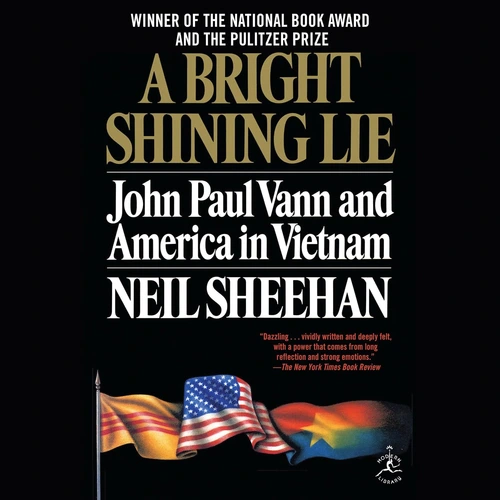
That conversation came back to me as I read Neil Sheehan’s A Bright Shining Lie. It’s a thick book. Over eight hundred pages. But its heart is simple. It asks one question. What do you do when you know the truth and nobody believes you?
What John Paul Vann Knew
John Paul Vann was a lieutenant colonel in the US Army. He went to Vietnam in the early 1960s. He was supposed to help win the war. Instead, he saw something else. He saw that the American strategy was broken. The Viet Cong were not losing. The South Vietnamese government was corrupt. The bombs were not working. He wrote reports. He gave briefings. He told generals and politicians directly. The war is not winnable, he said. Not this way.
Nobody listened.
I found Vann frustrating to read about. He was arrogant. He was obsessive. He had a messy personal life. Sheehan doesn’t hide any of this. He gives us Vann whole, not as a hero. But that messiness makes him real. Here is a man who could see the pattern. He could predict the next failure. And yet he could not stop it. He kept trying. He kept hitting the same wall. The military promoted him anyway. They sent him back to Vietnam. They asked him to keep fighting a war he knew was lost.
The core conflict is not between Vann and the enemy. It is between Vann and his own side. He is inside the machine, screaming. The machine keeps grinding.
The Lie We Tell Ourselves
Sheehan’s title is the key. The bright shining lie. It is not a lie told by one person. It is a lie everyone believed together. The lie that America could win. The lie that victory was just around the corner. The lie that the deaths meant something.
The imagery that sticks with me is light. Vann kept chasing a kind of clarity. He wanted to see things as they really were. He thought if he could just show people the truth, they would act. But the truth was not enough. The lie was brighter. It was more comfortable. It offered hope. The truth offered only hard work and sacrifice.
Sheehan writes with a journalist’s precision. He piles on details. Dates. Body counts. Meeting transcripts. At first, I found it overwhelming. Then I realized the density is the point. The truth is not neat. It is messy and exhausting. Sheehan makes you feel that exhaustion. You wade through the evidence the way Vann did. You come to the same conclusion. And you realize that even now, decades later, we do this. We pick the comfortable lie over the uncomfortable truth.
What Stays With You
I finished the book weeks ago. I still think about it. Not the battle scenes. Not the politics. I think about Vann sitting in a meeting, knowing what will happen, and saying it out loud. And everyone ignoring him.
The book has limits. It is long. It is dense. Sheehan sometimes gets lost in the weeds of military bureaucracy. I skimmed a few sections. But that is a small complaint.
The core insight is this. Seeing the truth is not enough. The hard part is not knowing. The hard part is getting anyone else to see it. And sometimes, you cannot. Sometimes you just have to watch the failure unfold. And then decide what to do next.
Maybe that is the real question Sheehan leaves us with. Not whether Vann was right. But whether we have the courage to keep speaking the truth, even when nobody is listening.
