I went to a family reunion recently. The kind where you see cousins you haven’t spoken to in years. We laughed, we ate, we took awkward photos. But later, alone in my car, I thought about the things we had not said. The anxieties we all share. The same quick temper my uncle has, the same quiet sadness my aunt hides. We call it personality. But what if it is something deeper? Something in the blood? Lawrence Ingrassia’s new book, A Fatal Inheritance: How a Family Misfortune Revealed a Deadly Medical Mystery, makes you wonder: How much of our story is written before we are born?
The Protagonist Who Found a Pattern
The book is not really a memoir, though it starts there. Ingrassia lost his mother, his two sisters, and a brother to a rare and aggressive cancer. He watched them vanish one by one. The doctors had no answers. They called it bad luck. But Ingrassia, a former editor at the New York Times, began to see a pattern. It was not just bad luck. It was a thread, pulled tight across generations. He became a detective of his own family’s DNA. He found a gene mutation called p53, a tumor suppressor gone rogue. Li-Fraumeni syndrome, they call it. A lifetime cancer risk of nearly 100 percent. The book follows him as he pieces together the puzzle. The core conflict is not just medical. It is emotional. To find the answer, he had to look at the bodies of the people he loved. He had to ask: What did they pass on to me? I will not tell you how it ends. But I will say this: The suspense is not about whether he finds the mutation. It is about what he does with it. He carries it. He writes about it. That is the deeper layer. The book is about the weight of knowing.
How the Author Builds the Argument
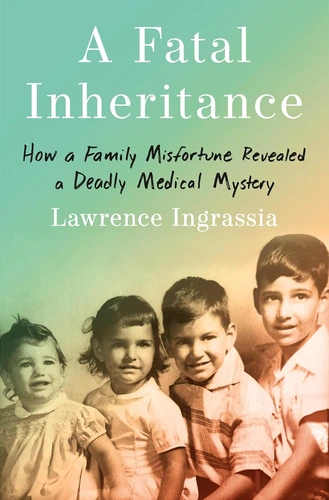
Ingrassia writes like a journalist. Clean. Precise. He does not drown you in jargon. He explains the science the way a good friend might, over coffee, slowly, carefully. The core theme here is inheritance. But he stretches the word. It is not just genetic. It is the silence we inherit. The fear. The way a family learns to not talk about death. The key imagery is the family tree. But it is a tree with branches that break. Ingrassia shows you the photographs of his sisters, his brother, his mother. Happy faces. Then he tells you the dates they died. The contrast is brutal. He also uses the image of a ticking clock. Every birthday is a risk. Every ache in the body is a question. This character’s struggle reveals a universal pattern. We all have a family history. We all carry something. Ingrassia’s craft is in making the invisible visible. He shows you how a microscopic error in a single cell can echo through decades. It is not just a medical story. It is a story about what we choose to remember and what we choose to forget.
What This Book Asks of Us
The book has flaws. It can feel repetitive. The science sections, while clear, sometimes slow the emotional momentum. You may find yourself wanting less explanation and more of his raw pain. But Ingrassia holds back. He is a journalist, not a confessional writer. That restraint is both a strength and a weakness. It makes the book trustworthy. It also makes it feel, at times, like a report. But the final section, where he grapples with what to tell his own children, is devastating. He asks: Do you give your kids the knowledge of the sword hanging over their heads? Or do you let them live in ignorant joy? That is the question the book lands on. And it is a question that crosses eras. In a world of genetic testing, of 23andMe and prenatal screening, we all face this choice. A Fatal Inheritance is for anyone who has ever wondered about the health of their family. Or the stories they do not tell. What you get from it is not just a medical education. It is a meditation on love, on legacy, on the strange grace of knowing the truth, even when it hurts. The core insight: We do not choose what we inherit. But we can choose how we carry it. Maybe that is the only freedom we have.
