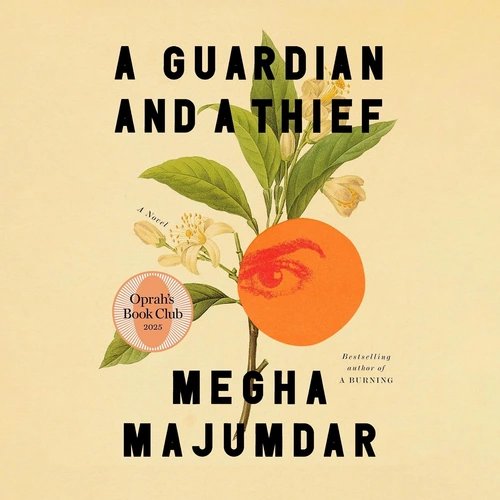
I was sitting in my kitchen, eating a bowl of rice, when I finished this book. It felt wrong. The rice tasted too easy.
Megha Majumdar’s novel, set in a near-future Kolkata where climate change has collapsed the food supply, is not a story about villains. It is a story about parents. Two families, both desperate, both loving their children with a ferocity that burns. They do not hate each other. They just need the same thing: food. And there is not enough.
The question the book asks, quietly and devastatingly, is this: What line do we cross when the person we love is starving?
The Quiet Violence of Parenthood
The protagonist, let me be careful here, is not a hero. She is a mother. Her name is Anjali. She steals. She hoards. She lies.
Majumdar does not let us judge her. Not really. We watch Anjali wake at dawn to stand in a ration line that may or may not have grain. We see her daughter’s ribs through her shirt. We feel the calculation in her chest: if I take this bag of rice from that old man, my child eats. If I do not, she does not.
The other family, the one she steals from, is not evil either. They are just as hungry. Their child is just as thin.
This is the core conflict. It is not a fight between good people and bad people. It is a fight between two people who are both right and both wrong. I found myself rooting for Anjali, and then I felt sick for rooting against the other mother. Majumdar traps you in that guilt.
The suspense is not about whether they will survive. It is about what they will become. Will Anjali still recognize herself at the end? I turned pages not for plot twists, but for that answer.
A City of Shadows and Salt
The theme is scarcity. Not just of food, but of grace.
Majumdar’s Kolkata is a city of long queues and short tempers. The imagery is spare and brutal. A child’s cough that sounds like broken glass. A bag of rice that feels heavier than a body. The smell of rotting vegetables in a market that used to smell of spices.
What struck me most was the salt. Salt appears again and again. On the skin of a sleeping baby. In the tears of a mother who cannot sleep. Salt preserves, but it also burns. It is the taste of desperation.
The author’s craft is quiet. She does not shout about the injustice. She shows it. A line about a woman selling her hair for a handful of lentils. A scene where a child asks for sugar, something that no longer exists. These small details build the argument: when resources vanish, morality becomes a luxury.
The book asks us to look at our own lives. When do we turn away from someone else’s hunger? When do we call it survival instead of theft? These questions do not have clean answers.
The End of Innocence
I will not reveal the ending. But I will say this: it does not offer comfort.
Majumdar completes her argument by showing us that the line between guardian and thief is not a line at all. It is a mirror. We are all capable of both. The difference is circumstance.
This book resonates across eras. It is about climate change, yes. But it is also about any moment in history when people are pushed to the edge. It is about the refugee. The single parent. The one who makes a bad choice for a good reason.
Who is this book for? Anyone who has ever loved someone and wondered what they would do to protect them. It is also for those of us who think we are good people. It will make you uncomfortable.
The core insight: There is no such thing as a good person or a bad person. There is only a person, and a child, and a world that has run out of food.
After reading, I sat with my empty bowl. I thought about Anjali. I thought about the other mother. I thought about what I would do. I honestly do not know.
Maybe that is the point. We do not know until we are there.
