bell hooks ruined the word love for me in the best possible way. Her definition, “the will to nurture our own and another’s spiritual growth,” is a standard most of us fail daily. Once you accept it, a lot of things you called love stop qualifying.
Love is not a feeling. It is an action, a practice, a decision. Chapters on childhood, romance, friendship, grief, and community all hang from that argument.
So what happens to a person who built her whole idea of love on the wrong foundation?
The Definition That Stops You Cold
hooks opens by admitting that love’s absence taught her how much love mattered. She grew up in a household where duty and obligation wore love’s name, and she is honest about the damage that did. There is no self-pity in her voice, which I found almost unsettling at first. She just keeps asking: what were we actually taught, and was any of it true?
Then she makes a claim that stopped me cold. Love and abuse cannot coexist. If someone is hurting you, that is not love with flaws. That is something else wearing the costume. I thought about a friendship I held onto for years, one where I kept saying “but she loves me” while dreading every phone call. hooks would say I was confusing attachment with love. She would be right, and I didn’t want her to be.
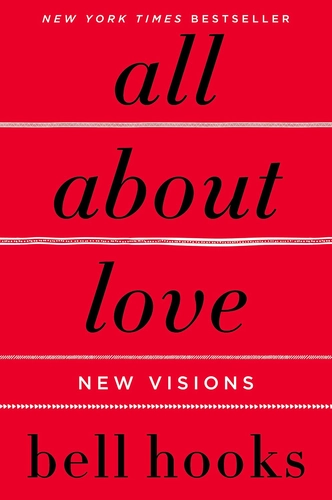
This is not a gentle book. It looks gentle on the cover. It is not.
The imagery that stays with me is hooks describing how we treat love as a subject unworthy of study, how we giggle at it, how we reduce it to romance and greeting cards while never actually learning the skills. She compares this to how we would never expect someone to become a surgeon without training, yet we expect everyone to love well without ever being taught.
Why Friendship Outranks Romance
The book argues that our culture sells us a version of love rooted in domination, where men receive and women provide, where romance outranks friendship, where loneliness gets treated as a personal failure rather than a social one. The chapter on friendship is the most affecting. hooks points out that friendship is where most of us first experience redemptive love and caring community, and yet we rank it below romantic bonds almost automatically. I put the book down after that chapter and texted a friend I hadn’t spoken to in months.
The Six Ingredients You Never Checked
hooks does not simply diagnose. She offers a working definition you can test. Care, affection, trust, respect, communication, commitment. Six ingredients. If one is missing, you are not in love, and pretending otherwise will cost you. That checklist sounds clinical until you apply it to your own life and realize how many “loving” relationships fail it immediately.
Chapter eleven, on death, broke something open in me. I lost my grandmother three years ago, and I have never been able to think clearly about what that loss meant because grief made me stupid in ways I resented. hooks writes that knowing love is the anchor that keeps us from falling into despair. I read that line four times. I still don’t fully know what to do with it.
Some chapters repeat themselves. hooks circles back to the same definitions more than once, and while I understand that repetition is a teaching tool, a few sections could have been tighter. The book was published in 2000, and its framing of gender can feel more rigid than what many readers hold now. She also leans on spiritual language, angels and divine love, and if that is not your vocabulary, certain passages will slide past you.
But those problems did not make me trust the book less. They made hooks feel more like a person I was actually listening to, someone with blind spots and convictions, someone who kept going because the subject mattered more than being right about everything.
What makes this book endure twenty-five years after publication is that its argument does not depend on the moment it was written. The specific cultural examples have aged. The core claim has not. We still confuse possession with love. We still call obsession romantic. We still expect women to do the emotional labor and call it nature.
This book will not fix your relationships for you. It will not hand you a script for the hard conversation with your mother or the friend who keeps taking more than she gives. What it will do is give you a definition sharp enough to cut through the fog, and that definition will keep working on you long after you finish the last page.
I still don’t know if I love well. But I know better now what the question even means.
“Love is an action, never simply a feeling.”

