I went to a funeral recently. Not a sad one, exactly. An old person, full years, everyone said the right things. But I stood by the coffin and felt that familiar wall. That invisible barrier we all build between ourselves and the body in the box. We don’t look too long. We don’t touch. We hurry past.
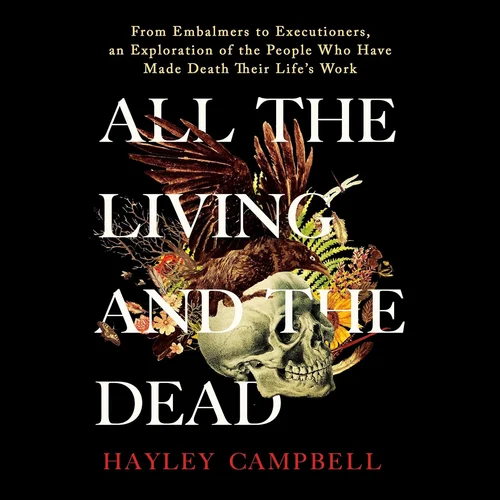
Hayley Campbell spent years walking through that wall. She visited executioners, embalmers, crime scene cleaners, and the scientists who study decomposition at body farms. She watched autopsies. She held the hands of the dying. She asked them all the same question: What is it like to be so close to death every day?
I expected her to find brave people with tidy answers. Instead, she found something stranger.
What the Embalmer Taught Me About Grief
Campbell’s first stop is a funeral home. She meets a woman who has dressed thousands of dead bodies. The woman talks about rigor mortis like it is a mild inconvenience. She describes the sounds a body makes when you move it. Air trapped in lungs. The groan of stiff joints.
I read this part with my shoulders up around my ears. But Campbell does something that changed how I read the rest. She stays. She watches. She asks the embalmer to show her the small things. The way they position hands so they look natural. The way they close mouths so the family remembers a peaceful face.
The embalmer is not grim or spooky. She is meticulous. She cares about her work the way a good carpenter cares about a joint. And here is the thing Campbell keeps discovering. These people are not broken by death. They are broken by the way we pretend death does not exist.
One crime scene cleaner tells her about a man who died alone and was not found for weeks. The cleaner’s job was to remove what remained and scrub the stains. But what stayed with her was not the mess. It was the untouched bowl of cereal on the table. The half-read book. The life that stopped mid-sentence.
That image hit me harder than any description of decay.
The Body Farm and the Fear We Don’t Talk About
Campbell visits the University of Tennessee’s Anthropological Research Facility. This is the body farm. Bodies donated to science are placed outside to decompose naturally. Researchers study the process to help forensic teams estimate time of death.
I have read about this place before. I expected a horror show. Instead, Campbell describes a quiet field with bodies in various states of return to earth. Some in cages to protect them from scavengers. Some in the open. One body she describes is nothing more than bones and a shock of red hair. It is almost peaceful.
The core theme here is not death. It is our refusal to look at it. Campbell argues that we have outsourced death to professionals and then sanitized it. We die in hospitals, not homes. We see bodies in caskets with makeup, not as they actually are. We have made death a stranger, and strangers are always scarier.
The key imagery throughout is hands. Hands of embalmers working. Hands of executioners pressing buttons. Hands of mothers holding dying children. Hands that reach out and touch what we cannot bear to touch.
One executioner tells Campbell he feels nothing during the procedure. He focuses on the technical steps. But later, alone, he dreams about it. The hands in his dreams are not his own. They belong to the people he killed.
Campbell does not judge him. She just listens. And that listening is the real gift of the book.
Why You Should Spend Time With the Dead
I will be honest. I picked up this book because I thought it would be morbidly fascinating. I thought I would get a peek behind the curtain, a little thrill, and then close it and go back to my normal life.
It did not let me do that.
Campbell’s argument completes itself in the final chapters. She meets a woman who volunteers with the dying. Not as a nurse or a chaplain. Just a person who sits with them. The woman says something I have not been able to forget. She says that dying people are not afraid of death. They are afraid of being alone at the end.
Maybe that is the real fear underneath all our avoidance. Not the moment of dying. The idea that when it happens, no one will be there. No one will hold our hand.
Campbell’s book is not a manual for how to die. It is an invitation to stop pretending death is someone else’s problem. The people who work with the dead are not weird or damaged. They are ordinary people who decided to look. And by looking, they found something I did not expect. They found a deeper appreciation for the small, messy, beautiful act of being alive.
The real emotion this book left me with was not fear. It was gratitude. Gratitude for the hands that clean the body, that close the eyes, that wash the sheets. Gratitude for the fact that I am still here, breathing, reading, thinking.
Maybe that is the only honest response to death. Not to run from it. But to let it remind you that today matters.
