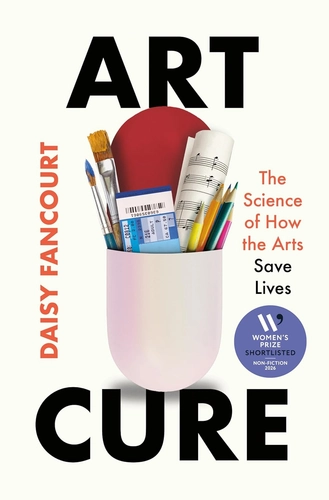
I have this memory. I was maybe nineteen, crying in my dorm room, and I put on this old Leonard Cohen song. Something shifted in my chest. Not a cure, exactly. More like a release. For years I thought it was just me being dramatic. Then I read Daisy Fancourt’s Art Cure, and I realized my body knew something my brain didn’t.
The book is built on a simple but radical question. What if the arts are not just entertainment, but actual medicine? Fancourt, an epidemiologist at University College London, spent years gathering evidence. She looked at studies on choir singing lowering cortisol. She examined how visual art therapy reduces pain in cancer patients. She even measured the effects of a simple museum visit on elderly people’s immune systems. The data is overwhelming. Yet the book never feels like a dry academic paper. It feels like a conversation with someone who desperately wants you to know something important.
The Protagonist Is You, the Skeptic
Here is the thing. Fancourt does not tell you a story about one character. She tells a story about all of us. The protagonist is the modern human, disconnected from art, skeptical that something as frivolous as dancing could matter for health. I saw myself in that character. I used to think art was a luxury, not a necessity. Something you do after real work is done.
Fancourt dismantles this belief with surgical precision. She shows how our ancestors used drumming, chanting, and cave painting for community bonding and stress regulation. Then industrialization came, and we compartmentalized art into galleries and concert halls. We forgot its original purpose. The book builds a quiet, thrilling suspense. Can we reclaim this lost connection? Will the science convince the skeptics? I will not spoil the answer, but I will say this. By chapter four, I had already signed up for a local community choir.
The Imagery of Wounds and Weaving
The core theme here is integration. Fancourt argues that the arts do not just distract us from pain. They help us integrate trauma, grief, and anxiety into our life story. The key imagery she uses is weaving. She writes about how creative activities create new neural pathways, stitching together emotional and cognitive fragments that had been scattered.
I found this image deeply moving. Think about it. When you sing in a group, your breath synchronizes with strangers. When you paint, your hand moves in rhythm with your heartbeat. The art is not separate from the body. It is the body expressing itself, healing itself. Fancourt shows that this is not magic. It is biology. The release of dopamine, the reduction of cortisol, the activation of the parasympathetic nervous system. But knowing the biology does not diminish the wonder. It deepens it.
The Book That Will Change How You See Your Own Life
Art Cure has some limitations. It leans heavily on Western studies, and I wanted more global perspectives. Also, the policy recommendations at the end felt rushed, like the author knew she had to include them but her heart was still in the science.
Still, this book is essential. It is for anyone who has ever felt moved by a song, a film, or a painting and wondered why. It is for the skeptical friend who thinks the arts are a waste of time. It is for the tired parent who has forgotten how to play. You will finish it with a deeper respect for your own creative impulses. You will start noticing how a certain melody shifts your mood, how a visit to a museum resets your perspective.
Here is what the book taught me. My nineteen-year-old self, crying to Leonard Cohen, was not being dramatic. She was doing science. She was using art to regulate her nervous system. She was, without knowing it, participating in a practice as old as humanity itself.
Maybe the question is not whether art can heal us, but whether we are brave enough to let it.
