I sat through a wedding last month where a man gave a toast about loyalty that made half the room cry. Three years ago, that same man quietly pushed a business partner out of a company they built together. Nobody in that room seemed to remember. Or maybe they did, and it simply didn’t matter.
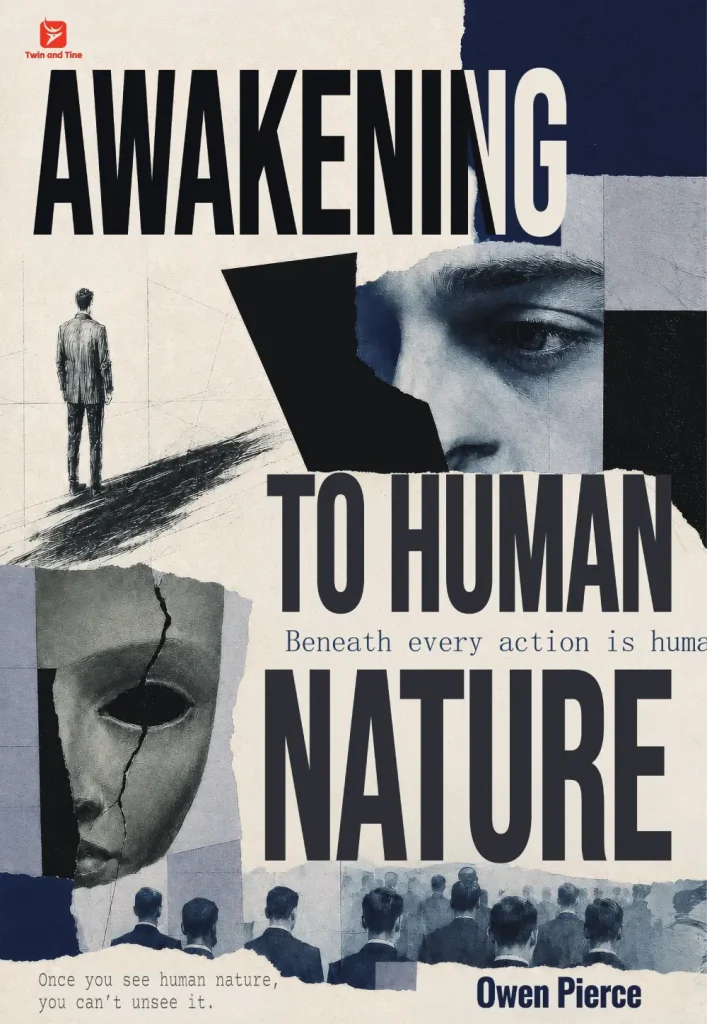
That gap between what we say about people and what people actually do is the territory Owen Pierce walks through in Awakening to Human Nature, a book that reads less like a self-help manual and more like a conversation with someone who has watched too many people get burned and decided to say something about it.
The question Pierce keeps returning to is not whether people can be trusted. It’s something sharper: what would you do differently if you stopped assuming that good intentions protect you? That question runs underneath every chapter, and it gives the book a weight that most titles in this genre never reach.

What the Book Actually Argues
Pierce’s central claim is that most suffering in relationships, careers, and social life comes from a single source: we confuse what people say with what they want. His remedy is not paranoia. It’s a kind of trained attention.
He builds the book around a handful of recurring principles. Interests drive behavior more reliably than values. Scarcity creates value, whether or not the thing being valued deserves it. Boundaries are what keep kindness from becoming prey. And structure, not individual character, determines most outcomes in organizations.
These aren’t new ideas in isolation. What makes the book work is how Pierce arrives at them. Each section opens with a historical scene: Socrates standing before his accusers, Tesla watching others profit from his genius, Talleyrand smiling at Napoleon while preparing for his fall. The stories come first. The rules come after. The advice comes last, and it’s usually brief. This sequence matters because it lets you feel the lesson before you’re told what it means.
The Craft Behind the Coldness
Pierce writes like someone who has spent years watching rooms. His sentences are short and declarative, almost flat, which makes the occasional sharp line land harder.
He describes the Medici family’s habit of funding artists who flattered them, then notes that the artists who refused to flatter rarely got funded twice. No editorializing. Just the fact, placed next to the next fact, until a pattern emerges.
The book’s dominant image is the mirror. Pierce returns to it repeatedly, and it’s a smart choice. A mirror doesn’t judge. It doesn’t tell you to be better or worse. It shows you what’s there, and the discomfort you feel is your own.
He extends this into what he calls the “crab bucket” dynamic, where people in a shared struggle pull down anyone who tries to climb out. It’s a brutal image, and he doesn’t soften it.
Where the book stumbles is in its occasional overreach. Some of the historical parallels feel stretched, and a few chapters repeat the same principle with different stories until the point is more hammered than illuminated. The chapter on desire and interest, in particular, could have been half its length.
Still, there’s a detail I keep thinking about. Pierce mentions that beggars don’t envy millionaires. They envy the beggar with more coins. It’s a small observation, almost throwaway, but it captures something about how comparison works that most books on human behavior spend entire chapters failing to explain.
Who This Book Is For, and What It Leaves Out
This book is for anyone who has felt the slow burn of realizing that someone they trusted was calculating the whole time. It’s for people navigating workplaces where competence and advancement have almost nothing to do with each other. It’s for readers who are tired of being told to just trust the process.
What it doesn’t do well is offer warmth. Pierce is not interested in comfort, and he says so. But there are moments where the relentless clarity becomes its own kind of exhaustion. The book could use more acknowledgment that some people are genuinely kind without hidden motives, that not every relationship is a negotiation. His framework is powerful, but it’s not the whole picture.
The philosophical echo here is older than Pierce maybe admits. Machiavelli said something similar five hundred years ago, and so did Sun Tzu before him. What Pierce adds is application. He brings the old observation into the modern office, the group chat, the family dinner.
Maybe the real value of this book isn’t its rules. It’s the moment you finish it and realize you’ve been giving your trust away like it costs nothing.
“You only find out who someone really is when you stop being useful to them.” That line stays with you. Not because it’s cruel, but because it’s true, and you already knew it.
If you found this helpful, these books go deeper into the same themes.




Break the Anxiety Circle
$19.90

From Debt to Wealth
$19.90

