I went to a farewell dinner last month for a colleague I had known for six years. Somewhere between the appetizers and the toast, I realized I had never actually known him. The man giving the speech was generous. The man I watched quietly calculate who was worth his time at the table was someone else entirely.
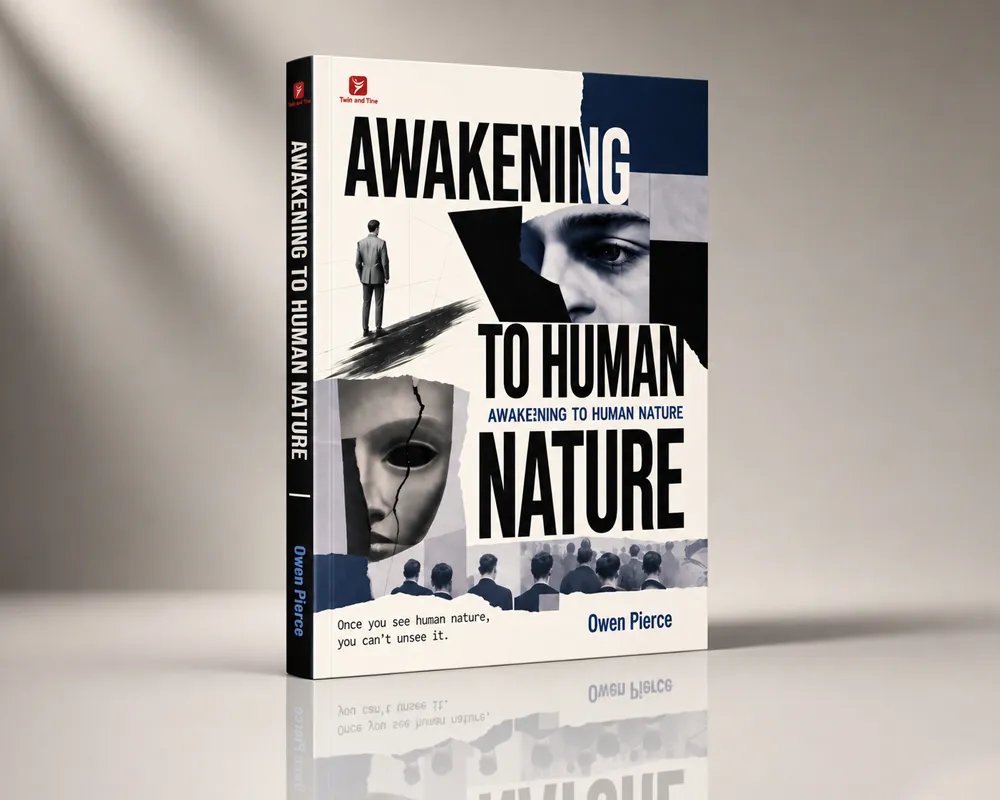
I thought about that dinner while reading Owen Pierce’s Awakening to Human Nature. The book opens with a question I have asked myself more times than I care to admit: why do I always see people clearly after it’s too late?
Pierce’s answer takes the whole book to unfold. But the question stayed with me long after I finished.
What the Book Actually Argues
Pierce’s central claim is simple, and maybe a little uncomfortable. We do not misjudge people because we lack information. We misjudge them because we ignore what we already know.
Most books on reading people hand you a toolkit. Body language. Micro-expressions. Tone. Pierce thinks that approach is mostly useless. One signal rarely tells you who someone is. What matters is the pattern.
| What We Focus On | What Actually Matters |
|---|---|
| One gesture | Repeated behavior over time |
| What people say | What they do under pressure |
| Stated values | Behavior when interests shift |
| A single moment | The pattern across months |
The concept he returns to again and again is self-interest. Not as a moral failing. As a force as ordinary as gravity. People are not lying when they say they value loyalty. They mean it, until loyalty costs them something.
That gap, between stated values and behavior under pressure, is where Pierce wants you to look.
The Quiet Architecture of the Book
What struck me about Pierce’s craft is how little he dramatizes. There are no villains here. No twelve types of toxic people, no red-flag checklists designed to make you feel clever.
Instead, the book reads like someone thinking out loud. He circles back to the same idea from different angles, the way you might worry a loose tooth with your tongue. The writing is plain, occasionally repetitive, and I’ll be honest, a few chapters could have been tighter.
But the repetition is doing something. Pierce is trying to make a habit stick. He wants you to notice, in real time, the moment you start explaining someone’s behavior away.
The image that runs through the book is not a mask or a puzzle. It is a river. People are not hiding their true selves. They are simply moving, and the current changes when the terrain changes. You do not catch a river. You learn to read it.
Why This Book Is Not About Becoming Cynical
Here is where I expected the book to go wrong. Most books in this genre end up teaching you to trust no one, which is just paranoia with better branding.
Pierce resists that. His argument is that understanding human nature is not about lowering your opinion of people. It is about raising your awareness of them.
The difference between cynicism and clarity:
| Cynicism | Clarity |
|---|---|
| Trust no one | See people accurately |
| Assumes the worst | Notices what’s actually there |
| Protects by closing off | Protects by paying attention |
| Leaves you isolated | Leaves you aware |
The goal is not suspicion. It is clarity. You stop being naive without becoming cold.
He is honest about the cost, too. Once you start seeing patterns, you cannot unsee them. Some relationships will not survive the clarity. That is a real loss, and Pierce does not pretend otherwise.
Who Should Read This
This book is for you if:
- You have ever finished a friendship or a job and thought, “I knew, I just didn’t want to know”
- You want to trust your instincts sooner
- You prefer understanding over suspicion
- You are ready to look at patterns you have been explaining away
This book is not for you if:
- You want scripts or formulas
- You need a structured system
- You are looking for a quick fix
It is less useful if you are looking for scripts, formulas, or a system. Pierce does not give you those. He gives you a way of paying attention.
The book’s weakness is its pace. It meanders. Some readers will want a sharper spine. I found myself skimming two chapters near the middle.

What Stays With You
The real gift of this book is not information. It is permission. Permission to trust the pattern you already noticed. Permission to stop calling your instinct a suspicion.
Maybe that is what seeing people clearly really means. Not becoming a better judge of character. Just admitting you were one all along, and finally listening.
“You were not fooled. You were hoping.”

