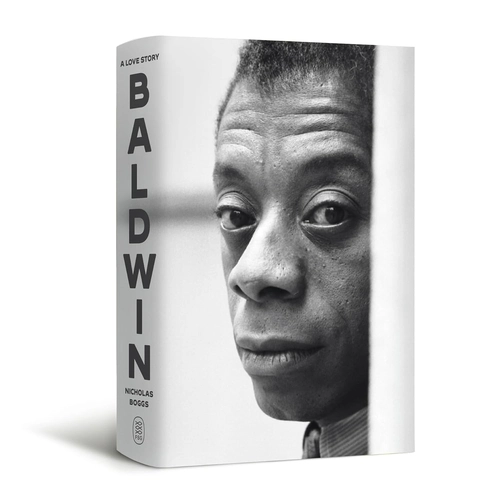
I was sitting in a coffee shop last week, watching a couple argue quietly. He kept reaching for her hand. She kept pulling it away. It made me think about something I’ve never fully understood. How do the people we love, the messy imperfect ones, actually change who we become? Is it a slow erosion or a sudden flood? I picked up Nicholas Boggs’s new biography, Baldwin: A Love Story, expecting to learn about a great writer’s life. What I got instead was a mirror held up to my own questions.
How a Single Relationship Becomes the Plot of a Life
Boggs does something unexpected. He doesn’t just chronicle Baldwin’s years. He focuses on one relationship. The one with his partner, the man who was there through the storms and the silences. The protagonist here is not a solitary genius. He is a man who loved, who needed, who broke and was broken by another person. Baldwin’s central conflict, as Boggs presents it, is not with racism or homophobia alone. It is with the terrifying risk of letting someone see you completely. The suspense, and you won’t find the ending here, comes from watching Baldwin weave his private tenderness into his public fury. I found myself holding my breath during certain passages. Not because of plot twists, but because of the raw, almost unbearable intimacy of it all.
The Craft of Unseen Threads: What the Imagery Reveals
The book’s core theme, I think, is not love as a feeling but love as a force that shapes the shape of a sentence. Boggs draws on new archives. Letters. Drafts. Photographs. The imagery he uses is subtle. There is a recurring image of hands. Baldwin’s hands writing. His partner’s hands reaching. Hands that create and hands that hold. This is not a metaphor you can underline. It is a pattern you start to see once you are inside the story. The author shows us how Baldwin’s most famous essays, the ones that cut through racial hypocrisy, were written in the same rooms where he argued about grocery lists. The universal pattern Boggs reveals is this. Our most private loves leak into our most public work. We cannot keep them separate. I realized that the books I love most, the ones that changed me, were probably written by someone who was, at that very moment, in the middle of a complicated love.
The Echo We Carry: A Final Question
Boggs completes his argument by showing us the aftermath. What happens to a writer after the relationship ends? The answer is unsettling and beautiful. The love does not disappear. It becomes the ground under every future sentence. Baldwin’s later work carries the weight of that loss. It is more tender. More forgiving. I thought about my own life. The people I have loved and lost. They are not gone. They are the lens through which I see everything now. This biography is not just for Baldwin fans. It is for anyone who has ever wondered if the love they gave away was wasted. The answer, Boggs suggests, is no. It becomes you. So here is the question the book left me with. If the people we love become part of our voice, whose voice are you speaking with right now?
