I was at a friend’s kitchen table recently, stirring coffee, when she said, “Doesn’t this smell like your grandmother’s house?” I froze. It didn’t, not really. But the question alone opened a door I thought was locked. That’s the feeling I carried into Adelle Stripe’s Base Notes: The Scents of a Life. The book asks a simple, almost embarrassing question: what if the things we remember are not stored in our minds at all, but in our noses?
My grandmother wore a perfume called L’Air du Temps. I hadn’t thought about her in years. Stripe does something similar. She doesn’t tell her life story chronologically. She sniffs it. Each chapter opens with a scent: a lover’s cologne, a hospital’s antiseptic, the damp wool of a childhood coat. These are not metaphors. They are keys. The protagonist here is not just Stripe herself, but her own memory, unreliable and stubborn. She chases a ghost through a bottle of rosewater. She finds grief in the smell of rain on hot pavement. The core conflict is quiet but violent: can we trust what our nose tells us? Or do we just smell what we need to survive? I won’t spoil the ending, but I will say this: she does not find easy answers.
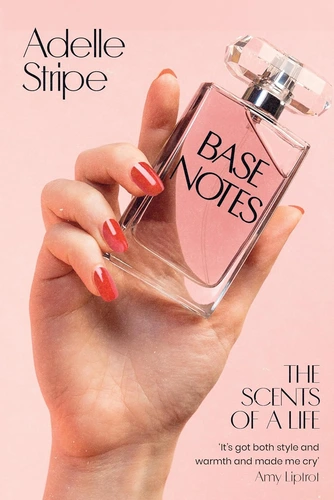
The core theme, I realized halfway through, is not nostalgia. It is survival. Stripe uses perfume the way some people use prayer. She is looking for a thread through the chaos of a difficult life. The key imagery is light, or rather the absence of it. She describes scent as “a dark room we walk into blind.” That stuck with me. Because her craft is not about pretty descriptions of flowers and spices. It is about the ugly smells too: the sour milk of poverty, the metallic tang of fear. She shows how a single whiff can collapse time. A man’s aftershave becomes a lost father. A whiff of chlorine becomes a summer that never ended. The struggle of one woman becomes a universal pattern: we are all walking archives of smell, and we cannot escape what we have inhaled.
I’ll be honest: I did not expect this book to crack me open. I thought it would be a clever gimmick. But Stripe does something rare. She completes her argument not by explaining, but by trusting. She trusts that a smell is enough. And it is. The book’s real power is its cross-era resonance. In an age of screens and noise, Base Notes whispers that our oldest sense might be our truest. It is not a self-help book. It is a permission slip. Permission to stop, breathe, and let the past arrive uninvited. What do you gain? A new understanding of how your own memory works. A tenderness toward the smells you have been ignoring. And maybe, just maybe, the courage to open an old bottle.
“Every scent is a ghost, and every ghost is a door, and every door opens onto a version of yourself you thought you had lost.”
