The Protagonist Who Lives the Problem
I finished a call with a friend recently. She spent half an hour listing everything she did wrong that week. Her job. Her parenting. Her inability to say no to her mother. I listened and thought, would you ever talk to your best friend this way? Of course not. So why do we do it to ourselves?
That is the question at the heart of Misha Brown’s Be Your Own Bestie. Brown is the social media personality behind @yourbestiemisha. He built a following on blunt, loving advice. Now he has turned that voice into a book. It is part memoir, part guide, part permission slip to stop apologizing for existing. But here is the thing: can a book built on sass and humor actually change how we treat ourselves? Or is it just a fun pep talk?
Brown is not a detached guru. He is the protagonist of his own story. He shares his messy past. He talks about growing up gay in a world that told him to shrink. He talks about bad relationships. He talks about the moment he realized he was the one being cruel to himself. I’ll be honest. Some of his stories made me laugh out loud. Others made me wince because they hit too close to home.
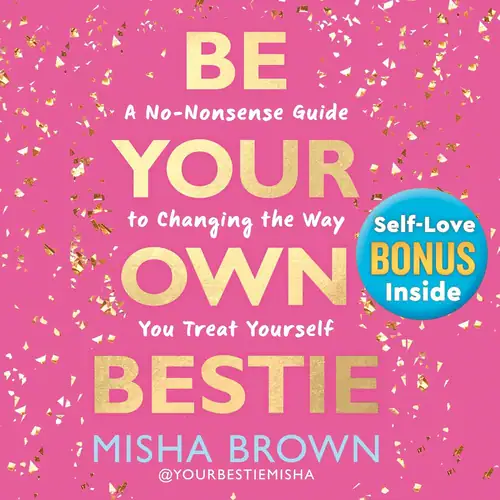
The book introduces the SASS Method. It stands for Shed, Affirm, Stand, Sculpt. Each letter represents a step. Shed means letting go of what holds you back. Affirm means changing your inner voice. Stand means setting boundaries. Sculpt means building the life you want. Brown does not present these as dry concepts. He walks through them with real examples. He tells you about the time he had to cut off a toxic friend. He tells you about the day he stopped apologizing for his personality.
The core conflict here is not between Brown and the world. It is between Brown and himself. And by extension, between you and yourself. He does not pretend it is easy. He admits he still struggles. He says the work is daily. That honesty makes the book feel less like a lecture and more like a conversation. You are not being told what to do. You are being walked through someone else’s journey. The suspense is not about whether he succeeds. It is about whether you will try.
The Inner Critic Meets Its Match
Brown uses a simple but powerful image. He calls it the “inner critic.” He describes it as a voice that sits on your shoulder. It whispers that you are not good enough. It tells you to be quiet. It says you do not deserve happiness. But then he introduces another image: the “inner bestie.” This is the voice that claps back. It says, “You are fabulous. Now go get it.”
The book is built on this contrast. Brown shows how the inner critic is often just the voice of other people we have internalized. A parent who criticized. A partner who dismissed. A society that told us to stay small. He argues that we can reprogram that voice. We can choose to speak to ourselves like we speak to a best friend.
There is a chapter where he talks about boundaries. He uses the image of a fence. A fence is not a wall. It does not keep everyone out. It just marks where your property begins. He says most of us let people trample our yard. We do not say anything. We just get angry silently. The SASS Method teaches you to say, “This is where I end and you begin.” It sounds simple. It is incredibly hard.
Brown’s writing is not literary. It is conversational. He uses short sentences. He uses exclamation points. He calls you “bestie” repeatedly. Some readers might find this annoying. But it is consistent. He does what he promises. He treats you like a friend. The audiobook is especially effective—Brown reads it himself. His voice carries the same energy as his videos. You can hear the sass. You can hear the warmth.
The Philosophy of Radical Self-Love
Here is the argument Brown makes. Being nice to yourself is not selfish. It is necessary. He pushes back hard on the idea of “being the bigger person.” He says that phrase is often used to make people accept mistreatment. He says you do not have to take the high road. You can meet people head on. You can call them out. You can walk away. He offers phrases to use: “I will not accept that.” “That is not okay with me.” “I am done.”
This is where the book crosses from fun read to something deeper. Brown is not just teaching self-love. He is teaching self-respect. He is arguing that you cannot love yourself if you let people walk all over you. The two are connected. The S in Stand is not about being mean. It is about being clear.
I will say the book has limits. It is not a deep psychological study. It does not offer new research. Some readers wanted more concrete techniques. Brown is more storyteller than therapist. The book is short—I finished it in about four hours. It feels like a booster shot. You leave feeling energized. But the effect might fade if you do not do the work.
Who is this book for? Someone who is tired of being mean to themselves. Someone who needs permission to stop apologizing. Someone who likes their advice served with humor. It is not for people who want academic rigor. It is for people who need a kick in the pants from a friend who loves them.
The core insight: you already have the person you need to love you most. She lives inside your head. You just have to let her speak.
