I have a confession. For years, I walked past a homeless encampment near my office. I never stopped. I told myself I was busy. The truth is, I did not want to know their names. I preferred them as a blur.
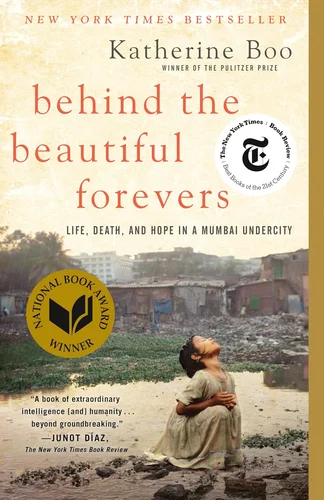
Then I read Katherine Boo’s Behind the Beautiful Forevers. And I realized something uncomfortable. My blur was a choice. Boo spent three years in Annawadi, a slum in Mumbai wedged between the airport and luxury hotels. She did not look away. She sat with families in their one-room shacks. She watched children scavenge plastic. She listened to a woman named Asha scheme her way toward power. And she wrote it all down with a clarity that feels almost cruel.
Here is the question the book forces: What happens when you stop treating poverty as a backdrop and start treating it as a system made of people?
The Protagonist Who Refuses to Be a Victim
The book does not have one protagonist. It has a dozen. But if you press me, I would say the central figure is Abdul, a trash trader. He is a skinny teenager who sorts garbage for a living. He is not a hero. He is not a saint. He is a boy who works sixteen hours a day so his family can eat.
Abdul does not complain. He does not dream of escape. He just keeps moving. His hands are always stained. His back always hurts. When a neighbor accuses his family of theft, the police come. They beat Abdul. They break his ribs. They take his family’s savings. And Abdul? He goes back to sorting garbage.
Here is what I found devastating. Abdul does not see himself as tragic. He sees himself as practical. He knows the system is rigged. He knows the rich tourists above him fly past without looking down. But he also knows that rage is a luxury. So he stays quiet. He works. He survives.
Lest you think this is a tale of noble suffering, it isn’t. Boo shows us Abdul’s mother, Zehrunisa, who burns with fury. She wants revenge. She wants justice. She also wants her son to be safe. The conflict between her fire and Abdul’s endurance is the heart of the book. It is not a story about good people and bad people. It is a story about people deciding, every day, whether to fight or to endure.
Theme and Imagery: The Architecture of Invisibility
Boo is a journalist, but she writes like a novelist. Her key image is the wall. The wall that separates Annawadi from the airport. The wall that separates the poor from the rich. The wall that separates you from me.
Here is the thing about walls. They work both ways. The rich tourists do not see the slum. But the slum dwellers see the tourists. They see the planes taking off. They see the hotel lights. They see a world that is close enough to touch but impossible to reach.
Boo’s core theme is aspiration. Everyone in Annawadi wants something. Abdul wants a better truck. Asha wants a political career. A young woman named Manju wants to finish school. They are not lazy. They are not passive. They are working harder than anyone I have ever met. And still, they are stuck.
Why? Because poverty is not a personal failure. It is a system. Boo shows how corruption, caste, and police brutality form a cage. You cannot climb out of a cage by trying harder. You need someone to open the door. And the people with the keys do not want to open it.
I will be honest. Reading this book made me angry. Not at the poor. At myself. Because I realized I have been one of the people who walks past. I have been the tourist on the plane. I have told myself that poverty is complicated. But what I really meant was: I do not want to be uncomfortable.
Elevation: The Book That Changes How You See
Behind the Beautiful Forevers was published in 2012. It won the National Book Award. It is taught in universities. But its lesson is not academic.
Boo’s argument is simple. We are all connected. The trash you throw away becomes someone’s meal. The indifference you feel becomes someone’s sentence. The system that keeps the poor down is the same system that keeps you comfortable. You cannot have one without the other.
Is the book perfect? No. Sometimes Boo’s language is too controlled. She never lets herself get angry on the page. She stays cool and observational. I wanted her to rage. But maybe that is the point. She is showing us how to look without flinching.
Who should read this book? Everyone who has ever walked past someone in need. Everyone who has ever felt helpless about poverty. Everyone who wants to understand how systems work. It will not give you easy answers. It will give you a harder question.
Now that you have seen them, what will you do?
