I sat in my kitchen the other morning, staring at a blue ceramic bowl my grandmother left me. It is not a special bowl. The glaze is chipped on one edge. But I keep it on the counter, not in the cabinet. I realized I do not know why. I do not know what the color means to me.
What does a color carry? That is the question Imani Perry asks in Black in Blues. She is not writing a history of blue pigment. She is excavating something deeper. Blue, she argues, is the color of Blackness in the Americas. It is the color of indigo plantations. It is the color of the spirituals. It is the color of grief and of grace. How can one hue hold so much?
Why Blue Matters: A Vivid Portrait of a People Through a Color
Perry moves through time like a woman walking through a house she knows too well. She starts with the indigo trade. Enslaved Africans were forced to cultivate the plant that produced blue dye. Their labor made the color valuable. Their bodies wore it. Their children inherited it. Then she shifts to the blues. The music came from the same root. The singer bends a note. The blue note is a cry that will not stay straight.
The book has no single protagonist. The protagonist is the color itself. But if you want a face, look at the enslaved woman who dyed cloth. Look at the jazz musician who blew a horn until it bled blue. Look at the writer who put blue into a sentence and felt the weight lift. Perry shows us how blue became a container. It holds the memory of violence. It also holds the hope of transcendence.
I will not spoil the end. But I will say this: the final chapter made me set the book down. I had to sit with what I read.
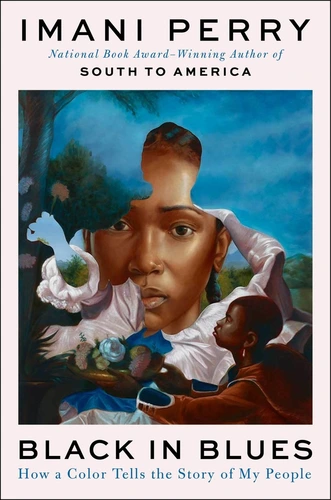
What Blue Knows: Memory, Grief, and the Art of Holding
The core theme is inheritance. Perry writes about what we carry without choosing. The blue in the indigo vat is the same blue in a Gee’s Bend quilt. The same blue in a painting by Kerry James Marshall. She traces this continuity with tenderness.
The key imagery is light. Perry describes how blue behaves in sunlight. How it shifts. How it refuses to be one thing. She compares it to Black identity. We are not a monolith. We are a spectrum. The blue of the ocean is different from the blue of a bruise. Both are true.
I found myself underlining passages. She writes about the “blue-black” of skin. She writes about the way a mother might call a child “blue” as a term of endearment. These small observations build into something large. She is not making an argument. She is revealing a pattern. The pattern was always there. She just taught me to see it.
Why This Book Matters Now: A Quiet Prayer for What We Inherit
Perry is a scholar. But she writes like a poet who has been hurt and healed and hurt again. There is no distance in her prose. She is in the room with you. She tells you about her own life. The color blue appears in her memories. The dress her mother wore. The sky above a protest. The blue of a vein in her own wrist.
The book has flaws. Sometimes it rambles. Sometimes Perry leaps between centuries without a clear bridge. But honestly, that feels intentional. Memory does not move in straight lines. Why should the book?
Who is this for? Anyone who has ever wondered why a certain color makes them feel something. Anyone who carries a family history they cannot quite name. Anyone who has looked at an object and felt the past press against their skin.
What do you get from reading it? Permission to look closely. Permission to let a color mean more than it is supposed to mean. Perry says, in effect, that we are allowed to feel the weight of what we inherit. We are allowed to name it.
Maybe that is what the bowl on my counter is doing. It is not a bowl. It is a memory in blue.
Recommendation: Read this book slowly. Read it with something blue in the room. Read it and let it change the way you see.
