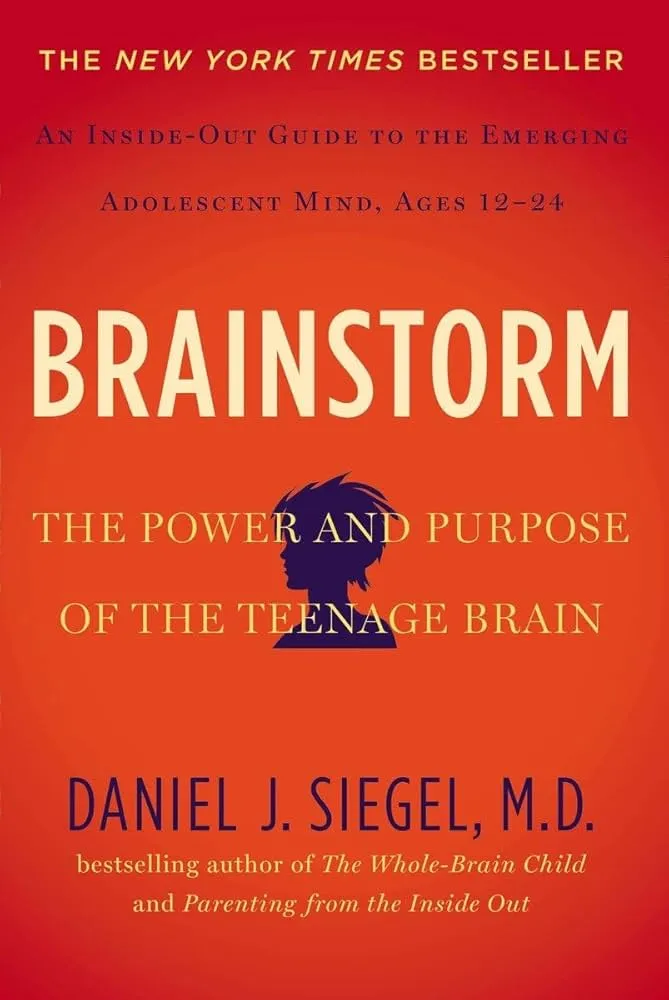
I picked up this book on a Saturday afternoon, standing in the parenting section of a bookstore while my own teenager was three aisles away, pretending she didn’t know me. Honestly, I almost put it back. Another book about teenage brains, written by some professor who’d probably never had a door slammed in his face by his own kid. But then I flipped to page 23 and read something that made me sit down on the floor right there: “The adolescent brain is not defective. It is not broken. It is undergoing the most profound reorganization since infancy.”
Here’s the thing I didn’t expect: this book made me rethink not just my kid, but myself. It made me wonder — what if the screaming matches, the eye rolls, the reckless decisions, the sudden weeping over nothing — what if all of it is not a problem to be fixed, but a feature of something essential? What if we’ve got the whole thing backward?
She’s Building It
The author, Daniel Siegel, is a UCLA professor who wrote this while raising his own teenagers. And that makes all the difference. You can feel it in how he talks about meltdowns — not like a scientist describing lab rats, but like a father who has been yelled at, ignored, and then hugged twenty minutes later, confused and grateful.
He says the four big changes in the teenage brain — emotional spark, social engagement, novelty seeking, and creative exploration — are not bugs. They are the operating system updates that turn a child into an independent adult. Every time your kid argues with you about a curfew, she is not being difficult. She is practicing for a life where she has to negotiate with bosses, partners, and strangers.
The Wire and the Window
Siegel uses two images that stuck with me, and I think about them almost daily now.
The first is the “brain remodeling” metaphor. He describes the teenage brain as a house under renovation. The wiring is being torn out and replaced. Some rooms are uninhabitable. The lights flicker. But nobody would look at a house under construction and say “this is broken.” They would say “this is becoming something new.”
The second image is about connection. He talks about “resonance” — not just listening to your kid, but letting their inner world enter you and change you. That part hurt to read, honestly. Because I realized I had been listening to my daughter the way you listen to a noise you want to stop. I wasn’t letting her change me. I was waiting for her to stop being annoying.
The book’s core argument is simple but devastating: the quality of the parent-teen bond determines how safe the teenager feels exploring the world. If they know they can come back to you, they will venture further. If they feel judged or dismissed, they will either retreat or rebel harder. Neither works.
What I Still Don’t Know
Here’s what I’ll be honest about: the book has a problem. It’s too optimistic. Siegel is so convinced that understanding the teenage brain will solve everything — he sometimes forgets that understanding doesn’t always lead to change. I finished the book feeling hopeful, but also a little exhausted. Knowing that my daughter’s emotional explosions are “brain development” doesn’t make them any less intense.
But here’s what I *did* change. The next time she slammed her door, I didn’t knock. I waited. Twenty minutes later, she came out and sat next to me on the couch. She didn’t say sorry. I didn’t ask her to. We just sat there.
My daughter is not defective. She is becoming. And I have to become too, or we’ll lose each other entirely.