I went to a quiet suburban wedding recently. Everyone was kind. The food was fine. But I kept thinking about a phrase from Sarah Wynn-Williams’s new memoir. She calls them “careless people.” Not malicious people, exactly. More like people who have lost the capacity to feel the weight of their own choices. I read her book in two days. I have not stopped thinking about it since.
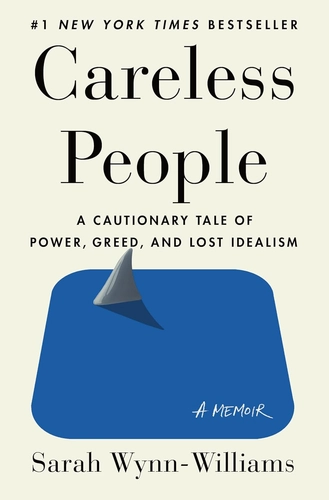
The book asks a question that made me uncomfortable. How do decent, intelligent, well-meaning individuals end up inside a system that routinely harms others, and decide to stay? Wynn-Williams was a New Zealand diplomat. She joined Facebook in its growth phase. She believed in connection, in building bridges. She left years later with a story that reads less like a whistleblower’s scream and more like a slow, quiet drowning. The question she plants in the reader’s mind is this. Are we all capable of becoming careless?
A Diplomat in a Data Machine
The protagonist in this story is not a hero. She is not a villain either. She is a woman who starts as a believer. Wynn-Williams was hired to handle international policy, to help Facebook navigate tricky governments. She was good at her job. She flew to remote places. She argued for free expression. She thought she was making a difference.
But something shifts. The company grows. The decisions get faster. The ethical questions become “operational challenges.” She describes a moment where she is asked to help a repressive government use Facebook’s tools. She hesitates. She raises concerns. She is told, gently, that this is not her area of expertise. So she steps back. That is the core conflict. Not a dramatic confrontation. A thousand small retreats. A person who once stood for something slowly learns to stand for nothing. Wynn-Williams does not spare herself. She shows us her own complicity with painful honesty. I found myself wincing. Because I recognized the pattern.
The Architecture of Complacency
The core theme here is not corruption. It is normalization. Wynn-Williams describes how Facebook’s internal culture gradually rewired her sense of right and wrong. Decisions were made in rooms with no windows. Data was discussed as abstract numbers, not as people. She uses an image that stuck with me. She describes watching a colleague present a graph showing rising hate speech in a country. The colleague did not pause. He moved to the next slide. The graph was just a line on a page. It wasn’t hate. It was “engagement.”
This is the book’s real argument. Evil is not dramatic. It is boring. It is a spreadsheet. It is a meeting that runs late. It is a phrase like “let’s circle back on that.” Wynn-Williams shows us that the most dangerous people are not the ones who intend harm. They are the ones who stop noticing. The imagery is spare, almost journalistic. She does not reach for metaphors. She lets the facts sit there, cold and heavy. That is what makes the book so effective. You feel the weight of her own exhaustion. By the end, I understood what “careless” really means. It is not about being sloppy. It is about being too tired to care.
What We Carry Home
The book is not perfect. Wynn-Williams sometimes veers into personal grievances that feel smaller than the subject. I wanted more about the specific mechanisms of how Facebook’s algorithms worked. But that is almost the point. She was not an engineer. She was a diplomat. She was a person who tried to do good in a system that rewarded compliance. The book is most powerful when she admits her own failure. She does not pretend to have been a hero. She was just someone who stayed too long.
The cross-era resonance is obvious. We have all been in organizations that asked us to bend. A school, a company, a family. The question is not whether we bent. It is whether we noticed. Wynn-Williams’s book is a mirror held up to anyone who has ever told themselves “it’s just this one time.” It is a painful, necessary read. I closed the book and sat in silence for a while. I thought about the meetings I sat through where I said nothing. I thought about the people I used to admire who now seem like ghosts. The golden quote comes near the end. She writes: “The worst thing about losing your conscience is that you do not even notice it is gone.” I have not been able to shake that line.
