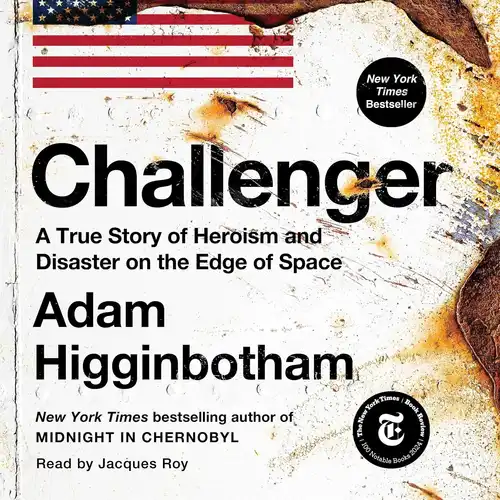
I found myself thinking about a dinner party I went to last year. A friend told a story about a small crack in her apartment wall. Everyone said it was nothing. Then the ceiling fell in. Why didn’t anyone speak up sooner? That question haunted me as I read Adam Higginbotham’s “Challenger: A True Story of Heroism and Disaster on the Edge of Space.” It is not a book about the explosion, exactly. More like a book about the long, quiet corridor of mistakes that led to it. The central question feels almost too heavy: When a giant system starts to break, why do the people inside it choose not to see?
The Engineer and the Silence
Higginbotham gives us a vivid portrait of Roger Boisjoly, the engineer who saw the danger in the O-rings. He was not a villain. He was a careful, technical man. He sent memos. He gave presentations. He begged his superiors to delay the launch. And they listened. They nodded. Then they launched anyway. What is remarkable is not his warning. It is the way the system absorbed his concern and turned it into static. There is a moment in the book where Boisjoly stands in a meeting room. He has just shown clear data about the risk of cold weather. His colleagues look at the floor. A manager says they need to make a “management decision.” That phrase becomes a kind of poison. The suspense does not come from whether the shuttle will explode. You know it will. The suspense comes from watching the people who could have stopped it choose not to. Higginbotham never reveals the final moments in a cheap way. He holds the tension in the space between the data and the decision. You feel the cold Florida morning in your bones. You want to scream at the page. But the people in the book cannot hear you. Bridge to deeper layer: The disaster was not a single broken part. It was a broken culture of hearing.
The Cost of Not Listening
The core theme here is not failure. It is the slow erosion of dissent. Higginbotham shows how NASA, after the Apollo success, became an organization that punished bad news. The key imagery is the O-ring itself. A small rubber seal. It should have been a minor detail. Instead, it became a symbol for everything the agency refused to see. The author describes it as “a whisper that became a scream too late.” He traces the engineering reports, the internal memos, the phone calls. Each piece of paper is a chance to stop the disaster. Each one gets filed away. The craft of the book is in its patient accumulation of evidence. Higginbotham does not shout. He lays out the details like a prosecutor. You start to notice a pattern. The managers who were promoted were the ones who said yes. The engineers who questioned were pushed aside. It is a universal pattern, really. Think of any large institution you have worked in. The person who raises a hand gets told to lower it. Higginbotham makes you feel the weight of that silence. The book is not just about space. It is about every meeting where someone knew something was wrong and said nothing. The title “Challenger” takes on a double meaning. It is the name of the shuttle. It is also the name of the person who dared to challenge the system. And how the system crushed them both.
What We Still Haven’t Learned
I finished the book on a rainy Sunday. I sat in my chair for a long time. The obvious lesson is about safety protocols and whistleblowers. But the deeper insight is more uncomfortable. The book shows that the disaster was not a mystery. It was a choice. A series of small choices made by smart, well-meaning people who convinced themselves that the risk was acceptable. Higginbotham writes about the post-disaster investigation. The commission found the cause in a single afternoon. The engineers had known for years. This is the core insight that crosses eras. We are still making these choices today. In hospitals. In factories. In schools. Every time a warning is ignored because it is inconvenient. Every time a person says “I don’t want to be the one who causes a delay.” Higginbotham does not offer easy answers. He offers a mirror. The book is for anyone who has ever sat in a room and felt the pressure to stay quiet. It will make you angry. It will make you sad. But mostly, it will make you ask yourself a hard question: If I saw the crack in the wall, would I speak? Or would I hope someone else did? Maybe the real tragedy is not that the Challenger exploded. It is that the people who could have saved it were already trained to stay silent.
