When Your Own Thoughts Become Exhausting
There is a particular kind of tiredness that has nothing to do with physical activity. You finish a conversation and keep replaying it. You make a small mistake and spend the rest of the day thinking about it. You are trying to make a decision, but every possible outcome creates another question.
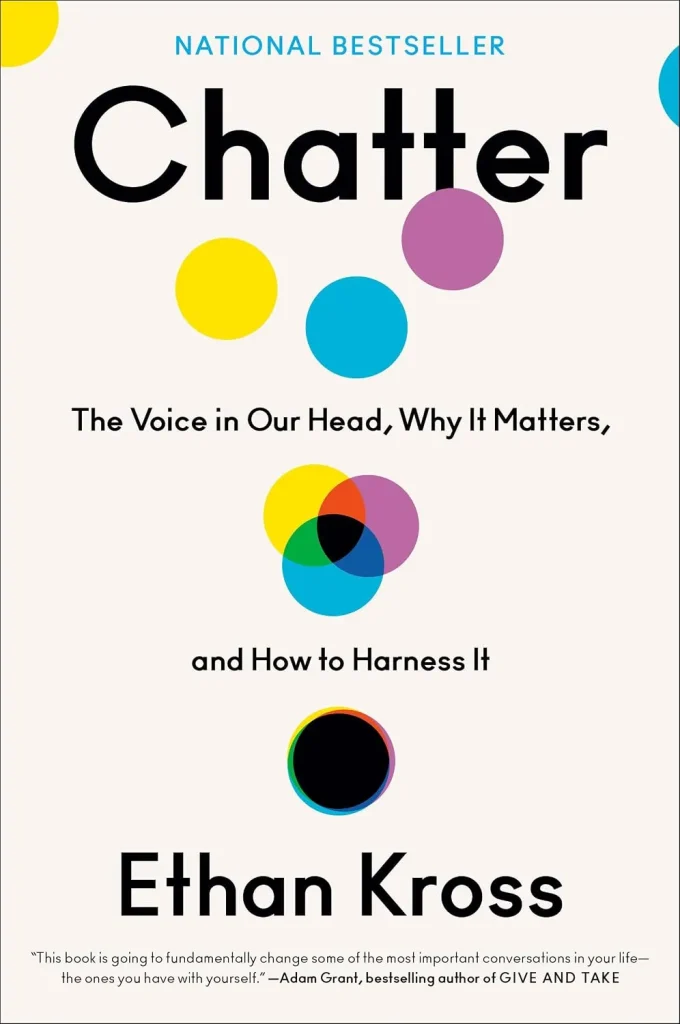
Chatter by Ethan Kross looks at this kind of mental noise. The book focuses on the inner voice people use when thinking about themselves, including the way that voice can become helpful in some situations and overwhelming in others.
Rather than telling readers to simply “stop overthinking,” Kross examines why the mind gets stuck in repetitive thought and what can help create some distance from it.
Why Thinking About a Problem Can Make It Worse
Thinking things through can be useful. You need to reflect on mistakes, understand what happened, and make plans for the future. The problem begins when reflection turns into repetition.
You may keep asking why something happened without reaching a new conclusion. The same memory comes back, the same worry gets analyzed from another angle, and the mind keeps searching for certainty that may not exist.
Chatter makes an important distinction between productive reflection and repetitive self-focused thinking. Once you notice that you are going in circles rather than solving anything, you can start treating the pattern itself as the problem.
The Distance Between You and Your Thoughts
One of the book’s most interesting ideas is that changing your perspective can change the way a thought affects you.
When people are caught in emotional thinking, they often experience their thoughts from the inside. Everything feels immediate and personal. Kross discusses ways of creating psychological distance, including looking at a situation from a more detached perspective.
Instead of endlessly asking, “Why am I like this?” you might step back and ask what you would tell a friend facing the same problem.
The situation has not changed, but your position within it has.
Your Inner Voice Is Not Always the Enemy
Chatter is not a book about getting rid of negative thoughts. The inner voice can help people plan, solve problems, prepare for difficult situations, and learn from mistakes.
The issue is what happens when that voice becomes too loud and repetitive.
This is important because trying to suppress every unpleasant thought can sometimes make people even more focused on it. A better approach may be learning when to engage with a thought and when to step away from it.
That is a much more realistic goal for anyone who deals with overthinking.
Small Changes Can Interrupt the Cycle
The book also looks at practical ways people can influence their mental state. Changing the environment, talking to someone, writing thoughts down, using familiar routines, and creating psychological distance can all affect the way the mind processes difficult experiences.
None of these techniques promises that anxiety or overthinking will disappear completely. Their value is in creating enough space to prevent one thought from taking over the entire day.
That makes the book more useful than simple advice to “think positively.”
What Makes Chatter Worth Reading?
The book stands out because it treats overthinking as something that can be understood rather than as a personal weakness. That perspective can be reassuring for people who are frustrated by how often their minds return to the same worries.
It is also relevant to everyday situations rather than only serious emotional crises. Work mistakes, relationship problems, embarrassing moments, difficult decisions, and uncertainty can all trigger the same mental loops.
For readers who want to understand why their minds keep returning to the same thoughts, Chatter provides a practical psychological framework.
Who Should Read It?
Chatter may be useful for people who:
- Replay conversations again and again
- Worry about things they cannot fully control
- Struggle to stop negative self-talk
- Become mentally exhausted by decision-making
- Spend too much time analyzing past mistakes
- Want healthier ways to handle overthinking
Final Thoughts
Chatter does not promise a mind that never produces negative thoughts. Instead, it offers a more useful goal: learning not to let every thought control your attention.
For anyone dealing with overthinking, self-doubt, or repetitive worry, that distinction matters. You may not always be able to stop the voice in your head, but you can become better at deciding when to listen to it and when to step back.

