I went to a small family reunion last summer. It was tense. Not because anyone was angry, but because everyone was careful. We tiptoed around a few subjects. Politics. Vaccines. A cousin who stopped speaking to another cousin. We all wanted to keep the family together. And we all failed.
That’s the feeling I carried into Eliza Griswold’s “Circle of Hope.” It’s a book about a progressive church in Philadelphia that falls apart between 2019 and 2022. But honestly, it’s a book about any group of people who love each other and still can’t make it work. Griswold asks a quiet but devastating question: what happens when everyone genuinely wants to do good, but they mean completely different things by that word?
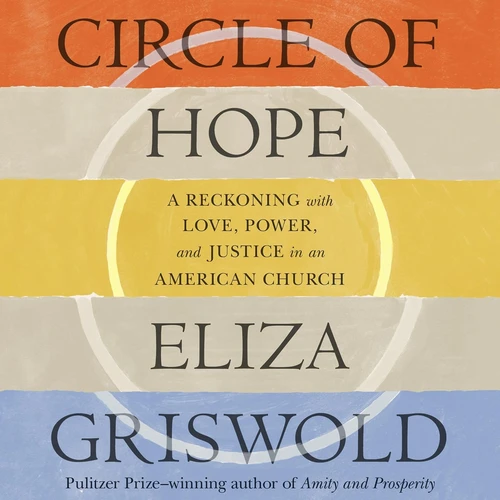
The book follows two pastors, a congregation, and a slow-motion fracture. The church started as a radical experiment. It was anti-racist, pro-LGBTQ, deeply committed to social justice. Members marched together, prayed together, and shared meals. They believed they were building a new kind of Christian community. One that was honest about power and privilege. One that didn’t look like the conservative churches they had left behind.
But then the pandemic hit. Then George Floyd was murdered. Then the protests came. Suddenly, the question wasn’t theoretical anymore. What does justice actually require? Some members wanted the church to become fully activist. To close its doors and give all its resources to Black-led organizations. Others wanted to keep the doors open. To hold space for grief and prayer. To be a sanctuary, not a protest march. Neither side was wrong. That’s the painful truth Griswold captures. She doesn’t take sides. She just shows you how two groups of good people can look at the same situation and see two completely different moral obligations.
What the Church Was Really About: Love, Power, and the Limits of Agreement
The core theme of “Circle of Hope” is something Griswold calls “the problem of competing goods.” It’s a deceptively simple idea. Most of us think conflict happens because someone is bad or wrong. But this book argues something harder to swallow. Sometimes conflict happens because people are trying to be good in different directions. One person’s act of love feels like betrayal to another. One person’s call for justice feels like abandonment to someone else.
Griswold’s writing is precise and restrained. She doesn’t dramatize the fights. She records them. She lets the church members speak for themselves. There’s a subtle light in her storytelling, though. She catches small moments of tenderness even in the arguments. A shared laugh. A hand on a shoulder. The way people still bring casseroles to each other even when they are barely speaking. That’s the part that got me. The book is about a split, but it’s also about people who kept loving each other through the split. They just couldn’t figure out how to stay together.
The book has one real limitation. It focuses almost entirely on the church leadership and a few vocal members. I wanted to hear more from the quiet people in the pews. The ones who just showed up every Sunday and tried to hold the middle. I suspect their story was also complicated, but Griswold doesn’t give them much space.
The Deeper Question: What Do We Owe Each Other?
I closed this book and sat with it for a while. I thought about my family reunion. I thought about friendships I have lost in the last few years. I thought about the people I still love but can’t quite reach anymore.
“Circle of Hope” is not a book that offers solutions. Griswold doesn’t tell you how to fix a fractured community. She doesn’t pretend there is a magic formula. Instead, she leaves you with a harder question. Maybe the real work is not finding agreement. Maybe it is learning how to stay in relationship with people you deeply disagree with. Maybe that is what love actually requires. Not shared politics. Not shared theology. Just the stubborn refusal to stop showing up.
That is the real emotion of this book. It’s not hope in the way we usually mean it. It’s not optimism or certainty. It’s more like a kind of tired, persistent faith. The faith that even when a circle breaks, the people in it can still matter to each other. I don’t know if that is enough. But I am still thinking about it.
