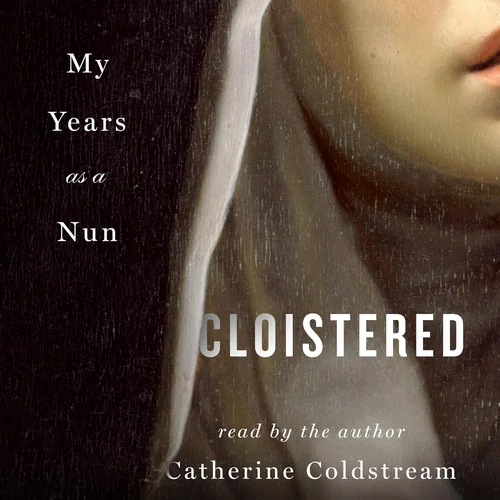
I went to a monastery once, for a weekend. I remember the thick quiet that settled on my shoulders like a heavy coat. It felt holy, at first. By the second day, I was fidgeting. By the third, I was desperate for a radio. So when I picked up Catherine Coldstream’s memoir, Cloistered: My Years as a Nun, I thought I understood something about silence. I was wrong.
Coldstream’s story asks a question that haunts me still. What happens when you give yourself completely to a system that demands your whole heart, your whole mind, your whole body? And then what happens when that system starts to feel less like a sanctuary and more like a prison? The book is not an exposé. It is not a scandal. It is something quieter and more dangerous. It is a confession.
A Vivid Portrait of a Woman Who Drank the Silence Like Wine
Catherine Coldstream was in her twenties when she entered the Carmelite monastery in England. She was smart, restless, searching. She wanted a life of meaning, of deep prayer, of total surrender. I found myself nodding as she described her early days. The attraction of the cloister is real. The beauty of the liturgy, the simplicity of the routine, the feeling of being held by something ancient and vast. She was not escaping. She was running toward.
But here is the thing Coldstream shows us with painful clarity. The same walls that protect you can also trap you. The same silence that lets you hear God can also drown out your own voice. She describes the small humiliations. The way her letters were read. The way her personality was slowly sanded down. The way she learned to smile when she was dying inside. I kept waiting for the dramatic break. It didn’t come. The leaving was slow, like ice melting. That made it more terrifying, honestly. She does not demonize the nuns. She still loves some of them. That is the hardest part to read. Because it means the betrayal was not violent. It was silent.
The Core Theme: The Architecture of Surrender and the Light That Got In
The central argument of this book, I think, is about the nature of surrender. Coldstream surrendered to God. But she also surrendered to a human institution. The two became tangled. The book’s subtle light comes from her refusal to make that tangle simple. She shows how the very practices meant to free her soul ended up imprisoning her spirit. The hours of prayer. The silence. The obedience. All of it was beautiful, and all of it was dangerous.
She writes about a moment in the garden. A single ray of sunlight falls on a stone wall. She realizes that she has not looked at sunlight for years. Not really. She had been looking at the rules about sunlight. The proper way to experience it. The correct posture. That moment is the hinge of the whole book. The light was always there. She just stopped seeing it. The institution had given her a lens, and the lens had become the only thing she could see. I found myself thinking about my own life. All the systems I have trusted. Work, relationships, beliefs. Where do I stop seeing and start obeying?
What This Book Gives You, and What It Doesn’t
Coldstream is a beautiful writer. Her prose is clean and unadorned, like the walls of her monastery. She does not overexplain. She trusts the reader to feel the weight. The book is best for anyone who has ever loved something that hurt them. A church. A partner. A career. A family. It is for people who have wondered if they were the problem, and then wondered if the problem was the system.
There are limitations. The book is very internal. There is little about the outside world, about politics, about the other nuns as full characters. Some readers might find it claustrophobic. But that is the point. Claustrophobia is the subject. You feel it in the reading. I felt it in my chest. What you get in return is a rare gift. A testimony that leaving is not failure. Sometimes it is the most faithful thing you can do. You will not get a checklist of “how to leave.” You will get something better. Permission to trust the quiet voice inside you, even when the louder voices say stay.
The Last Note: A Recommendation That Hums Like a Bell
Maybe that is what this book really is. A permission slip. A long, slow permission to leave. Coldstream does not tell you what to believe. She tells you what she lived. And her living asks a final question. What if the silence you entered was not God’s silence, but the silence of a system that needed you small? What if leaving is the first real prayer you have prayed in years?
I recommend this book to anyone who has ever stayed too long. To anyone who has ever confused safety with holiness. To anyone who has ever felt a door close behind them and wondered if they would ever find the handle again. It will not give you easy answers. It will give you company.
