I was at a dinner party last month, surrounded by people who all seemed to know each other. I was the only Asian face in the room. Someone made a joke about my name. I laughed. I thought of Connie Chung.
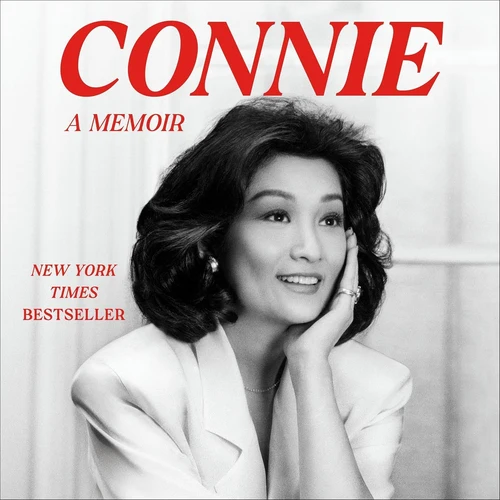
Her memoir, simply titled Connie, landed on my desk like a question I had been avoiding. What does it cost to be the first? Not just the first Asian American anchor on a major network. The first woman to sit in that chair. The first to insist she could do more than read a teleprompter. I opened the book expecting a victory lap. Instead, I found a wound.
Chung does not present herself as a hero. She is a woman who walked into newsrooms where the men called her “China Doll” and the women saw her as competition. She describes the early years with a kind of detached precision. She was hired because she was different, but the difference was a liability. She had to be twice as fast, twice as tough, and somehow never show the exhaustion. The core conflict is not with the network executives. It is with the mirror. She had to decide whether to become what they wanted or to insist on who she was.
The suspense in Connie comes from watching her negotiate that tightrope. She gets the interviews. She breaks the stories. But every win feels provisional. The reader holds their breath, waiting for the moment she stumbles. I will not tell you if she does. What matters is what she learns in the process. She discovers that the room does not change because you prove yourself. It changes because you refuse to leave.
The Newsroom as a Stage for Invisibility
Here is the heart of the book. Chung writes about the feeling of being invisible and hypervisible at the same time. The executives saw her race and her gender. They did not see her ambition. She describes sitting in meetings where the men talked over her, where her ideas were repeated back to her as if they were new. The core theme of the memoir is erasure. The key imagery is the glass. She is always on the other side of something. A window. A screen. A barrier.
She learned to use the invisibility as a strategy. She would stay quiet in the meeting, then execute the plan without asking permission. It was not rebellion. It was survival. She made the newsroom work for her by pretending she was not trying to win. I found myself underlining passages about the silence. She writes about the moment she realized that speaking up was not enough. You have to speak in a way they cannot ignore.
The craft here is subtle. Chung does not lecture. She shows the exhaustion in small gestures. The way she learned to read a room. The way she memorized the names of every producer, every camera operator, every assistant. She understood that power is not just in the anchor chair. It is in the relationships you build when no one is watching. That is the universal pattern. Anyone who has ever felt like the outsider knows this game. You learn the rules faster than anyone else. You play them better. But you also ask yourself, at night, whether the game is worth playing at all.
The Weight of the Door You Opened
Chung’s story does not end with her success. That is what makes this memoir different. She wrestles with the legacy of being first. She received letters from young Asian women who said she gave them permission to dream. But she also felt the weight of representing an entire race. One mistake would not just be her failure. It would be proof that someone like her did not belong.
I appreciated her honesty about the loneliness. She writes about the friendships she could not keep because she was always working. About the marriage she almost lost because she did not know how to be vulnerable. About the children she did not have because the timing was never right. The book does not pretend that ambition has no cost. It asks whether the cost is worth paying.
The core insight of Connie is that being first is not a gift. It is a burden you choose. You carry the door for the people behind you, but you also carry the knowledge that the door might close. Chung writes with a kind of wry acceptance. She did not become a saint. She became a journalist who happened to be Asian. And that, somehow, is the most radical thing of all.
Maybe that is what the dinner party taught me too. You do not change the room by blending in. You change it by being visible, by refusing to be erased, by staying long enough that they have to learn your name. Connie Chung learned that lesson the hard way. She wrote it down so we do not have to.
