I was at a dinner party last week. Someone checked their horoscope before ordering wine. Someone else threw salt over their shoulder after spilling it. I laughed, but I also looked at my own phone. Later that night, I opened Tabitha Stanmore’s “Cunning Folk: Life in the Era of Practical Magic.” It made me wonder. Are we really so different from the people who paid a cunning woman to find their lost cow or cure their fever?
The People Who Needed Magic
Stanmore does not write about witches or demons. She writes about the cunning folk. These were the neighborhood experts in practical magic. They found stolen goods. They healed sick children. They predicted the weather or who would get pregnant next. Their clients were ordinary people. Farmers, midwives, servants, merchants. People who had no other way to understand a world that kept breaking their hearts.
The book’s core portrait is not of one person but of a system. A woman loses her wedding ring. A man’s horse goes lame. A child has a mysterious rash. They go to the cunning folk because doctors are expensive and unreliable. Because the church offers prayer but not answers. Because something has to make sense. Stanmore shows us these clients with tenderness. They are not stupid. They are not superstitious. They are human. They need control over something that feels uncontrollable. I found myself nodding. I have done the same thing, just with different tools.
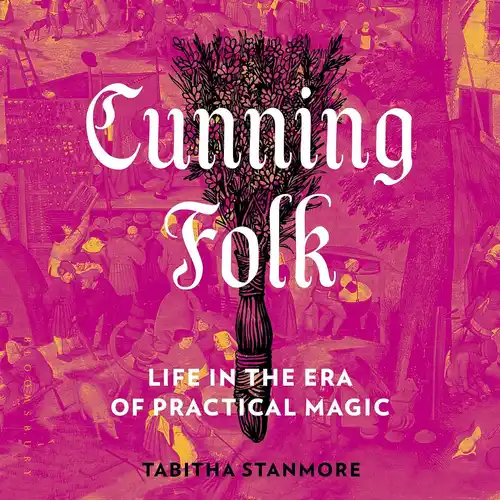
The suspense in this book is not about whether the magic works. It is about why people keep coming back. Why they keep paying. Why they keep hoping. Stanmore never gives us a simple answer. She just shows us the patterns. And those patterns feel uncomfortably familiar.
The Quiet Work of Hope
The core theme here is uncertainty. How do people live with it? Stanmore uses imagery of thresholds. Doorways, borders, edges of fields. Places where this world meets something else. The cunning folk stood at those thresholds. They offered a bridge between the known and the unknown.
Her craft is subtle. She does not romanticize the cunning folk. Some were frauds. Some believed their own magic. Some helped, some hurt. She just presents the evidence and lets you sit with it. The most powerful imagery is the simplest. A candle lit in a window. A knot tied in a string. A small gesture against the dark. These acts did not change the world. They changed how people felt about the world. I realized something reading this. We still do that. We wear lucky socks for an interview. We knock on wood. We send a prayer to a god we are not sure exists. The gestures change. The need does not.
The Spell We Still Cast
Stanmore ends the book without judgment. She does not call the cunning folk fools or heroes. She just notes that the demand for their services only faded when other systems appeared. Insurance. Police. Modern medicine. But even then, it did not fully disappear. It just went underground.
The truth is we have not stopped believing. We have just changed the names. Astrology is a billion dollar industry. Manifestation is a self-help trend. We share good luck memes before exams. We chase signs from the universe. We want someone or something to tell us it will be okay. We want a small piece of certainty in a world that gives none.
There is a humility in this book that I admire. Stanmore does not mock the past. She does not mock us either. She simply shows that the desire for practical magic is not ignorance. It is a survival instinct. It is a way of saying, “I do not know what will happen, but I will do something anyway.”
So maybe the question is not whether we have outgrown magic. Maybe the question is what happens to a society that pretends it has.
