I met this book on a Tuesday night, three weeks into a panic spiral that made my own living room feel like a trap. I was sitting on the bathroom floor, cold tiles against my back, trying to remember how to breathe. My phone screen glowed with reviews for Barry McDonagh’s Dare: The New Way to End Anxiety and Stop Panic Attacks. Seven thousand ratings. A 4.7 average. People claiming it saved their lives. I had tried therapy, meditation apps, and enough herbal teas to flood a small village. Nothing stuck. So I bought the book with the desperate hope of someone who has run out of better ideas.
Here is the central question I carried into those pages: can a simple four-step method truly dismantle the terror of panic, or is this just another self-help promise wrapped in a confident smile? What I found surprised me, frustrated me, and eventually helped me, though not in the way the marketing suggested.
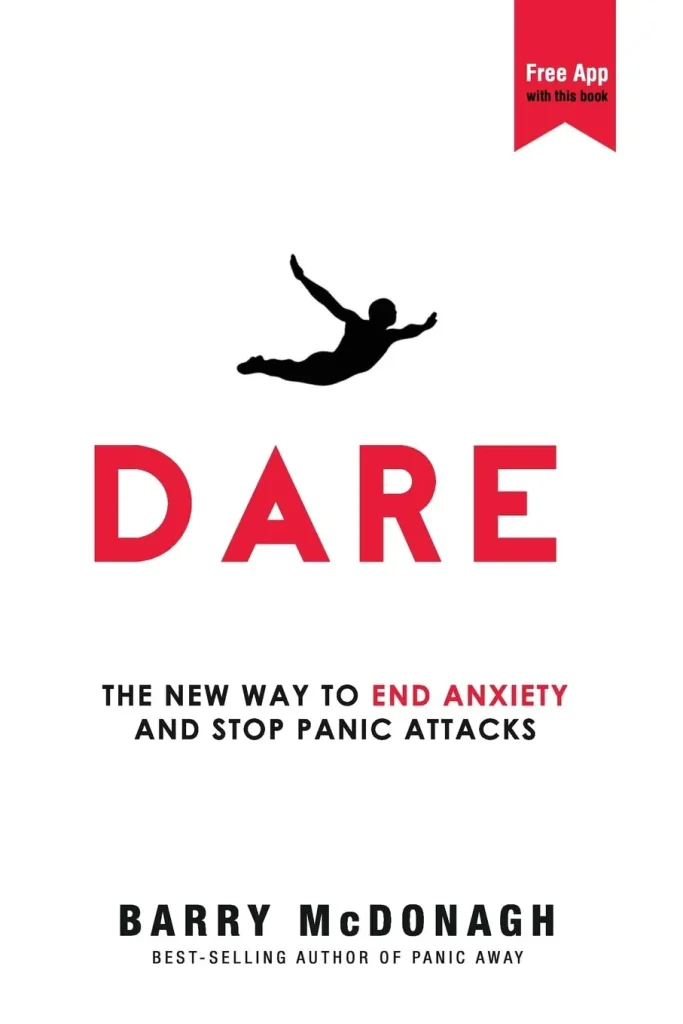
The DARE Method and What It Does Well
The DARE acronym breaks down like this: Diffuse the scary thought by saying “so what,” Allow the anxiety to be there without fighting it, Run towards the sensation by telling yourself you are excited rather than terrified, and Engage in something that pulls your attention outward. McDonagh writes like a friend who has been through it, not a clinician looking down from a podium. That tone matters. When you are curled up at 2 AM convinced your heart is failing, you do not want a textbook. You want someone who says, “I know this feeling. Here is the way out.”
The book excels at attacking the fear of fear itself—that vicious loop where you become anxious about being anxious. McDonagh’s insight is genuine: the more you resist a panic sensation, the louder it screams. His instruction to lean into the discomfort feels counterintuitive and terrifying at first. I remember trying the “Run towards” step during a wave of dizziness, telling myself I was excited, feeling utterly ridiculous. And then something shifted. The sensation lost its grip because I stopped feeding it with resistance. For pure panic disorder and agoraphobia, this approach has real teeth.
Where the Book Falls Short
Here is where my praise gets complicated. McDonagh claims his method works for everything: OCD, social anxiety, PTSD, depression. That is a stretch, and a dangerous one. The book borrows heavily from Dr. Claire Weekes, whose 1962 classic Hope and Help for Your Nerves laid the groundwork for acceptance-based anxiety treatment. McDonagh repackages her Face, Accept, Float, and Let Time Pass philosophy with modern language and apps. Credit where it is due: he made her wisdom accessible to a generation that would never pick up a book from 1962. But he leaves out crucial pieces. Weekes spent considerable time addressing the root causes of anxiety, those insoluble life problems involving grief, guilt, or impossible work situations. Dare barely touches this territory.
The medication stance made me bristle. McDonagh repeatedly frames psychiatric drugs as crutches, a myth to be discarded. For someone like me, whose anxiety reached the point of complete dysfunction, that framing feels shame-inducing. I needed short-term medication to function well enough to apply any technique, including his. The book does not acknowledge that reality with any grace. It presents itself as fail-proof, and when it did not instantly cure me, I felt like the broken one. That is a profound failure of compassion in a book that claims to offer hope.
A Practical Tool, Not a Complete Answer
If your struggle is panic attacks and the fear of having them, read this book. The core method is sound, practical, and genuinely liberating. Keep it on your phone for those moments when panic rises. Read it slowly. Do not rush into aggressive engagement with activities, as I did, and exhaust yourself into depression. His advice to occupy every waking moment backfired spectacularly for me. Moderation matters.
If your anxiety stems from trauma, complicated grief, or a chemical imbalance that requires medical support, this book alone will not be enough. It might even make you feel worse. And if you have a physical condition that mimics anxiety, like a heart issue, McDonagh’s assumption that your medical tests came back clear will ring hollow.
I recommend pairing Dare with Weekes’ original work for depth, and with books like The Mindful Way Through Depression if your struggles extend beyond panic. Therapy and medication are not failures. They are tools. Use what you need.
The book will not cure you overnight. It will not replace professional help when you need it. But it will hand you a practical response for the moment when panic arrives uninvited, and sometimes that is exactly what you need to take the next step. McDonagh says anxiety is an experience you move through, like grief. I am not sure I fully agree. But I am sure that the DARE response gave me something my therapists never did: a concrete action plan for the chaos in my chest.
Every wave of anxiety you allow to pass through you without fighting it weakens the next one. That line stayed with me. It still does.
