David Perry died in the autumn of 2022, nine days after a cancer diagnosis. He liked stamp collecting, fish and chips, comic novels, his local church, the Antiques Roadshow. Sarah Perry is his daughter-in-law. She and her husband Robert nursed him at home, bathed him, dressed him, sat with him. This book is her account of those days.
What if the ordinary life is the only kind there is, and we have simply agreed not to notice?
The Man Who Said He Was In A Bit Of A Muddle
David barely speaks in these pages. He says “I’m in a bit of a muddle,” and that phrase has to carry everything, from incontinence to not being able to eat. I’ll be honest, this bothered me at first. I thought Perry was flattening him, turning a grown man into a patient, a body to be managed.
Then I understood what she was doing. She is showing you what dying actually takes from a person, and it takes the vocabulary first. The man who once had opinions about stamps and church and the correct way to make tea is reduced to one sentence he repeats. That is the horror. Not pain. Subtraction.
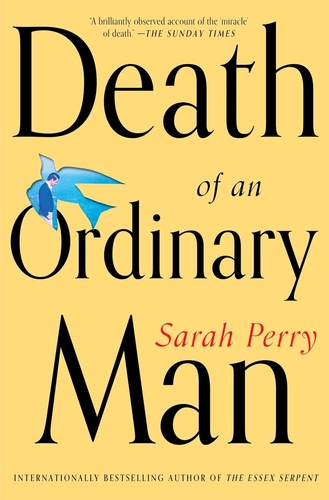
What holds the book together is Perry’s refusal to look away, and her refusal to make it beautiful. There is a GP here who is unfeeling, and Perry does not soften him. There are nurses and a pastor and relatives who are kind, and she does not soften them either. She just writes down what happened, hour by hour, and lets you decide what to feel.
I kept thinking about my own aunt’s last week, and how I found reasons not to visit on the Thursday.
The Bed That Displaced The Air In The Room
Perry’s central image is the bed. She calls it “an engine for dying in,” so large it displaced the air in the room. That one line does more than a chapter of reflection could. The furniture becomes the machine. The room becomes the site. Everything else in the house quietly stops mattering.
Her prose is plain on purpose. Short sentences for the physical facts, longer ones when she lets herself think. The effect is that you trust her. She is not performing grief for you. She is reporting it, and the reporting is the love.
Then there is the line about death being the dark backing a mirror needs if we are able to see anything. I sat with that one for a while. It is not a comforting thought, exactly. More like a true one.
The strongest argument for a life well lived is not what it achieves. It is who stays in the room when there is nothing left to achieve.
The Absence at the Center
The problem with Death of an Ordinary Man is that David stays a blur. Perry admits she is writing from her own perspective, and it shows. We get her emotional state, her husband’s to a lesser degree, and David mostly as a set of habits and a laugh. I wanted more of him alive. The opening section is brief, the “Afterlife” chapter at the end is brief, and the middle is a long, careful watch.
Some readers will find that insufficient. Others will find it exactly honest. I land closer to honest, but I felt the absence.
This book is for people who have sat with someone at the end, or who know they will. It is for anyone who has been told to look away and quietly refused. It is not for someone in fresh, raw grief, and I mean that seriously. Perry’s detail is unsparing, and it will not hold you.
What you get, if you stay, is a shift in scale. You start noticing the specific things about the people you love. The way someone answers the phone. The particular sound of a laugh.
Perry’s real claim is that every death ends an event so improbable it counts as a miracle, and irreplaceable in every particular. I believe her now. I did not before.
This book won’t make dying easier. It will make you slightly less willing to leave the room.

