Why Some Conversations Become So Difficult
A conversation can begin with a simple disagreement and quickly turn into something much bigger. One person feels criticized, the other becomes defensive, and soon neither side is really talking about the original problem anymore.
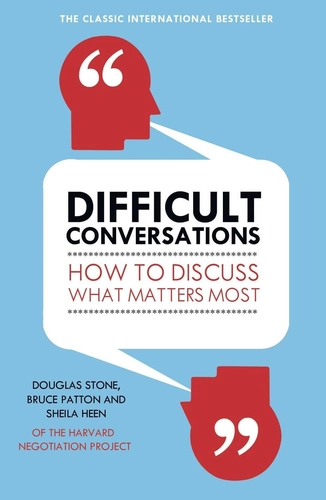
Difficult Conversations by Douglas Stone, Bruce Patton, and Sheila Heen looks at what happens in these moments. Instead of teaching people to avoid conflict, the book explains how to understand difficult conversations more clearly and approach them with less defensiveness.
The Problem Is Often Bigger Than the Words
One useful idea in the book is that difficult conversations usually contain several issues at once. There is the actual disagreement, but there are also assumptions about what the other person meant, emotions about what happened, and concerns about how the situation affects the relationship.
That is why simply choosing better words does not always solve a conflict. You may be arguing about what someone said while actually feeling hurt, ignored, or disrespected.
Recognizing those different layers can make the real problem much easier to see.
Why We Get Defensive
When people feel blamed, they often focus on proving that they are not at fault. The conversation then becomes a battle over who is right instead of an attempt to understand what went wrong.
The authors encourage readers to look beyond blame and examine what each person contributed to the situation. That does not mean taking responsibility for things you did not do. It means recognizing that most relationship problems are more complicated than having one completely innocent side and one completely guilty side.
This shift can make difficult conversations much more productive.
Emotions Are Part of the Conversation
The book also takes emotions seriously. Anger, disappointment, fear, and embarrassment can strongly influence the way people speak and listen.
Instead of trying to suppress those emotions, readers are encouraged to understand what they are telling them. A strong emotional reaction may reveal an unmet need, an important expectation, or a fear that has not been expressed clearly.
Once the emotion is understood, it becomes easier to talk about the actual issue.
What Makes Difficult Conversations Worth Reading?
The book feels practical because its ideas can be applied to everyday situations. Relationship disagreements, workplace problems, family conflicts, and misunderstandings can all become easier to navigate when you stop treating the conversation as a simple contest between right and wrong.
It is also useful for people who tend to avoid difficult topics. Avoiding a conversation may keep things calm temporarily, but unresolved issues often return later with even more frustration.
Who Should Read It?
This book may be a good fit for people who:
- Avoid difficult conversations
- Become defensive during arguments
- Struggle to express feelings clearly
- Overthink disagreements afterward
- Want healthier communication in relationships
- Need better ways to handle conflict at work or at home
Final Thoughts
Difficult Conversations offers a practical reminder that communication problems are rarely just about choosing the right words. Our assumptions, emotions, expectations, and fears can all shape what we hear and how we respond.
For readers interested in communication, emotional regulation, and healthier relationships, this book provides a useful framework for handling the conversations we would normally prefer to avoid.