I was scrolling through a streaming service the other night. You know the one. I wanted to watch a specific movie, a classic I had seen years ago. It took me seven clicks and three pop-up ads to find it. The search bar now prioritizes sponsored content. The recommended titles are all shows I would never watch. I felt a little tired. A little cheated. I thought: this used to be good. What happened?
That is the question Cory Doctorow answers in his book Enshittification: Why Everything Seems to Be Getting Worse and What We Can Do About It. He gives the feeling a name. He traces its roots. And he asks something harder: once you see the pattern, can you refuse to play along?
The Protagonist Is You, and You Are Losing
Doctorow does not write about a single hero or a fictional character. His protagonist is the user, the customer, the person who once loved a platform. He paints a vivid portrait of how we get hooked. A new app arrives. It is generous, cheap, maybe even fun. It gives you something real. You invest time, data, and loyalty. Then, slowly, the app changes. It stops serving you. It starts serving shareholders. The search results get worse. The prices creep up. The experience rots.
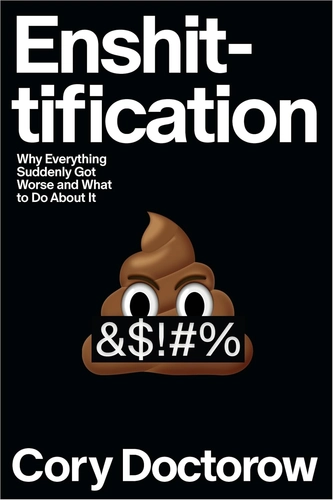
I found myself nodding along, page after page. Doctorow shows how the core conflict is not between you and the algorithm. It is between you and the company’s need for infinite growth. He explains the life cycle of a platform: first it is good to users, then it is good to business customers, and finally it is good only to itself. He never reveals the ending, because the ending is not written yet. But he makes you feel the suspense. Will we let this happen? Or will we push back? The emotional title of this section might be: The Slow Betrayal You Cannot Quite Name.
The Core Theme: Platforms Are Parasites, and We Are the Host
Doctorow’s central argument is that enshittification is not a bug. It is a feature. He uses the imagery of a parasite. A platform starts by offering a warm, safe home. You move in. You build your life there. Then the parasite stops feeding you and starts feeding on you. It extracts your attention, your money, your relationships. It sells them to the highest bidder.
The key image that stuck with me is the “tollbooth.” Doctorow describes how platforms become gatekeepers. They control the road. You cannot go around them. You have to pay the toll. And the toll keeps rising. This is not a metaphor. It is a precise description of how Amazon squeezes its sellers, how Google buries organic results under ads, how Uber raises prices on rainy days. His craft is in making the abstract feel personal. He does not just name the pattern. He shows you your own life in it.
This character’s struggle, your struggle, reveals a universal pattern. We are not isolated individuals having bad experiences. We are all hosts to the same parasite. The emotional title here: The Tollbooth You Did Not Choose.
The Way Out: It Is Not Hopeless, But It Is Hard
Doctorow does not leave you in despair. He completes the argument by showing that enshittification is a choice, not a law of nature. He points to moments when people pushed back. When workers unionized. When regulators stepped in. When users left a platform and built something better. The key, he argues, is to reclaim the idea that a service can be good and stay good. That growth does not have to be infinite. That a platform can serve its users forever, not just until the next quarterly report.
I will be honest: his solutions are not easy. They require collective action. They require breaking up monopolies. They require you to pay for things that are free now. But at least he gives you a map. He tells you what the fight looks like.
Who is this book for? Anyone who has felt that sinking feeling when an app updates and something breaks. Anyone who has wondered why the internet feels smaller, louder, and more expensive. What will you get from it? A name for your frustration. A story that connects your small annoyances to a bigger pattern. And maybe the courage to do something about it.
The book has a weakness. It is dense. Doctorow loves digressions and footnotes. Some chapters feel like a lecture. But I think that is okay. The subject deserves seriousness.
I closed the book and looked at my phone. I thought about the apps I use every day. I thought about the tollbooths I pay without noticing. And I asked myself: what am I willing to lose to keep something good?
