I read the first page of Etna at my kitchen table at 6 AM, coffee going cold, my own shepherd mix snoring at my feet. I thought I knew what I was getting. A war dog walks home. Fine. Then I hit the line about the scent of a morning kiss leftover on a cheek, and I forgot about the coffee entirely.
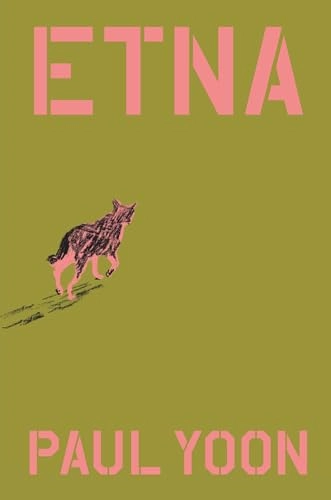
Paul Yoon’s new novel asks something quietly devastating: what does home mean when the place you remember no longer exists? Etna, a shepherd mix pulled from a seaside farm as a puppy, spends five years sniffing out landmines and explosives for soldiers in an unnamed country’s war. When the fighting ends, he walks away from his unit and tries to find his way back to the farm by the sea. He knows the war destroyed everything. He goes anyway. Why?
The Warrior Who Never Chose the War
What struck me most is how Yoon never lets Etna become a metaphor. He stays a dog. His memories are smells and textures. He remembers his mother’s warmth, the salt air, the quiet husband and wife who fed him. He does not think about patriotism or ideology or the politics of the conflict. He remembers the farm. That’s all.
Etna’s handler Jason dies in combat. His friend Fuji dies too. The war takes everyone and everything, and Etna keeps going because going is what he knows. He meets an old blind dog at a way station, a trio of territorial strays in the city, a donkey, a woman named Soojin who can somehow speak to him through thought. Each encounter strips away another layer of his training. He learns to protect strangers. He learns to trust again.
The core conflict is not whether Etna reaches the farm. It’s whether he can survive arriving. I kept worrying about what he would find, and Yoon kept making me feel the terror of not knowing. There is a moment with an aging dog’s cataracts that broke something in me. I won’t describe it further. You should stumble into it the way I did.
Reading the World Through Scent
The novel’s central image is the nose. Etna reads the world through scent, and Yoon’s prose follows suit. The writing is spare, almost skeletal, with no quotation marks and short sentences that feel like a dog’s focused attention. This is not a gimmick. It works because Yoon commits fully to the sensory reality of his narrator.
The old dog at the way station has a disfigured nose and clouded eyes. He shares tinned food with Etna. In return, Etna digs up the bones of the old dog’s former owners from a field that came under siege. The old dog cannot see the bones. He can only smell them. He thanks Etna. That moment—the gratitude of a blind dog for the recovered remains of the humans he loved—is the whole novel in miniature. Loss is not something you get over. It’s something you learn to carry.
Yoon is writing about the aftermath of war, but he never names the war. He doesn’t need to. The landscape is any landscape after violence. The people Etna meets are any people trying to start again. His craft builds an argument: home is not geography. Home is memory, and memory is fragile, and we hold onto it anyway because what else is there.
The Decision to Keep Walking
I finished this novel in one sitting, and then I sat on my porch for a long time watching my dog sniff the grass. I kept thinking about how Etna’s journey is not heroic in any conventional sense. He does not defeat enemies. He does not save the world. He walks, he smells, he remembers, he protects the few creatures who show him kindness. That’s it.
The novel has real weaknesses. The ending is deliberately unresolved, and one reviewer called it fleeting. I felt that too. You want more. You want to know what happens after the last page. Yoon refuses to tell you, and I think that’s the point. The discomfort of not knowing is the discomfort of living in a postwar world. There is no tidy resolution. There is only the next day.
Dog lovers should read this, obviously. But also anyone who has ever lost a place they thought they could return to. Anyone who has ever wondered if home was a person, not a location. Anyone who has read The Odyssey and wished Odysseus had four legs and a better sense of smell. If you need plot momentum and clear endings, skip it. If you find anthropomorphized animals inherently sentimental, skip it. If you want your war novels to name the enemy and declare a side, skip it. Etna does none of that.
What did I take from it? I learned that hope is not optimism. Hope is the decision to keep walking toward a place that might not exist anymore. Etna does not know if the farm survived. He walks anyway. Somewhere in that walking, he finds a new pack, a new reason, a new understanding of what home could be. That’s not a cheap lesson. It’s a hard one.
“To remember there was a place before all this where there were days that passed into other days peacefully, peacefully, without terror.” That sentence is the whole book. It’s also the whole human condition.
This book won’t give you closure. It will make you feel slightly less alone in the not knowing.

