What if the great romance of a woman’s twenties is not a man at all?
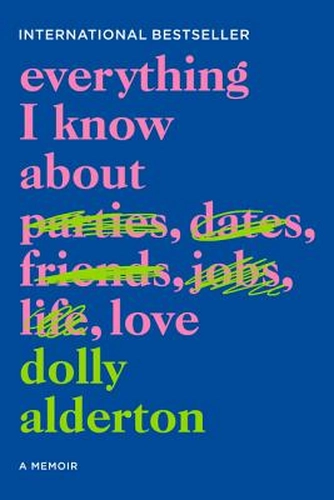
Dolly Alderton walks us through her teens, her university years in Exeter, and most of her twenties in London. There are terrible dates. There is a lot of drinking. There is a recurring boyfriend she calls a hummingbird, a man she keeps returning to because he never quite lands. There is a job she stumbles into, columns she writes, a flat she shares, and a slow, ugly stretch of anxiety and disordered eating that she does not dress up.
Threaded through all of it is Farley. Her best friend. The person she calls when the night goes wrong, the one who knows where everything is in her head.

The Decade That Refuses to Give You the Ending
The plot is not really a plot. It is a decade, rearranged. Lists, recipes, emails, text exchanges. Some readers find these interludes charming. I found a few of them tedious, honestly, and skipped two recipes outright. The early chapters drag too. Alderton takes about a hundred pages to find her footing.
But once she does, the book has a pulse.
What struck me most was how deliberately she withholds the ending you expect. You keep waiting for the man who fixes everything. Alderton keeps not giving him to you.
Nearly everything Alderton knows about love, she learned from her long friendships with women. That sentence sounds like a greeting card. It is not. It is the whole book, and the memoir is the evidence.
Watch how she handles the hummingbird. He is not a villain. He is a mirror. Every time Alderton returns to him, she is auditioning for a version of herself she thinks she needs a boyfriend to become. The reader sees it before she does, which is uncomfortable in the best way.
The Bathroom Floor and the Phone Call
The image I kept returning to is a bathroom floor. Not one specific scene, more the pattern of them, the cold tile, the crying, the friend on the other end of the phone. Alderton uses domestic mess as her emotional register. Hangovers. Takeaways. A wedding where she is not the bride. The book argues that love lives in the unglamorous maintenance of other people, and it makes that argument through sheer accumulation of small, ugly, tender moments.
There is a passage where Farley tells Alderton she can do long-term love, and when Alderton protests that her longest relationship lasted two years, Farley says she is talking about the two of them. I put the book down there. Not because it was a twist. Because it was the entire point, stated plainly, and I had spent two hundred pages not wanting to hear it.
Is the argument airtight? Not quite. Alderton’s romantic relationships get thinner treatment than her friendships, which is a structural choice that sometimes reads as avoidance. And her privilege, the London flats, the family safety net, goes mostly unexamined. I noticed. I minded a little.
Still, the verdict holds: this is a memoir that argues female friendship is not a consolation prize for the love you did not get. It is the love you got.
What the Book Gives You Permission to Stop Doing
Alderton published this in 2018. The world since has gotten lonelier in ways she could not have written about yet. Reading it now, in an era of friendship recessions and apps that promise intimacy in twelve messages, the book reads less like a memoir and more like a corrective. It says the thing our culture keeps forgetting: that the person who texts you back at 2 a.m. is not a side character in your life.
What I took from it was not advice. It was permission. Permission to stop treating my friendships as the waiting room for my real life.
This book will not fix your dating life. It will not tell you what to do about the person who has not texted back. But it will make you feel slightly less insane for loving your friends more than you love most of the men you have dated.
So here is the question I am still sitting with, tea gone cold, phone still open: if friendship is the great love of your life, why do we keep writing it as a subplot?

