I was chatting with a friend recently. She’s a successful lawyer with two kids and a husband who genuinely thinks he helps around the house. She told me she spends three hours every Sunday planning the family’s week. Meals, appointments, school forms, birthday gifts for classmates, the gift for her mother-in-law. Her husband thinks he’s being supportive because he loads the dishwasher. She laughed when she said it. It wasn’t a happy laugh.
What is Femenomics about?
That laugh. That specific, exhausted laugh.
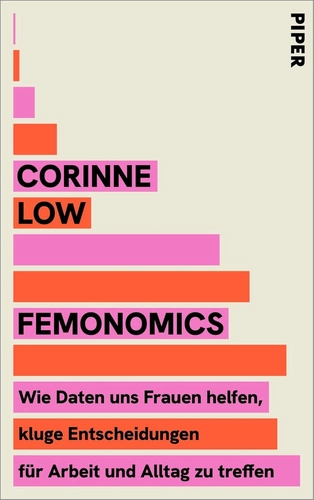
Corinne Low, an economist at the University of Pennsylvania, wrote Femenomics to explain why that laugh is so familiar to so many women. She isn’t just describing the problem. She is measuring it. And what she finds is sobering.
The book’s central argument is simple and devastating. Women are not just working more hours than men. They are working different kinds of hours. A man’s hour at the office is focused. A woman’s hour at home is fragmented. She is cooking dinner while answering a work email while reminding her son to finish his homework while mentally planning next week’s carpool. This fragmentation is a tax. It is a tax on attention, on rest, on the ability to think a single thought from beginning to end.
Low calls this the “cognitive load premium.” It is the price women pay for being the default parent, the default household manager, the default emotional caregiver. And it is invisible. No one sees the three hours of planning. They only see the dinner that appears on the table.
She does not blame men, exactly. More like she blames a system that was designed for a world that no longer exists. A world where one person worked outside the home and the other worked inside it. Now most women work both. But the unspoken rules of the workplace and the home have not caught up.
Low’s solution is not radical in the way you might expect. She does not argue for revolution. She argues for precision. She wants us to see the specific tasks that drain us and redesign them. For example, she suggests that couples should not just split chores. They should split the mental labor of managing those chores. The person who does the laundry should also be the person who notices the laundry needs to be done. Otherwise, the manager still manages.
I found myself nodding through the whole book. But I also felt a low hum of resistance. Is this really what we need? Another book telling women to optimize their lives? But Low anticipates this. She is careful to say that individual solutions are not enough. She wants structural changes. Paid family leave. Workplace flexibility. A cultural shift away from the idea that a good mother is a constantly available mother.
The book’s weakness, if I am honest, is that it sometimes feels too reasonable. Low is an economist. She trusts data. She trusts rational arguments. But the problem she describes is not entirely rational. It is emotional. It is about identity, about guilt, about the fear of being seen as a bad mother or a bad partner. Data alone will not fix that.
Still, Femenomics is a necessary book. It names what has been nameless. It quantifies what has been dismissed as trivial. And it offers a path forward, even if that path requires more than just spreadsheets and negotiation scripts.
I finished the book and called my friend. I told her to read it. She laughed again. That same laugh. Maybe the book cannot fix the laugh. But at least now she knows she is not alone.
What I learned from Femenomics
The most valuable part of the book for me was the chapter on “The Marriage Bargain.” Low argues that many heterosexual marriages are built on an implicit contract that benefits men more than women. The man gets a partner who manages his social life, his health, his family relationships. The woman gets… what? Security? That security is increasingly fragile. Low wants us to rewrite that contract. Explicitly. Out loud.
Who should read this book
Anyone who has ever felt exhausted for no clear reason. Anyone who has ever said “I do everything” and then felt guilty for saying it. Anyone who is in a partnership and wonders why it feels uneven. Also, men. Especially men.
What Femenomics is missing
The book focuses heavily on middle-class, professional couples. Low acknowledges this. But the burden of invisible labor falls hardest on women with fewer resources. Single mothers. Women working multiple jobs. The book could have done more to address class and race. That is a limitation.
Final thought
Femenomics will not change your life. But it might change how you see your life. And sometimes that is the first step.
