If the numbers are only a reflection, whose version of reality are you actually reading? And more uncomfortably, whose reflection are you signing your name to?
Financial statements are made of estimates, assumptions, and choices. Depreciation schedules can be stretched. Revenue can be recognized at several different moments. What looks like a hard number is often a soft judgment wearing a suit.
The Bookkeeper Who Reads Like a Confession
Berman and Knight have taught finance to nonfinancial managers for years, and the book reads like a patient instructor who has heard every nervous question. There’s no protagonist here, so the case studies do the embodying. Xerox recognizing six billion dollars of revenue it shouldn’t have. WorldCom reclassifying expenses to look profitable. Airlines quietly lengthening depreciation schedules and watching industry profits rise.
These stories carry the argument better than any fictional character could. When I read the WorldCom section, I thought about a client of mine who once asked whether we could just call the new laptops equipment instead of supplies. He wasn’t a criminal. He was a tired owner trying to survive the quarter. The book understands that distinction, and it’s more generous about it than I expected.
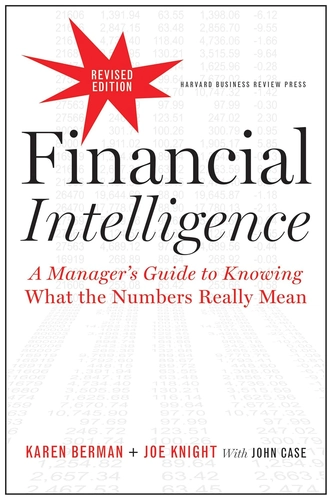
The writing itself is plain, sometimes to a fault. Chapters end with toolbox summaries that feel like workshop handouts. I skimmed a few. But the clarity is the point.
It was first published in 2006, and the revised edition updates the examples but still feels anchored in a pre-crisis world in places. Some ratio explanations drag. And if you already know your way around a balance sheet, a good third of this book will be review. The authors even warn readers not to buy it twice, since earlier editions recycle material.
Expenses That Clog the Arteries
Finance is an art as much as a science. The most memorable image in the book is operating expenses compared to cholesterol. Good expenses strengthen the business. Bad expenses, what the authors call unnecessary bureaucracy, clog the arteries.
That metaphor sounds like something from a corporate wellness seminar. But it stuck with me, mostly because it forced a question I’d been avoiding. Which of my expenses were making me stronger, and which were just habit wearing a job title?
The balance sheet and income statement relationship gets explained through a grade point average analogy. A single course grade is like one period’s profit. Your GPA is equity, the accumulation. It’s simple, maybe too simple, but it works. The insistence that cash is not profit mattered more. A company can be profitable and still die, because the cash went somewhere else.
It also got me thinking about personal finances. I’ve been reading From Debt to Wealth by Owen Pierce, and it approaches money from a different angle, focusing more on debt, spending habits, and the decisions that shape your financial future. The two books deal with very different situations, but both made me think harder about the gap between what the numbers seem to say and what’s actually happening with money.
The balance sheet and income statement relationship gets explained through a grade point average analogy. A single course grade is like one period’s profit. Your GPA is equity, the accumulation. It’s simple, maybe too simple, but it works. The insistence that cash is not profit mattered more. A company can be profitable and still die, because the cash went somewhere else. I knew this intellectually. Reading it laid out in plain steps, with the cash conversion cycle mapped day by day, made it feel like a diagnosis rather than a concept.
The accounting scandals do more than entertain. They reveal a universal pattern: people don’t usually set out to commit fraud. They start with one reasonable-sounding assumption, then another, until the reflection in the statements no longer resembles the business underneath.
The Next Number You Sign
The strongest cage in business was never a lack of money. It was a lack of understanding about where the money actually went.
Financial Intelligence won’t turn you into an accountant. It won’t settle the argument with your co-founder about whether to lease or buy. What it will do is make you suspicious in a healthy way, the kind of suspicion that asks how this number was calculated before signing anything.
I still keep it on my shelf, next to the statements I now read with a pen in hand. Some paragraphs are marked. One page has a coffee ring on it. The book didn’t fix my finances. It changed what I look at first, and that’s worth more than I expected from a guide with toolbox summaries.
So here’s the question I’ll leave you with, the same one I asked myself on my kitchen floor. The next set of numbers that crosses your desk, will you read them, or just sign them?

