I was scrolling my to-do list at 11 p.m. again. My jaw hurt from clenching. I had three tabs open: a work email, a newsletter about “deep work,” and a calendar app screaming at me about tomorrow’s meetings. And I thought, honestly, what the hell am I doing? Trying to outrun time? Trying to finish everything before I die?
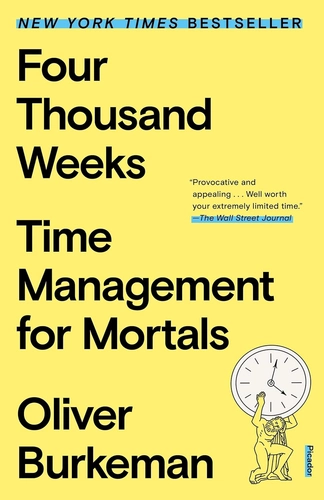
That’s the question Oliver Burkeman plants in “Four Thousand Weeks.” It lands like a quiet bomb in your chest. What if the problem isn’t your productivity system? What if the problem is the very idea that you should be able to do it all?
The Protagonist: You, the Exhausted Striver
The book doesn’t have a fictional hero. It has you. Or me. Or anyone who’s ever felt like a hamster on a wheel made of deadlines.
Burkeman shows us a person, let’s call her the Modern Striver. She buys the planner, she optimizes her mornings, she reads about “time blocking” and “eating the frog.” And she still feels behind. Every email answered births three more. Every project finished reveals two waiting. The core conflict is this: she is trying to conquer time, and time is not a mountain to be climbed. It’s a river, and she’s drowning in the attempt to swim upstream.
He doesn’t offer a 10-step plan. He offers a diagnosis. The urge to be “efficient” is actually a form of avoidance. We cram our schedules because we’re terrified of the empty space where we’d have to face our own mortality.
I’ll be honest, reading this felt like being caught. I kept waiting for the chapter where he’d say, “But here’s how to secretly get more done.” He never does. Instead, he asks: what if you just… stopped? What if you accepted that you will never read all the books, never travel to all the countries, never finish the list? What then?
The suspense isn’t about plot. It’s about a question that follows you around for days after you close the book. Are you willing to be finite?
The Weaver of Threads: Time as a Gift, Not a Resource
The core theme is finitude. Burkeman doesn’t dress it up. He says, bluntly, you have roughly four thousand weeks. That’s it. And the modern obsession with “time management” is really an attempt to deny this fact.
His key imagery is surprisingly gentle. He talks about time not as a resource to be “spent” or “invested.” He talks about it as a fabric you are weaving, moment by moment. Every choice to do one thing is a choice to not do ten others. That’s not a failure. That’s the whole deal.
He uses the image of the “attention merchant” — the apps and emails that hijack your present moment. But his deeper point is that the anxiety to “use time well” is itself a thief. When you’re constantly calculating if this moment is “productive,” you’re not in the moment. You’re in a spreadsheet of your life.
Does it have flaws? I think so. The book can feel a bit abstract. It gives you a philosophical hammer but not always a clear nail to hit. It’s better at diagnosing the disease than prescribing the cure. For someone in deep crisis, it might feel like too much acceptance, not enough action.
But the value is undeniable. After reading, I stopped checking my phone during my son’s breakfast. Not because I found a better system. Because I realized that the toast crumbs on his cheek, right now, are the whole point.
The Quiet Revolution: Living Inside the Limit
So what do you actually get from this book? A permission slip to be human. A way to see that the anxiety of “not enough time” is not a problem to solve, but a condition to inhabit.
It resonates across eras because the delusion of total control is ancient. But Burkeman gives it a modern language. He names the quiet panic of the 21st century striver. He says, you don’t need to win the game. You need to stop playing.
Who is this for? Anyone who has ever felt guilty for resting. Anyone who buys a new productivity app with a secret hope that this time, they’ll finally conquer the chaos. Anyone who, at the end of the day, feels like they lost.
What is the one question you’re avoiding because you’re too busy answering emails?
