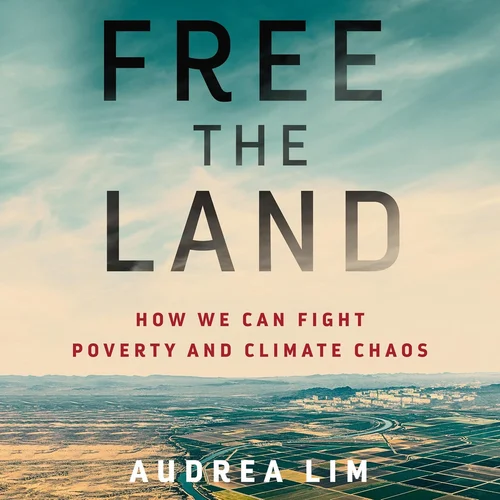
I was standing on a patch of grass in a city park, watching kids run in circles. A thought hit me, quiet and unsettling: who actually owns this dirt? Not the city, not the state, not me. I had never really asked that question before. Then I picked up Audrea Lim’s “Free the Land: How We Can Fight Poverty and Climate Chaos,” and the question became a splinter I couldn’t remove.
Lim starts with a simple proposition: land is not a commodity. It is a common good. She argues that private land ownership, especially the kind passed down through generations and corporations, is the root of both poverty and climate breakdown. I remember pausing at that line. It sounded radical. It also sounded true. She is not writing theory from a distance. She walks us through communities in the Mississippi Delta, in Appalachia, in urban Detroit, where people are already doing the work. They are buying land collectively. They are building community land trusts. They are refusing to sell out.
The Protagonist Is the Land Itself
This book does not have a single hero. It has hundreds. But if I had to pick one thread, it would be the story of the farmers in the Mississippi Delta, Black families who lost their land through predatory lending and broken promises. Lim shows them not as victims but as architects of a different future. They are reacquiring land, planting native crops, restoring soil. The core conflict is quiet but relentless: the system wants them to sell. They refuse. The suspense is not about whether they will win in the short term. It is whether their model can scale. Lim never reveals the final outcome, and that is the point. This is a story still being written. It left me wondering: what would it take for me to see the ground I walk on as something we share, not something I own?
The Imagery of Roots and Light
Lim uses two images that stay with me. One is the root system of a prairie grass, deep and tangled, holding the soil together even in drought. The other is subtle light, the kind that filters through leaves in a forest canopy, not harsh but persistent. She uses these to show how land restoration works. It is not fast. It is not flashy. It is slow, patient, and collective. The soil heals one microbe at a time. A community recovers one meeting, one shared decision, one restored field at a time. I found myself thinking about the light in my own backyard, how it falls on grass that I never planted, on soil I never filled. Lim makes you see the invisible infrastructure of land ownership, the deeds, the titles, the laws that decide who gets to live where and who gets pushed out. It is not a book about blaming anyone. It is a book about noticing.
What We Can Do With the Ground We Stand On
I will be honest. I finished this book and felt a kind of grief. Not because Lim is pessimistic. She is not. She is fiercely hopeful. The grief came from realizing how deep the problem goes, how much of our economy and identity is built on the idea that land is something to grab, to fence, to sell. But then the grief shifted into something else. It becomes a question: what can I do with the ground I stand on? Lim does not give a checklist. She gives a framework. She discusses community land trusts, cooperative ownership, the legal tools that already exist but are underused. She also admits the limitations. This work is hard. It requires trust, patience, and a willingness to share power. The book is best for people who are tired of individual solutions, tired of buying a reusable bag while the planet burns, tired of feeling alone in a crisis that demands togetherness. It is not a comfortable read. It is a necessary one.
What I took away, finally, is this. The land does not belong to me. I belong to the land. Maybe that is the real shift Lim is asking for. Not a policy change, not a new law, but a new way of seeing the ground under our feet. I closed the book and went outside. I put my hand on the soil. It was cool and damp. It did not feel like mine. It felt like ours.
