I sat across from a friend last month who works sixty-hour weeks and still checks her bank balance with one eye closed, the way you’d check a wound. She asked me, half-joking, whether there was a book that could explain why the math never worked out for her. I didn’t have an answer then. I might have one now.
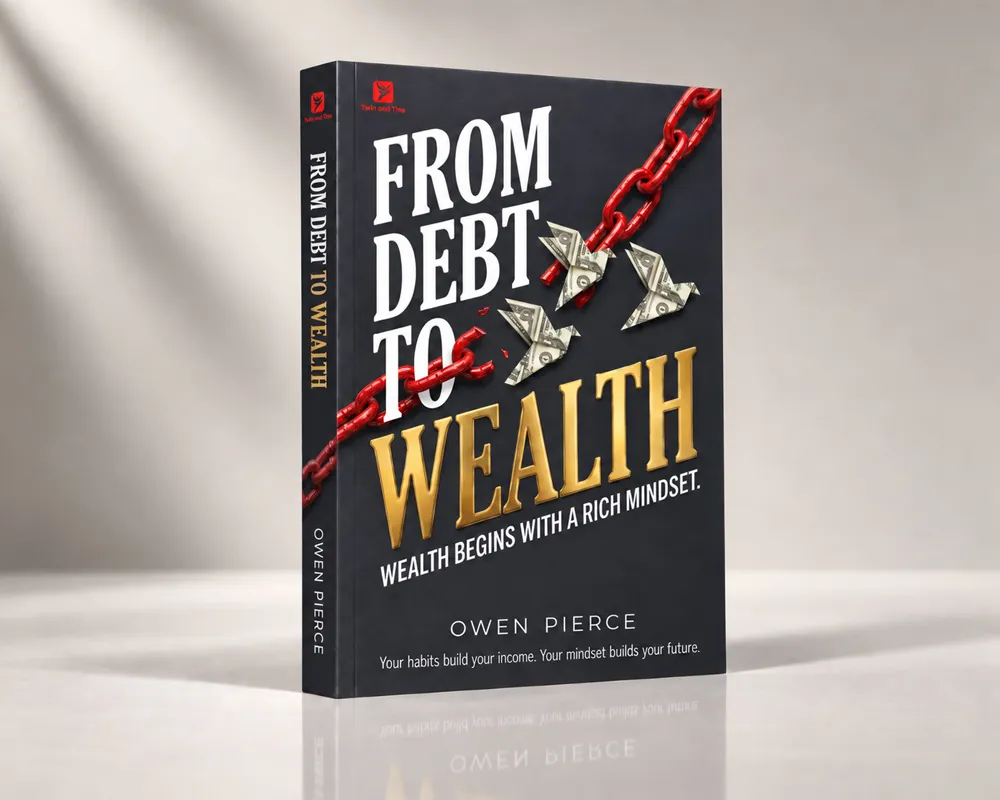
From Debt to Wealth is a practical guide built on a claim that sounds almost rude at first: wealth is a reward for cognition, not for hard work. The book isn’t interested in comforting you. It’s interested in showing you the machinery.
So what does it actually mean to be paid for how you think rather than how long you labor? That question is the spine of everything the book argues.
A Man Who Stopped Selling His Hours
The book returns again and again to a figure I’ll call the jam seller, a small vendor who survives not because his product is special but because he adapts faster than anyone around him. He changes recipes, locations, prices. He watches what people buy and what they ignore.
His story carries the book’s central tension. He works harder than anyone, yet the chapter insists his real advantage is perception. He notices what the crowd misses. That gap between effort and insight is where the book plants its flag.
The conflict is familiar. He could keep grinding at the same stall forever, safe and stuck. Or he could restructure everything, take on risk, and build something that pays him while he sleeps. The book doesn’t flinch from how frightening that choice is.
What the book does reveal is the cost of staying still. The stall is a liability dressed as security. That phrase stuck with me.
Where the Book Cuts Deepest
The core theme here is ownership versus labor, and the imagery is deliberately mundane. Assets feed you. Liabilities eat you. Those two verbs do enormous work across the whole book.
The author’s craft shows in how he treats debt. He refuses the simple moral story. Some debt builds, some debt destroys, and the difference is whether the money buys you an income stream or a photograph of one.
| Type of Debt | What It Does |
|---|---|
| Debt that buys an income stream | Builds wealth over time |
| Debt that buys a lifestyle | Destroys wealth quietly |
| Debt that buys an asset | Can work for you |
| Debt that buys a photograph of one | Only looks like it works |
There’s a section on compound growth that avoids the usual charts. Instead it talks about time as a substance you either spend or plant. I found that quietly moving.
Poverty, strangely, gets its own chapter as an advantage. Nothing to lose means nothing to fear, which means speed. I’m not sure I fully agree. But the argument has teeth.

The Limits and the Gift
The book’s weakness is that it occasionally treats luck as a footnote when it deserves a chapter of its own. Timing matters. Markets bend. Some people do everything right and still arrive late.
Still, the framework holds. Assets, leverage, systems, mastery, compounding. It’s coherent, and it’s honest about gray areas.
This book is for you if:
- You earn steadily and still feel stuck
- You’ve gotten a raise and watched your savings stay flat
- You want to understand why effort alone isn’t enough
- You’re ready to rethink what you’ve been taught about money
This book is not for you if:
- You want a get-rich-quick plan
- You’re looking for advanced investment strategies
- You believe hard work alone guarantees financial security
This book suits anyone who earns steadily and feels stuck anyway. If you’ve ever gotten a raise and watched your savings stay flat, this is for you. The gift is a new lens, not a promise. I closed it still unsure about my own risk tolerance, honestly.
Maybe that’s the point. The book isn’t asking you to be brave tomorrow. It’s asking you to see the stall you’re standing in. And sometimes seeing is the first quiet act of leaving.

